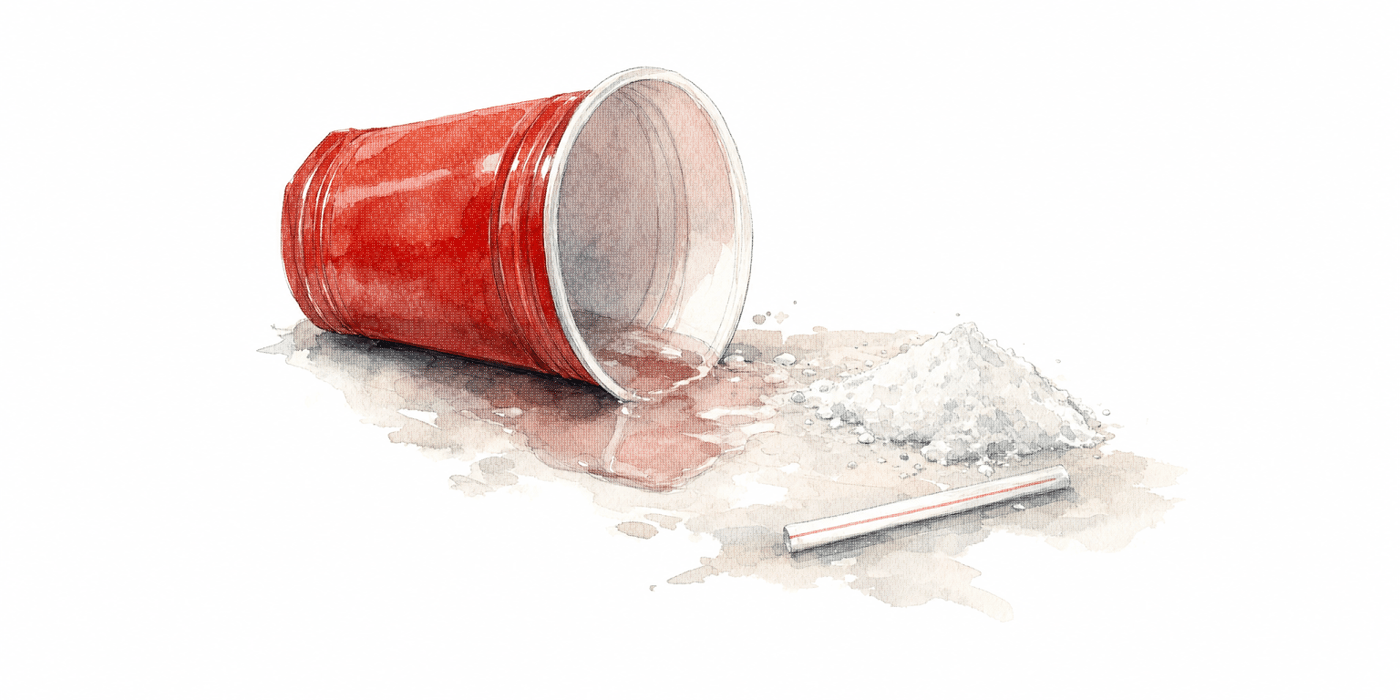

We live in a murky age where the bar for caring for one another is so low that dignity, respect, wisdom, and responsibility are no longer clear-cut standards of character. This applies to both men and women.
Which leads us to the story of The Cornell 7.
It all started in 2024, when a young woman, identified as Jane Doe, was a student at Cornell University. She had just left a sorority meet-up sponsored by her own sorority and went to the Chi Phi fraternity house to hang out with a friend.
While at the house, Ms. Doe drank, snorted ketamine, did weed, and then made another very bad decision — she was asked if she’d be interested in a threesome with her friend and another frat brother, and according to her original statement, she was “pretty okay with having this threesome.”
The two men she originally engaged with were too drunk to go through with their intentions; however, a third man entered the room, then four more, one after another. According to Kat Rosenfield at The Free Press, “The original statement describes a sloppy but consensual series of interactions between the woman and the seven men, involving sex, drugs, alcohol, or some combination of the three.”
The consent was legal, but dubious. Ms. Doe was admittedly very drunk and hoped that the ketamine would help her black out. “My thought was that if I passed out and these men had sex with me, then they could be charged with Rape,” she stated.
The frat brothers in this case behaved horribly, sending a group text message advertising a young woman available and willing to have sex (which is why five more guys showed up in the first place). Afterward, they bragged about it, and rumors spread around campus that Ms. Doe was involved with them in an “eightsome.”
At the same time, Ms. Doe exchanged texts with one of the men from that night, who apologized for “how things went down,” saying he was super wasted and shouldn’t have let things go that far. She congenially agreed and texted back that “non(e) of the sexual stuff was illegal” and that she’d like to hang out again, “but like leave out the extra 5 billion men and ketamine.”
Weeks later, Ms. Doe reported the encounter to campus police. At the time, she remarked that because of the gaps in her memory later in the evening, she “could say with 100% confidence” she was raped, which is why she ultimately told campus police. Her experience was then referred to the district attorney’s office.
Cornell imposed consequences on the accused boys. Two of the young men were expelled outright; the other five faced varying levels of suspension and workshops on consent and treatment of women. All of them had to write essays. It was not a slap on the wrist, as some news sources are reporting.
Weeks later, the DA’s office, based on Ms. Doe’s original statement, did not prosecute because the encounters she recalled were considered consensual, according to New York law, even though she felt coerced.
This case, previously a blip on the radar, exploded in the national news because in mid-September, Ms. Doe decided to sue the seven men who used her as a plaything. Instead of an ugly but consensual sexual, drug-fueled encounter, the experience turned into a gang rape accusation.
In her second statement in the suit, Ms. Doe alleged that she was incapacitated by alcohol before she arrived at the frat house, that she was forced into snorting the ketamine, and that because of her drunk and drugged state, she was not capable of giving proper consent.
The seven accused men deny the rape allegations.
In the court of public opinion, these frat bros have already been convicted (one of the accused was fired from his bank job). Celebrities have gotten on their soapboxes to condemn them. Women on social media are in a frenzy of outrage (they always seem to be these days). Prospective Cornell applicants and their parents are boycotting the school because of accusations that the university only made the boys write essays as recompense.
Like other stories, particularly where the alleged attackers are white fraternity brothers, the young men have been convicted by the mob. Yet not much has come to light, let alone been litigated.
Interestingly enough, even “The [Leftist] View” cohost Sunny Hostin, who was a sex crimes prosecutor in New York for 10 years, said that the media was treating the young men unfairly.

Sunny Hostin, a former sex crimes prosecutor, actually defends the Cornell 7. She argues that under New York State law, the girl consented and that the media is "reporting this story inaccurately. I think they're reporting it unfairly." "The pictures of these young men who have Show more
This case is horrible from start to finish. First, there is no way to know who is telling the truth. It’s a he-said-she-said with the added blurring of drugs, alcohol, and years of building regret and rage.
If Ms. Doe isn’t telling the truth, this is the Duke lacrosse team slander all over again — the sort of lie that ultimately hurts real victims of gang rape. It is also another point against the victimhood hierarchy, in which young white men are immediately thrown under the bus because they fit a stereotype of lecherous monsters that has been crafted over the years.
If Ms. Doe is telling the truth, prosecute these men to the full extent of the law. No woman should be treated like that — ever. Such behavior is inexcusable.
Regardless, evidence shows that a number of fraternity brothers at Cornell were cruel, horrible, and treated this young woman as a plaything. They did not protect, respect, or value her beyond what she could offer for entertainment. They should be ashamed of themselves on those counts alone.
Ms. Doe was also not wise. Her responsibility in this case was to take care of herself, which she systematically did not do at almost every step of this story. No, I do not mean that she was asking for it in any way (though, by her own admission, she consented to much, if not all, of it). I am saying that the choices she made, including making herself drunk, were unwise.
This case should sadden us as a society. Not only because of the lack of care by all involved, but because of the utter lack of character. The facts are still unfolding, and more may come to light, but as of now, this is a sobering tale of cultural depravity and cruelty.