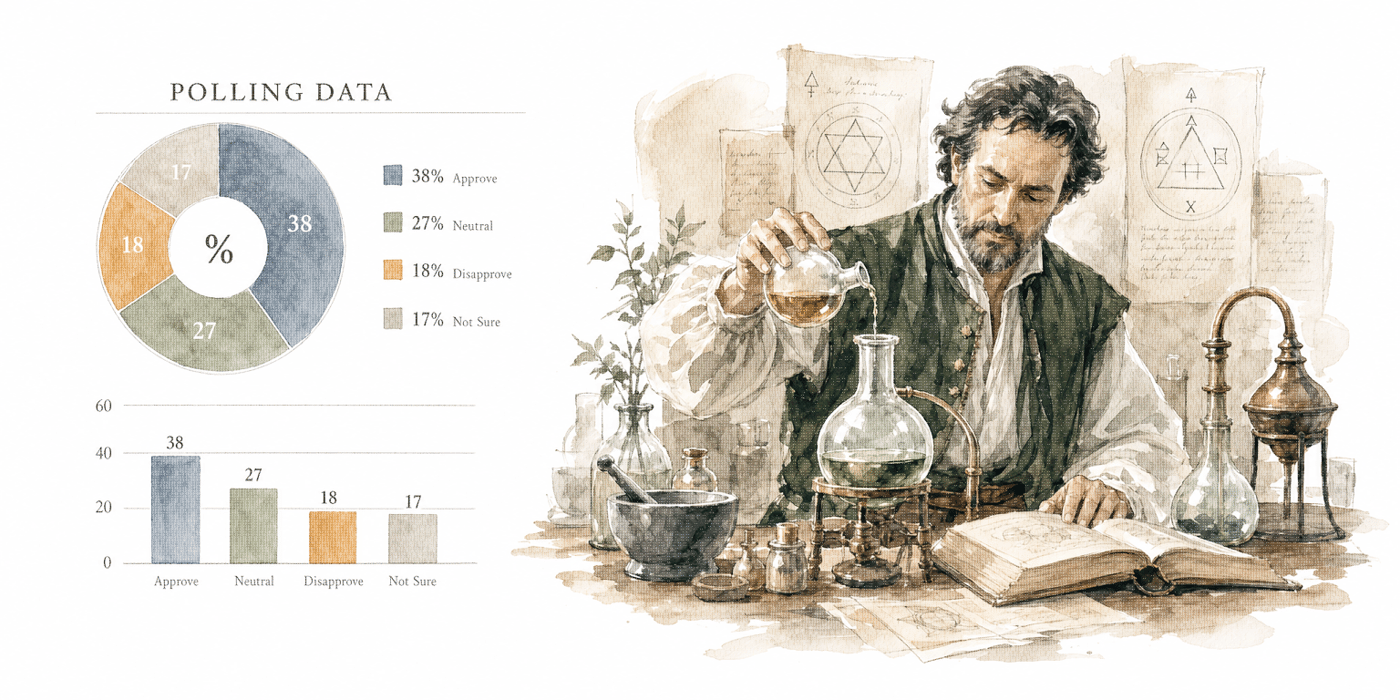

Election polling has always been more art than science. That’s because, unlike an actual election, pollsters can only survey a fraction of the electorate. Who they survey and what is asked then becomes the basis for their prognostications. That is, if the polling data isn’t completely made up by a bogus polling outfit, as was the case with Wedgewood Polls.
Earlier this month, Wedgewood Polls admitted that it had made up its polling data completely out of whole cloth. The organization claimed it did so to conduct an “experimental project to demonstrate the vulnerabilities, lack of oversight, and overall low barrier to entry in the modern political polling industry.”
That’s a fine explanation to offer after getting caught: Uh, we were just conducting an experiment, so no harm, no foul.
At least one candidate for the Michigan Democrat Senate nomination, Mallory McMorrow, alleges that a Wedgewood poll showing her significantly trailing eventual nominee Abdul El-Sayed cost her donor support and led her to drop out of the race early. Wedgewood’s poll could have played a role, given that El-Sayed’s eventual nomination victory was far narrower than polling had indicated.
But Wedgwood was just one poll among several, and it wasn’t the only one showing El-Sayed with a significant lead.
That said, Wedgwood was not actually polling prospective voters. It was making up its “polling” data, and tellingly, the majority of its “polling” data tended to favor the more progressive candidates. At the very least, Wedgwood was helping to support a narrative of Democrat voters, favoring the more radical leftist candidates.
More broadly, even if actual polling has been conducted, it has been evident over the years that polling generally favors Democrat candidates over Republicans. This is one reason why, years ago, we in our humble little shop coined the term “Pollaganda Effect.”
Our own Mark Alexander explains it this way: “Repeatedly tell people what you want them to believe, then poll them on what you told them, then report the polling as something other than an echo-chamber effect.”
Wedgewood is just one of several fake polling outfits over the last few election cycles that have gone beyond even the semblance of conducting a poll, creating the same pollaganda effect.
Genuine, reputable polling organizations still exist. But even they have struggled to predict election outcomes over the last few election cycles. Why is this?
As noted above, polling is more art than science, but that doesn’t mean it lacks scientifically sound data-collection methods. The art, so to speak, is recognizing the right demographic from which pollsters collect data. According to reputable pollsters, gaining this data has become increasingly difficult.
In 2024, a Pew Research Center pollster identified one of the biggest reasons accurate polling has become much more difficult. People don’t answer their phones. As most Americans have replaced landlines with cellphones, fewer and fewer people answer a call from an unfamiliar number. Pew noted that, on average, only one in 149 people answered a pollster’s call. Twenty years ago, one in three people would answer the phone.
This suggests fewer people are willing to respond, and those who do are outliers, not the average Joe voter. This factor alone significantly complicates efforts to collect polling data that accurately reflects the average voter’s views.
There is also the problem of the overt anti-Trump mainstream media narrative that loudly suggests that anyone who dares to support Donald Trump and his MAGA movement is a racist and bigoted fascist. Given this leftist bias and wholly inaccurate narrative, it comes as little surprise that many people don’t share their true political opinions with pollsters.
With current polling numbers showing Democrat candidates doing well, maybe especially in red states like Texas, Iowa, and South Carolina, one is justified in holding a healthy amount of skepticism. Of course, this does not mean one can sit on one’s laurels and fail to vote or fail to encourage other conservatives to vote. But it does provide more context for why these polls are so often wrong and shouldn’t be trusted.