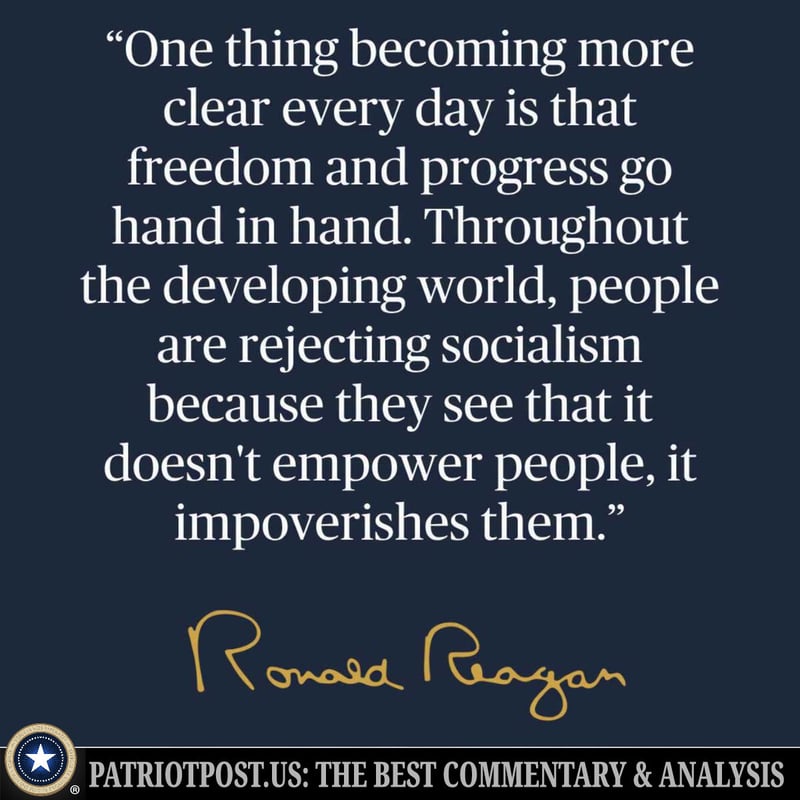
History is filled with political movements born from noble promises. Few have been more appealing in theory than socialism. At its heart, socialism promises greater equality, economic fairness and protection for those who struggle in a competitive marketplace. It speaks to the desire for justice and the belief that no person should be left behind.
Yet history also teaches a sobering lesson: While millions have voted for socialism, millions more have ultimately fled from it.
Why?
The answer is not found in campaign slogans or academic theories. It is found in the lived experiences of ordinary people across generations and continents.
Throughout the 20th century, socialist governments emerged across Eastern Europe, Asia, Africa and Latin America. Many came to power promising to eliminate poverty, reduce inequality, and place the needs of the people above the interests of the wealthy. In the beginning, those promises often generated enormous enthusiasm. Citizens were told that government planning would be more efficient than free markets, that collective ownership would create fairness, and that centralized control would produce prosperity for all.
The results, however, frequently fell short of the promises.
One recurring problem was the concentration of power. When governments assume responsibility for directing large portions of the economy, political leaders inevitably gain greater control over employment, investment, production and distribution. Over time, this concentration of authority often extends beyond economics into other aspects of society.
History shows that when governments acquire greater power, citizens frequently lose a measure of independence. Economic freedom and political freedom are often more closely connected than many realize. When a person’s livelihood depends heavily upon the state, dissent becomes more difficult and individual choice becomes more limited.
Another lesson history teaches is that incentives matter.
Human beings respond to rewards, risks and opportunities. Free-market systems are far from perfect, but they have consistently demonstrated a remarkable ability to encourage innovation, entrepreneurship and productivity. When individuals are allowed to benefit from their hard work, creativity and investment, economies tend to grow.
By contrast, heavily centralized systems often struggle to generate the same level of innovation and efficiency. Bureaucracies can become slow, inflexible and disconnected from local realities. Over time, shortages, inefficiencies and declining productivity have plagued many state-controlled economies.
This does not mean capitalism is without flaws. It clearly is not. Free markets can produce inequality, abuse and economic dislocation. They require regulation, accountability and moral responsibility. But history suggests that replacing markets with extensive government control often creates a different set of problems — problems that can be even more difficult to solve.
Perhaps the most powerful evidence comes from migration patterns.
Throughout modern history, people have overwhelmingly moved toward societies that offered greater economic freedom rather than away from them. From East Germans risking their lives to cross the Berlin Wall to Cubans crossing dangerous waters to Venezuelans fleeing economic collapse, countless individuals have voted with their feet.
This reality deserves careful consideration.
People rarely abandon their homes, families, language and culture without compelling reasons. When citizens repeatedly leave countries governed by socialist systems in search of opportunity elsewhere, it raises important questions about the long-term sustainability of those systems.
The lesson is not that every policy associated with socialism is inherently wrong. Many democratic societies incorporate social safety nets, public health care programs, retirement systems and other forms of government support while maintaining market economies and strong democratic institutions.
The real lesson is about balance.
Successful societies tend to recognize both the strengths and limitations of government. They understand that government has an important role in protecting the vulnerable, enforcing the rule of law, and providing essential public services. At the same time, they recognize that prosperity is often driven by individual initiative, private enterprise, innovation and economic freedom.
As younger generations debate the merits of socialism, they should do so with an appreciation for history rather than romanticized visions of what might be. Good intentions alone do not guarantee good outcomes. Policies must ultimately be judged not by their promises but by their results.
History’s verdict is neither simple nor ideological. It is practical. Again and again, people have demonstrated through their actions that they value freedom, opportunity and the ability to shape their own destinies. When those things become scarce, many eventually seek them elsewhere.
That is perhaps the most enduring lesson history offers: People may be attracted by promises of equality, but they are often willing to travel great distances — and endure great hardship — in pursuit of liberty.
Today, these lessons are becoming part of the American political conversation. With socialist candidates gaining influence in major cities — two examples being the rise of Councilwoman Janeese Lewis George in Washington, D.C., and the growing prominence of Mayor Zohran Mamdani in New York City — voters are once again debating the proper balance between government intervention and individual enterprise.
Supporters see these movements as a response to rising costs, housing shortages and economic inequality. Critics see warning signs that history has presented before. Whatever one’s political perspective, the debate should not be driven by slogans or emotion alone. It should be informed by the experiences of nations that have already traveled this road.
The harsh lessons of history are not that compassion is dangerous or that government has no role to play. Rather, they remind us that concentrated power, diminished economic freedom and excessive dependence on the state often carry consequences that emerge only over time.
America’s future will not be determined by labels such as “capitalist” or “socialist.” It will be determined by whether we preserve the freedom, opportunity, innovation and personal responsibility that have long defined the nation’s success while ensuring that those who struggle are not left behind.
History remains our greatest teacher. The question is whether we are willing to learn from it.
COPYRIGHT 2026 CREATORS.COM