
We lost a Tennessee icon yesterday, a person who rose from the most impoverished circumstances to become the nation’s most recognized performing artist, and much more than that.
Dolly Rebecca Parton Dean was a person of deep and abiding faith, a very smart businesswoman, and a philanthropist.
She was born on January 19, 1946, the fourth of 12 children living in a one-room cabin on Locust Ridge above the banks of the Little Pigeon River near Pittman Center, Tennessee. That is just east of Gatlinburg and Pigeon Forge, home of Dollywood. It is an area I have visited for 40 years, staying at a B&B just above Locust Ridge next to the Great Smoky Mountains National Park. It is a beautiful place, which I know she appreciated despite the hardships she experienced.
Her parents were Avie Lee and Robert Parton, the latter being a sharecropper, and though illiterate, Dolly said he was among the smartest people she had ever known. He worked dawn to dusk while her mother raised all their children.
Dolly was a child prodigy, and attributes her musical talent to her mother’s side of the family saying “my mother’s people were all very musical.” She composed her first song at age six, teaching herself to play a homemade guitar. She was performing on Knoxville radio stations by the age of 10. She recorded her first single at age 11 and appeared on the Grand Ole Opry at 13.
The day after graduating from severe County high school in 1964, she went to Nashville, and over the course of her career, would write more than 3,000 songs and sell more than 100 million records — many gold, platinum, and multi-platinum — winning 11 Grammy Awards and three Emmy Awards.
She said of her humble entertainment beginnings, that early in her career: “My bedroom was the backseat and [my Uncle Bill Owens’] was the front seat. I’d wash my hair in the filling station bathrooms and put makeup on in the side mirror of the car, and that was just how you did it.”
It’s hard to pick a favorite among her songs, but mine would be the timeless “Coat of Many Colors” about a patched-together coat from rags her mother made while telling her the story of Joseph and his coat of many colors.
That song begins:
So with patches on my britches and holes in both my shoes,
In my coat of many colors I hurried off to school
Just to find the others laughing and making fun of me
In my coat of many colors my Mama made for me
It concludes:
But they didn’t understand it, and I tried to make them see
One is only poor, only if they choose to be
Now I know we had no money, but I was rich as I could be
In my coat of many colors my momma made for me
She said, “Coat of Many Colors really talks about poor people. But you don’t have to have money to be rich, you can be rich and love patience and kindness and understanding.”
Another song that touches me to this day is “I Will Always Love You,” written to her former business partner, Porter Wagner, when Dolly was leaving his show to launch her own career.
Dolly had strong connections with our hometown, Chattanooga. She and her husband Carl Dean met at a Wishy-Washy laundromat in Nashville, and were married here at Ringgold Baptist Church in 1966.And she was here weekly when “The Porter Wagoner Show” was broadcast live from a local studio.
In 1970s she topped the US country music charts with her single “Joshua” before releasing “Coat of Many Colors” in 1971, which topped the charts two years later.
Having made a name for herself as a solo artist, in 1974 after seven years with Wagoner, she departed. It was not an amicable business split and he sued her for $3 million claiming breach of contract. Years later however she would forgive him and they would reconcile. Dolly was present at his bedside when he died in 2007.
Dolly’s over-the-top appearance was a big part of her brand, which she said was modeled after the “town tramp.” She famously said, “It costs a lot of money to look this cheap,” adding, “I am a self-made woman, and I have the doctor bills to prove it.” She declared, “I’m not offended by all the dumb blonde jokes because I know I’m not dumb — and I’m not blonde either.”
Ask by a reporter how long it took to do style her hair, she responded: “People always ask me how long it takes to do my hair. I don’t know, I’m never there.” Of her brand she said, “It’s hard to be a diamond in a rhinestone world,” and explained, “Why blend in when standing out is so much more fun!”
Of the hardships she faced early on, she said, “The way I see it, if you want the rainbow, you gotta put up with the rain,” saying, “If you see someone without a smile today, give ’em yours.”
On her stardom, she said, “I never think of myself as a star because, as somebody once said, ‘A star is nothing but a big ball of gas’ — and I don’t want to be that.” She said: “I always count my blessings more than I count my money. I don’t work for money, never did. ... Don’t get so busy making a living that you forget to make a life.”
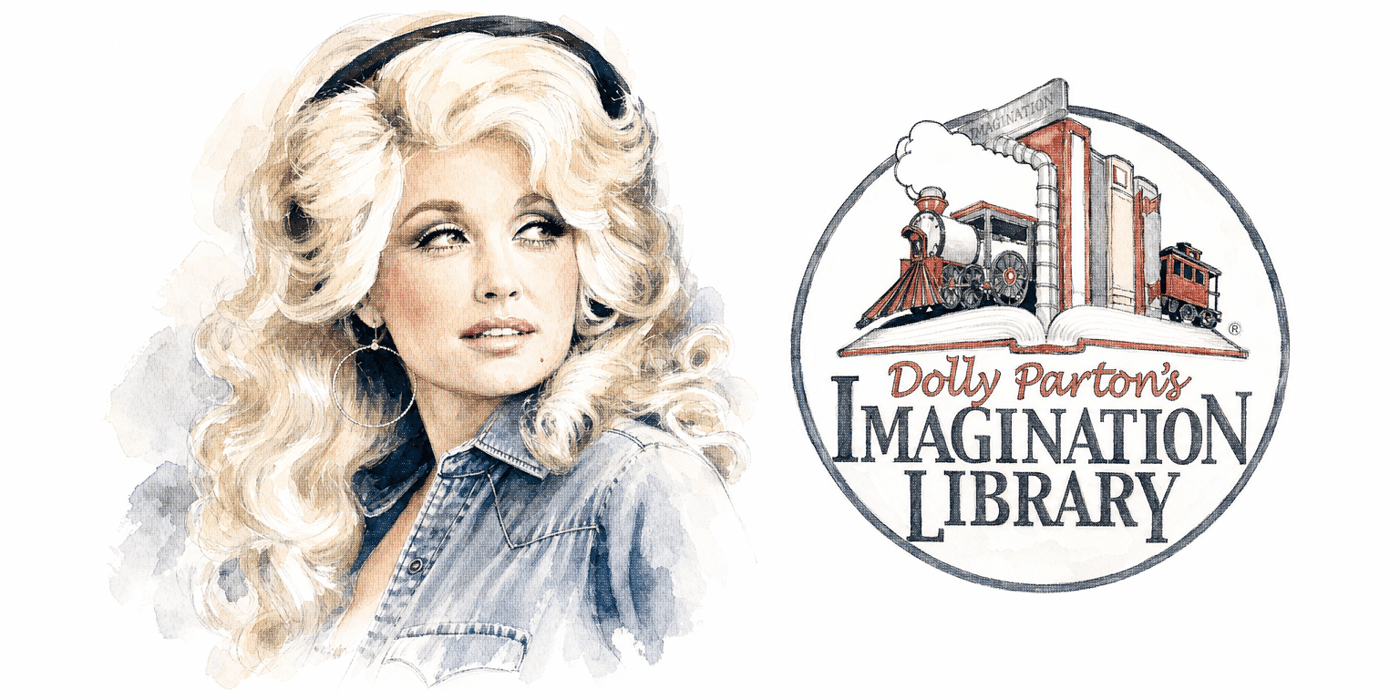
In light of her father’s illiteracy, she launched Dolly Parton’s Imagination Library, one of many ways she has supported children in East Tennessee and now nationwide. Since its founding, her foundation has distributed more than 332 million free books to children under age five. Among her book fans are our grandchildren. Dolly said, “The seeds of dreams are often found in books, and the seeds you help plant in your community can grow across the world.”
Carl, an asphalt contractor who avoided the limelight, died last year at age 82, and that took the wind out of Dolly’s sails. She has experienced some health issues over the last year, and her death was not unexpected.
She and Carl had no children, and her nephew Bryan Seaver issued the following announcement on behalf of their family:
I have imagined the heaviness of this moment but haven’t truly felt it until now. It is an honor that is mixed with absolute pride and great sadness. But sadness lies with us, not with Dolly. Dolly has lived in the Light and is in the arms of Jesus. Surely met by Carl, her parents, and countless others who have watched her and longed for her to meet them in the heavens. ... Dolly also opened doors for generations of singers, songwriters, musicians and dreamers from every walk of life, and across every continent. By her example, we believed that anything was possible. She never saw a door she couldn’t open and the doors she opened made and changed history. My family and I have shared a lifetime of beautiful memories with Dolly, but so have you.
He concluded:
Dolly was a farmer just like her Daddy. He farmed the soil, she farmed songs and happiness. Dolly called me and said she wants to rest in a beautiful bed of plush cotton because after a life wearing heavy rhinestones, she finally deserves to be comfortable and have some rest. Rest in peace Aunt Dolly. May God Bless Dolly Parton and may God bless you all.
It is no surprise that last year Dolly topped the list of the most favorably viewed global figures.
And among many reasons why, unlike some high-profile celebrities, Dolly kept her political views to herself.
She wanted her music and philanthropy to bring people together, rather than create partisan divide. She declined honors and avoided political traps to ensure her brand was rooted in shared values, including kindness, charity, and love.
In an ABC Nightline interview during Donald Trump’s first term, David Wright tried repeatedly to bait her into partisan rancor. But she declined, saying:
Of course I have my opinions about everybody and everything. But I learned a long time ago to keep your damn mouth shut if you want to stay in show business. I’m not in politics. I’m an entertainer. I don’t do politics. I’m not getting into any of that, because I have a lot of fans out there and I don’t want to offend anybody. ... So if you decide you may want to ask me something more serious, don’t, because I’m not gonna answer it.
When Wright responded, “Fair warning, I might still ask,” Dolly replied, “I might still tell you where to put it.”
Of her purpose, she said: “I like trying to make people happy and lift people up and glorifying God. That’s my mission in life.”
Dolly spent her life lifting others up — with neither judgment nor approval of their life choices.
That included her deeply distressed goddaughter, another child celebrity and pop star, Miley Cyrus. I think Dolly saw her own struggles with stardom from an early age in Cyrus. She was a mentor to her father Billy Ray, and put him on her tour as an opening act.
She also spent time with those who feel disenfranchised, including gender-disoriented people — again, not to judge or approve but to comfort.
In a Commentary column, “The Beauty Parton,” Rob Long focussed on Dolly Parton’s goodness. He concludes: “Forgiveness. Fairness. Grace. Openness. Gratitude. Simplicity. Prayer. The public-radio producers ask, How does she do it? Hollywood asks, How does she do it? That’s how.”
For her part, of forgiveness Dolly said, “That’s all there is.”
Of her faith, she said: “I was brought up believing that through God all things are possible and that Jesus loves me. That’s embedded in me. It follows me through everything that I do. It’s in my songs, my heart, my speech.”
At the 2006 Oscar awards, she sang “Travelin’ Thru,” and this was her message to those present and those watching then -- and now:
We’ve all been crucified, and they nailed Jesus to a tree, And when I’m born again you’re gonna’ see a change in me... God made me for a reason, and nothing is in vain, Redemption comes in many shapes with many kinds of pain, Oh sweet Jesus, if you’re listening, keep me ever close to you, As I’m stumblin’, tumblin’, wonderin’, as I’m travelin’ thru.
And it was, and will forever be.
(In honor of Parton’s extraordinary life, President Trump has ordered flags to half-staff, saying: “There has never been anyone like her, and never will. Rest in Peace, Dolly! The World loves you.”)
Semper Vigilans Fortis Paratus et Fidelis
Pro Deo et Libertate — 1776