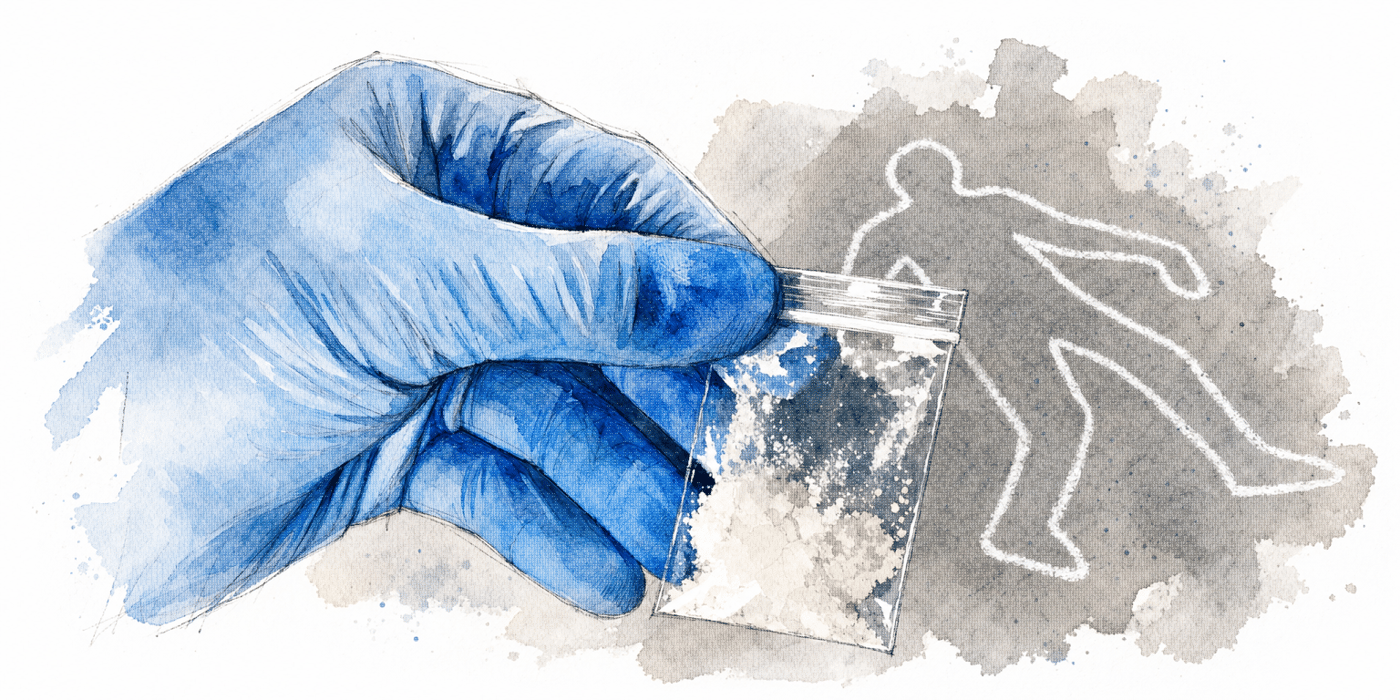

Back in January, our Emmy Griffin wrote about the “fentanyl drought” and concluded that she hoped it would continue. The good news: it has. And it’s nice that we can distribute credit rather than blame, as it can be shared among many factors.
But let’s begin with the root bad news. A 2025 study by researchers at Florida Atlantic University determined what they called “deaths of despair” — a term that includes “a constellation of 19 underlying causes which included: chronic hepatitis; liver fibrosis/cirrhosis; suicide/sequelae of suicide; poisoning (accidental or undetermined intent) or exposure to nonopioid analgesics, antipyretics, rheumatic, antiepileptic’s, sedative hypnotics, antiparkinson and psychotropic drugs; narcotics, psychodysleptics, drugs acting on the central nervous system; and alcohol” — had increased by two and a half times from 1999 to 2021, with a significant surge starting around 2014.
That era was when opioid abuse began entering the national discussion, with the declaration of a public health emergency coming in 2017 — a year after fentanyl became the leading cause of overdose deaths, eclipsing both deaths from heroin and prescription opioids. By 2022, KFF was reporting that 29% of those they surveyed were either addicted to opioids themselves or had a family member who was.
However, since that 2022 peak at 107,941 total overdose fatalities, that death toll has decreased — slowly at first in 2023, but with a rapid decline to under 80,000 by the end of 2024 and even fewer now. Just 66,712 year-over-year deaths were reported by the CDC at the end of March this year, the latest statistics available.
This is driven by the significant decrease in fentanyl deaths, and deaths from heroin overdoses have also plunged from their 2017 peak of 15,482 to just 2,743 in 2024. “I’m cautiously optimistic that this represents really a fundamental change in the arc of the overdose crisis,” Brandon Marshall, a researcher from Brown University, told AP reporter Mike Stobbe.
The credit can go to several sources, though. One team of researchers published in Science Magazine and cited by Mary Beth Sheridan at The Dialogue noted, “The DEA reported a decline in fentanyl purity throughout 2024. It appeared that fentanyl cooks in Mexico were finding it harder to get key ingredients for the opioid from China, the main producer of such precursor chemicals, the agency said. Mexican cartels are the main supplier of U.S. fentanyl. The U.S. researchers hypothesized that a Chinese government crackdown on precursors led to a huge fentanyl shortage.”
Researcher Jonathan Caulkins also noted that “actions by the two current U.S. and Mexico presidents didn’t cause the turnaround in the fentanyl crisis, which began before they took office. But their enforcement actions — and others in Canada — may have contributed to the supply disruption, and helped explain ‘why it has persisted longer than I thought it would have,’” he said. (“May have” my foot.)
And it appears that we are having success at both ends of the issue, as a second cause for the decline in fatalities would be the increased availability and use of Narcan, which quickly alleviates the effects of fentanyl. Credited with saving “many thousands” of lives, the product has become ubiquitous in its use by first responders and other medical teams.
Yet perhaps the most important factor has been the decline in demand.
“Sometimes an enforcement action yields benefits years after it occurs,” added Sheridan. “Starting in the 1990s, pharmaceutical companies introduced painkillers like OxyContin that addicted millions of Americans. When authorities tightened access to those pills a few years later, they inadvertently triggered a new round of the crisis, as desperate users turned to other opioids — first heroin, then fentanyl. But the stricter controls on prescription drugs ultimately had another effect. Many people didn’t even start using them, and so never got to fentanyl.”
While the trend has been encouraging, one controversy has arisen over the use of so-called “harm reduction” programs, which include the distribution of free needles and other drug paraphernalia. As the Science study concluded, “It may be wise to use the current drought as an opportunity to ramp up the prevention and treatment programs that have evidence of decreasing demand,” but the Trump administration would prefer to steer away from programs that promote drug use.
As Stobbe’s piece reveals, “In a letter last month, the federal Substance Abuse and Mental Health Services Administration notified federal grant recipients that the government would no longer pay for test strips and kits that help drug users see if their drugs contain highly-lethal additives. Officials say they are shifting away from services that facilitate illicit drug use, including clean syringes and hotlines that people can dial into while they use drugs.”
I seem to recall a time when the government gave us a simple message: just say no. And when there are private-sector, faith-based programs such as Narcotics Anonymous that provide help without resorting to the trap of “harm reduction” programs that facilitate continued substance abuse, it seems like solid advice to this day. The best harm reduction is getting people off the stuff so the number keeps falling to zero, where it belongs.