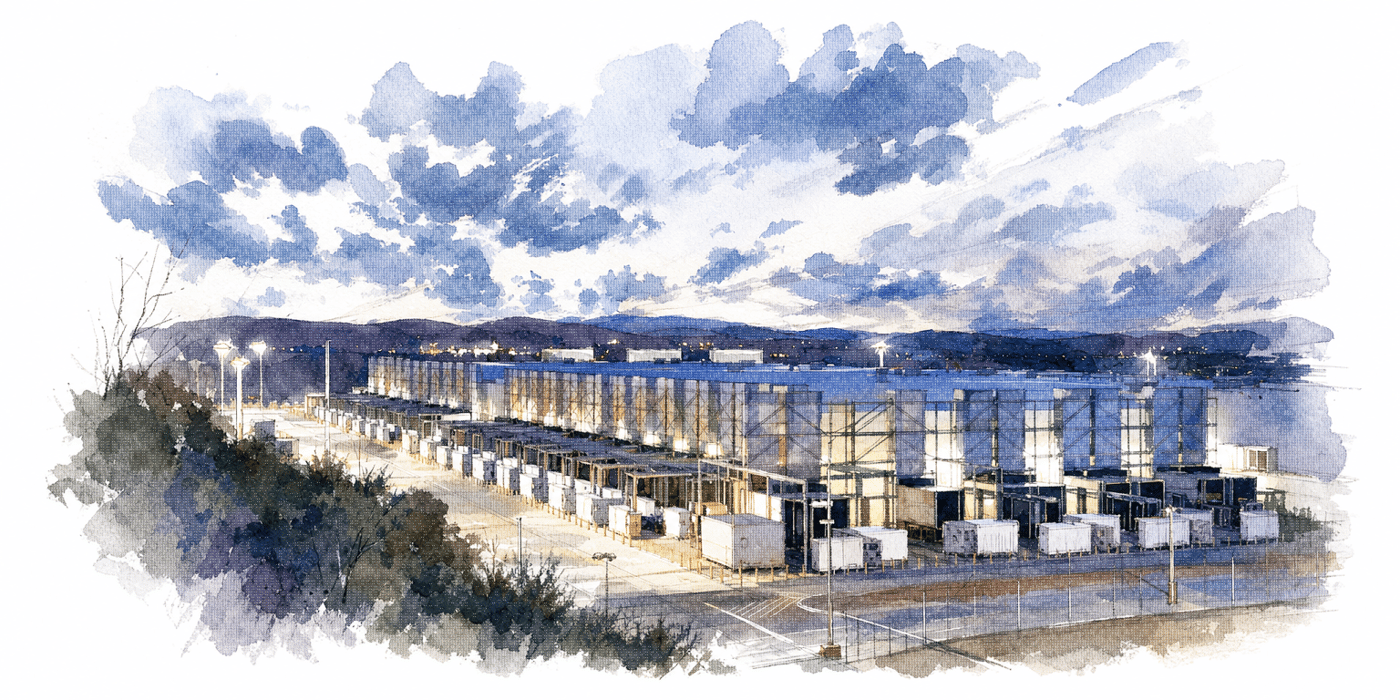

Data centers are becoming one of the most controversial developments in communities across America. As artificial intelligence expands, massive facilities are appearing in states across the country, raising concerns about electricity prices, water consumption, noise, and their impact on surrounding towns.
Some of those concerns are legitimate. But the answer cannot be to stop building data centers. The United States is competing for technological dominance in an industry that will increasingly shape everything from national defense to medicine. If America refuses to build the infrastructure necessary to support that technology, other countries will not make the same mistake.
Most importantly, China will not wait for us.
Data centers provide the computing power behind artificial intelligence and countless other technologies Americans increasingly rely upon. The servers in these facilities process enormous amounts of information, which naturally requires substantial amounts of electricity and generates significant heat. That creates real challenges for the communities where they are built.
Electricity is probably the most legitimate concern.
A massive data center suddenly connected to an already strained electrical grid can substantially increase demand. Particularly in smaller communities, that demand can put pressure on infrastructure never designed to support facilities that consume such enormous amounts of power.
But that is an argument for expanding energy production, not restricting technological development.
Companies building massive data centers should increasingly be expected and allowed to develop their own power generation and electrical infrastructure rather than simply placing the entire burden on existing consumers. If these companies can produce more of their own electricity, pressure on the public grid decreases. Additional power production could eventually increase the overall supply of electricity as well.
America’s electrical grid is already aging. Artificial intelligence is simply exposing a problem the country eventually would have needed to confront anyway.
Water presents another challenge. Data centers traditionally required substantial amounts of water to cool their servers. Critics therefore argue that allowing more facilities to open will place an unacceptable burden on local water supplies.
Again, the concern should not be dismissed so easily. But technology is already beginning to address it.
Newer cooling systems can recycle water rather than continuously consuming new supplies, while other technologies are reducing dependence on traditional evaporative cooling altogether. As data centers become more advanced, the amount of water required to operate them can continue to fall.
That is how technological development usually works. Early versions of new technologies are rarely as efficient as the systems that follow them. Preventing development because the technology is imperfect today can also prevent the innovations that solve those problems tomorrow.
There is also an economic side of the data-center boom that is frequently ignored.
Many facilities are being constructed in communities that have spent decades watching manufacturing jobs disappear overseas. Data centers can bring billions of dollars in investment, construction projects, engineering positions, technology jobs, additional property-tax revenue, and new demand for local businesses.
Communities should still have a significant voice over what gets built around them. Local governments are better positioned than Washington to determine whether a particular development makes sense for their residents. But there is a major difference between demanding responsible development and attempting to stop data-center construction altogether.
America does not have the luxury of abandoning this industry.
Artificial intelligence is becoming an economic and national-security competition. The country that controls the infrastructure behind it will possess an enormous advantage in the decades ahead. Data centers are the physical infrastructure making that revolution possible.
The solution is therefore not fewer data centers. It is better ones: facilities that produce more of their own electricity, recycle more water, minimize their impact on surrounding communities, and provide tangible economic benefits to nearby residents.
The concerns surrounding data centers deserve answers. They should not become an excuse for America to surrender its technological advantage.