
It’s no secret that the high fuel prices Americans are experiencing at the pump are tied to the current conflict with Iran.
Diesel prices have risen to over $6 a gallon, which will raise the cost of nearly everything else, especially groceries.
President Donald Trump recently chided Ukrainian President Volodymyr Zelensky over Ukraine striking numerous targets within Russia, including its energy resources. “Mr. Zelensky has to do one thing. He has to stop knocking out diesel fuel in Russia. Let him go after targets, but not diesel fuel, because he’s causing a shortage of diesel,” Trump argued. “This isn’t done by the Middle East. This is done by what’s happening with Russia and Ukraine.”
Trump is not entirely wrong. Russia’s war against Ukraine has certainly contributed to higher fuel prices. In fact, when you factor in inflation, diesel prices rose to $6.56 in 2022. As another example, in 2008, during the financial crisis, the price of diesel hit 4.74 a gallon, equivalent to $7.20 today. In other words, while diesel prices are nominally high today, they have effectively been higher in the past.
The trouble with Trump’s criticism is the fact that it was Russian President Vladimir Putin who started this war, not Ukraine. And it has been Putin’s refusal to back down from his aggression against Ukraine that has ensured that this war of attrition continues, which has cost hundreds of thousands of lives. Ukraine putting up a good fight is not the primary reason why diesel prices are high now.
The answer to that is Iran. In late February, before the joint U.S./Israel attacks against Iran, the average price of diesel was $3.76 a gallon. It is currently 60% higher. Fuel prices have jumped because shipping traffic through the Strait of Hormuz has dropped significantly.
It is not wrong to observe this reality. It’s simply a case of supply and demand. It’s also not wrong to observe that this is negatively impacting Americans’ bank accounts. Of course, this does not play well for the upcoming midterm elections, which is why Trump is seeking to deflect blame for the high diesel prices onto Ukraine.
Trump would be better advised to make his argument by leaning into the reality, which the 25th anniversary of 9/11 brought home, that Islamic terrorists cannot be allowed to gain access to a nuclear weapon, period.
Iran, the world’s leading sponsor of terrorism, has been working toward building a nuclear weapon for decades, and if the Islamic Republic radicals were ever to succeed in producing a nuclear weapon, they would use it in one of two ways.
Tehran would either use the threat to gain significant concessions from neighbors and the West, expanding the scope of its geopolitical power. Or the mullahs would actually use the weapon on their leading enemies, with Israel and the U.S. being at the top of the list.
This is exactly why Trump’s decision to attack Iran in an effort to ensure that it never acquires a nuclear weapon is worth supporting despite the higher fuel costs. This is a righteous cause, and while the current financial pain is indeed frustrating, Trump should be commended for his commitment to preventing Iran from getting a nuke.
Meanwhile, the Iranian regime, which has been as trustworthy as a snake oil salesman, has been actively looking to expand the scope of the conflict in a desperate bid to get Trump to commit ground troops to the fight.
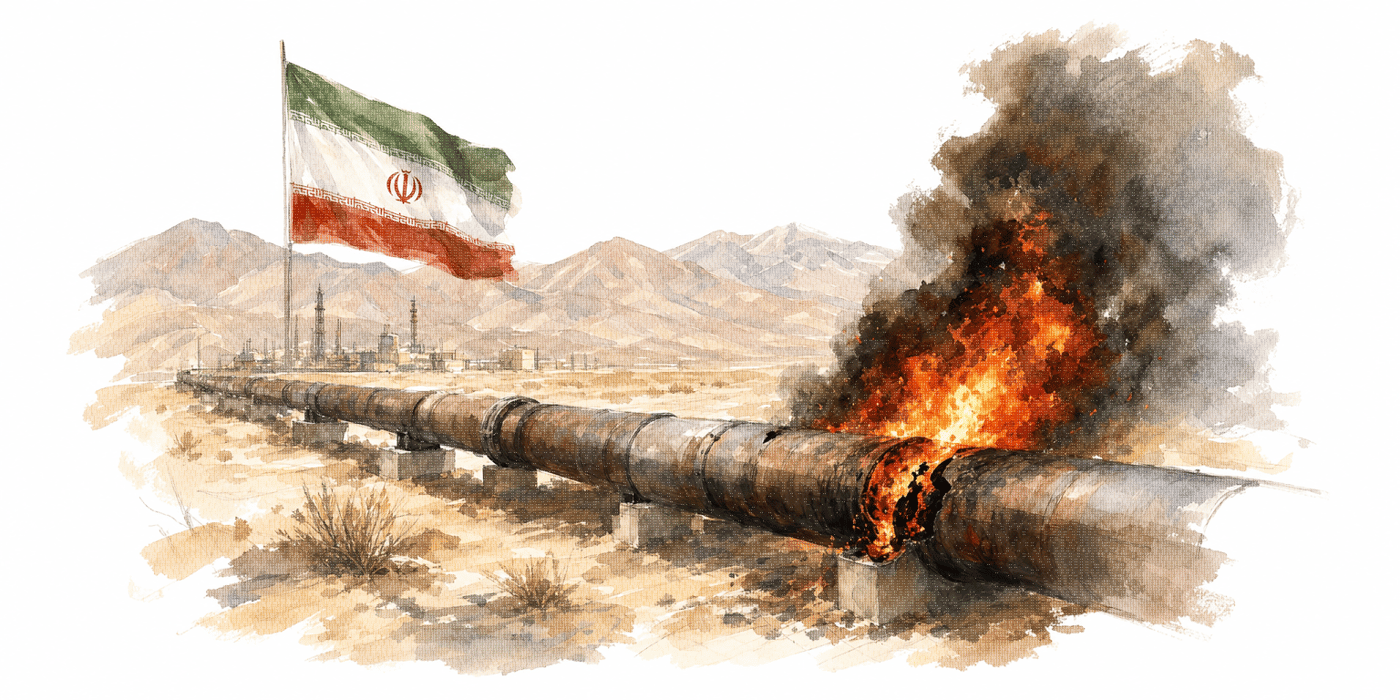
Last week’s attack on a major Saudi oil pipeline, which appears to be the work of Iranian-backed Houthi rebels, is the latest effort to escalate the conflict. Saudi Arabia has been using the pipeline to divert much of its crude oil away from the Persian Gulf and the Strait of Hormuz.
The Houthi rebels have pressed their efforts against Saudi Arabia, have sought to take greater control in the region, and have threatened shipping through the Red Sea.
Trump has proven to be incredibly patient, despite the aforementioned negative economic impact on the U.S., and that patience is proving to crush Iran economically.