
One of life’s harshest lessons is the never-ending regret for failure to prevent an avoidable tragedy.
For example, imagine driving your car down a country lane on a dazzling fall day, taking in the perfect fall colors on the hillside ahead — and then, in a life-changing moment, you hear and feel a sickening crunch. Instantly, you know what happened. That little girl who’d been happily riding her bike just seconds ago is now a motionless heap under your car.
You’re a careful driver; you were wide awake, driving well under the speed limit. That precious child, inattentive as children often are, probably just drifted into your path. But none of that matters. You will never erase that moment from your memory, and you will never forgive yourself for letting it happen.
Sure, I just made that up, but it’s a wholly plausible scenario — an understandable mistake with horrendous consequences and no chance for a do-over. With that in mind, let’s jump to another even more serious imaginary scenario.
Last Friday was the 25th anniversary of the 9/11/2001 terrorist attack, one of the most devastating events in American history. The day’s memorial services brought back painful memories of the 3,000 innocent victims, and they prompted, as they do every year at this time, the critically important question: How could we possibly have allowed it to happen? Surely we should have anticipated and prevented it.
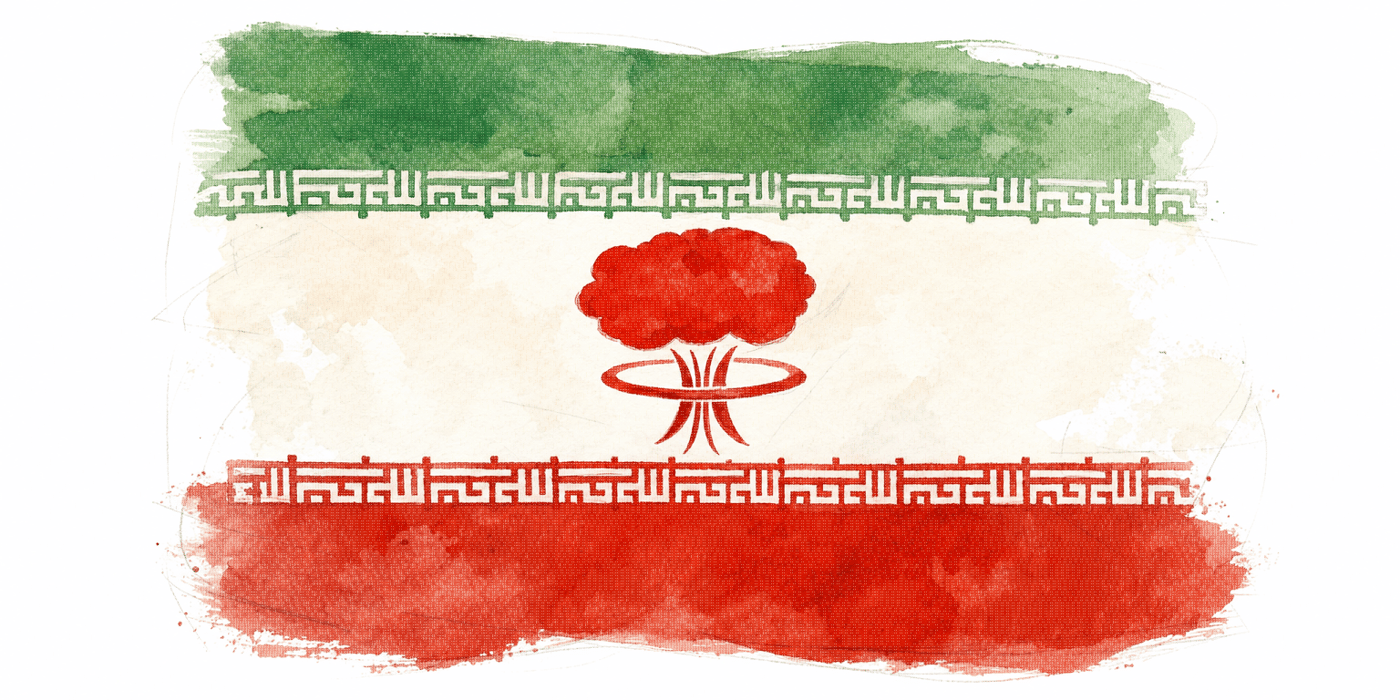
So today, instead of dwelling on what happened 25 years ago, let’s take a moment to visualize a potentially comparable scenario 25 years from now. Imagine yourself attending a memorial service commemorating the victims of a nuclear attack against our nation by a resurgent, nuclear-armed Iran.
It could happen anywhere, but for now let’s assume Ground Zero was downtown Baltimore, Maryland — destroyed by a single nuclear bomb acquired by the Iranians and secreted into the U.S. in one of the thousands of container ships that frequent Baltimore’s harbor.
We can assume that it was a one-shot attack and that our military would have responded with overwhelming force, erasing the Iranian threat once and for all. But the damage would have been done — our nation physically, emotionally, and economically wounded for decades to come.
Instead of thousands of victims, in this case we would be mourning the loss of millions — the immediate death toll unknowable because the nuclear blast would have incinerated and leveled much of downtown Baltimore, leaving no identifiable bodies to recover. Surrounding areas, while not as physically damaged, would be desolated as well, with swaths of largely uninhabitable, radiologically contaminated wasteland — a gaping hole in the American landscape.
It wouldn’t be a death blow — we are a resilient nation of nearly 350 million — but a wound more grievous than any in our history.
And back to the critical question: How did we let it happen? In this scenario, I’m assuming it would have been caused by our president, in the fall of 2026 — with midterm elections looming and under immense political and economic pressure — making a deal of some kind with Iran and backing away from the eight-month-long war that everybody hated.
How that would have played out in the subsequent midterms or in the 2028 presidential race is irrelevant. The only thing that mattered would have been the president’s catastrophic mistake of not finishing the job in Iran, leading to the horrendous consequences described above.
I don’t think President Donald Trump would do that, although it’s exactly what he’s been urged to do for months by the Left, by the financial markets, and even by some on the Right. We’ve been hearing their pitch, day in and day out, for months:
Trump’s war was a colossal mistake — reckless, illegal, a war of choice. And besides, we had to get gas prices back down. Americans care about affordability, not Iran.
Does that make any more sense in this scenario than it does in today’s real world? No.
Now, back to reality. The above, of course, is pure fantasy — but not too far-fetched. We don’t really know how close the Iranians were to acquiring a nuke, but we know they wanted one; we know there are tens of thousands of nuclear weapons around the world, many in the hands of nations hostile to the U.S.; and there’s no doubt that Iran would deploy a nuclear weapon against either Israel or the U.S. if given the opportunity.
Moreover, in many respects, my imaginary picture of a post-nuke U.S. is less extreme than the actual possibilities. After 80 years of managing to keep a global lid on the use of nuclear weapons, many believe that the next one used in anger will trigger salvos of others, with no end in sight. Would civilization survive?
And for context, if it hadn’t actually happened, who could imagine that in 1999–2000, more than a dozen international terrorists would be able to secure U.S. visas, enroll in airline flight schools, learn to fly commercial airliners, talk their way through airport security, hijack four U.S. airliners simultaneously, and fly three of them into vital targets — all as conceived by Osama bin Laden? Let’s face it: Effective security requires out-of-the-box thinking. We can’t afford to dismiss unlikely scenarios.
The enduring lessons of 9/11 remain: Never forget — and don’t let it happen again. And as far as midterm elections are concerned, affordability may be tops on voters’ minds, but it cannot be the number one priority for our elected leaders. Kudos to Trump for keeping his eye on the ball.