
Artificial intelligence has become one of the world’s most controversial technologies. Much of the public discussion focuses on the dangers: workers losing jobs, misinformation spreading, or machines becoming too powerful.
Those concerns deserve serious attention. But the debate is becoming so consumed by what AI could do wrong that Americans are overlooking what it could do right.
Nowhere is that potential greater than in education.
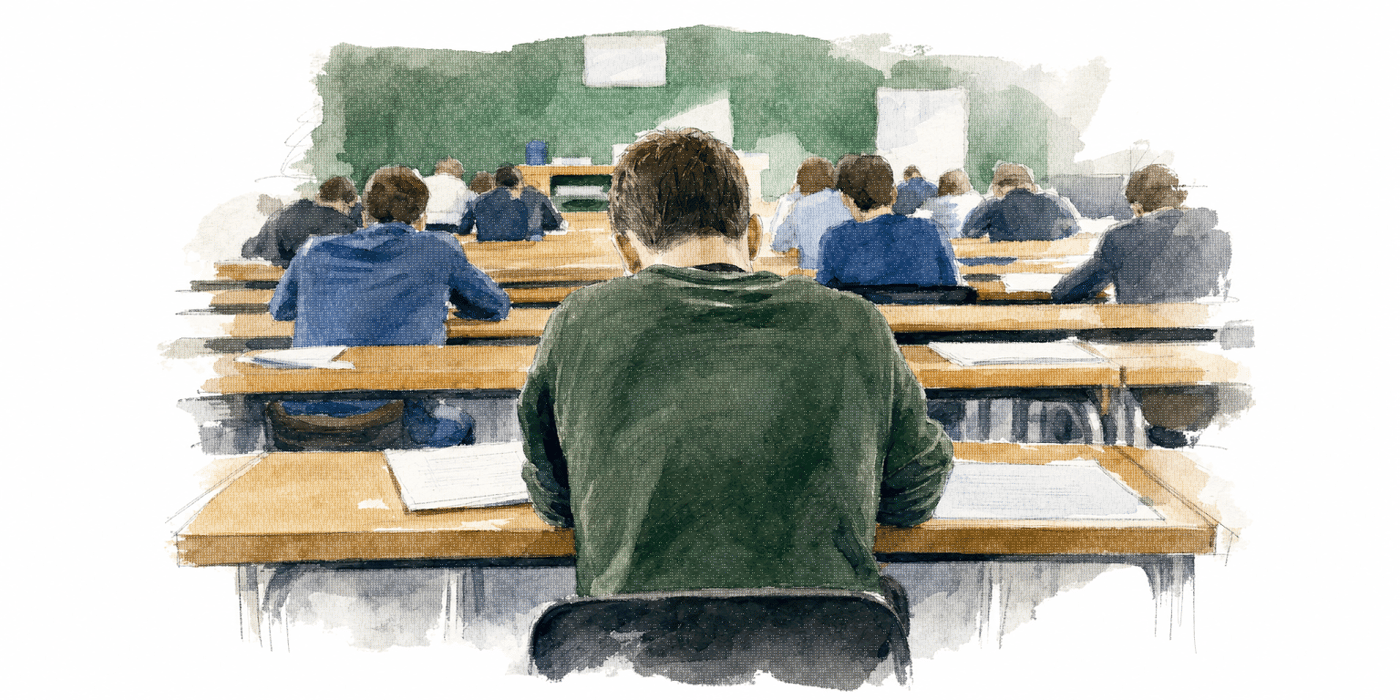
For generations, one of the largest inequalities in American education has had very little to do with what happens inside the classroom. Wealthier families could afford advantages that poorer families simply could not.
A struggling student from a wealthy family could hire a private tutor. A student preparing for the SAT could enroll in an expensive test-preparation program. Parents could pay for additional instruction, specialized courses, or hours of one-on-one academic help.
Artificial intelligence could make many of those advantages available to virtually everyone.
A student struggling with algebra can ask an AI tutor to explain the same problem five different ways until one finally makes sense. A student studying Latin can receive immediate explanations of grammar and vocabulary. Someone preparing for an exam can generate practice questions, review mistakes, and receive personalized explanations at any hour of the day.
For the first time, millions of students can access a private tutor on their computer or cell phone 24 hours a day.
The technology is not perfect, and students still need teachers. AI can make mistakes and can obviously be abused by students looking to avoid doing their own work. But misuse should not become an excuse to reject the technology itself.
Calculators can be used to avoid learning arithmetic, yet schools still teach students how to use calculators responsibly. The Internet can be used to plagiarize an essay, but nobody seriously argues that the world should lose access to the Internet.
The same principle should apply to artificial intelligence. Used properly, AI does not replace learning. It can make learning more individualized, accessible, and effective.
The irony is that many of the people who stand to benefit most from artificial intelligence are among those most skeptical of it. Gen Z has seen firsthand how much AI can expand access to education, information, and opportunity. Yet much of the political resistance to AI also comes from the Left, which constantly speaks about equal opportunity and economic inequality.
AI may be one of the greatest equalizers ever created.
At some point, we have to stop treating every disparity as something that can only be solved through government intervention while ignoring the tools already giving people greater control over their own success.
The same mistake is being made in the debate over jobs. Our grandparents had milkmen delivering bottles to their doors. Refrigerators helped eliminate much of that profession, but nobody today sees the refrigerator as a harmful invention simply because it displaced workers. It made everyday life easier, cheaper, and more efficient.
Technological progress has always replaced certain jobs while creating new opportunities and improving quality of life. AI will be no different.
That does not mean artificial intelligence should operate without limits. Broad safeguards are necessary to prevent genuinely dangerous or nefarious uses. But there is an enormous difference between establishing reasonable boundaries and restricting innovation simply because technological change creates uncertainty.
If those boundaries become too narrow, America will not make AI safer. We will make innovation harder and risk surrendering the opportunities AI could provide.