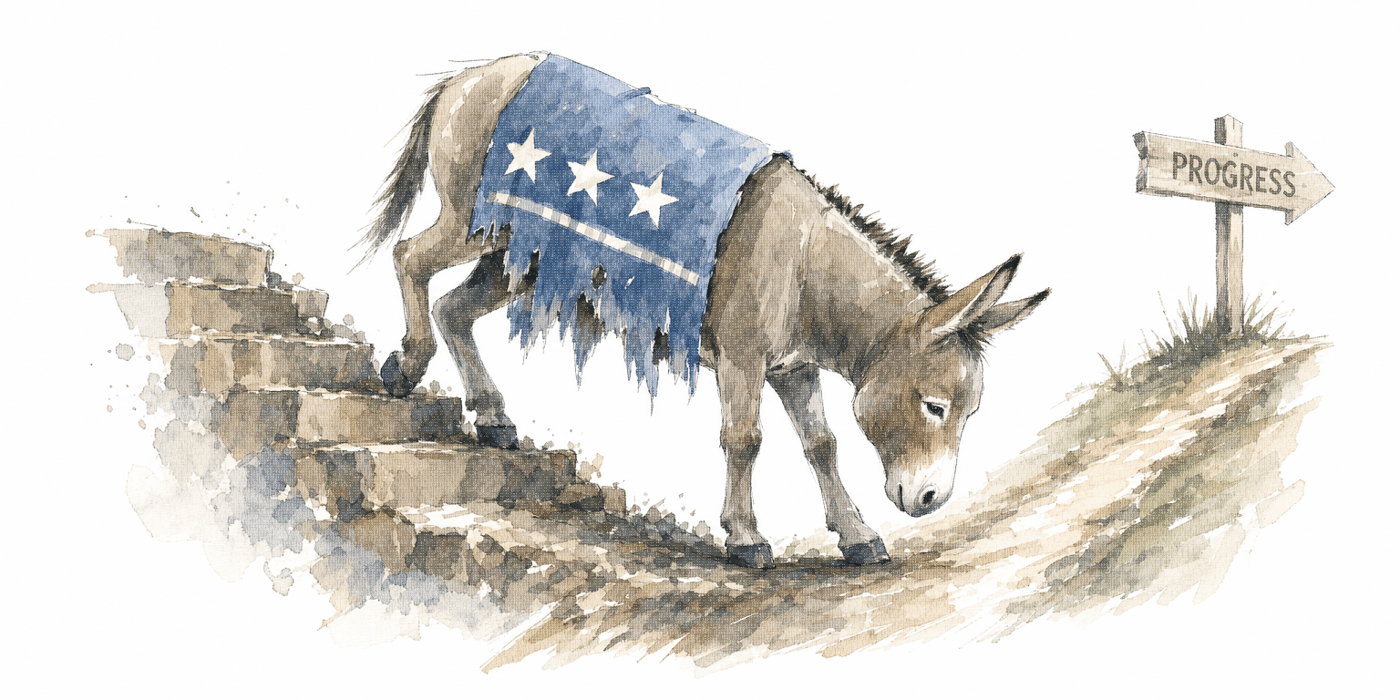

We all know how badly Republicans lost in Congress, but the damage extended to several states as well. New Democrat trifectas (State House, State Senate, Governor) are now in place in 28 states — a number that, come January, will include several “swing” states won by Donald Trump on his way to the White House, like Arizona, Michigan, Nevada, Pennsylvania, and Wisconsin.
“It is hard to overstate how massive of a political earthquake this was,” said Oscar De Los Santos, the incoming House speaker in Arizona. The 33-year-old hadn’t even been born when Democrats last controlled either portion of the state legislature, which occurred in 1990. (You have to reach back to 1966 for Arizona’s last Democrat trifecta.)
Democrats won on the same “affordability” message at the state level as they did for Congress. For example, The Washington Post boasts, “Leaders of new Democratic majorities say their primary focus is on making life more affordable.” But the Post’s very next sentence belies the Democrats’ real agenda: “Stronger protections for abortion rights, new gun regulations, safeguarded election procedures for 2028, funding for health care and rural hospitals, and the creation of independent redistricting commissions are on the table in various states.”
NPR added, “The shift could mean real change in people’s lives as legislatures rewrite laws on taxes, reproductive rights, access to health care, school funding and other issues. Legislatures have also been important in promoting or blocking President Trump’s agenda.”
In other words, Democrats don’t really care about affordability at all.
“Democrats say they know they’ve been elected to improve voters’ quality of life, and they may face the same verdict as Republicans in two years if they fail,” opined Scott Baldauf at the Christian Science Monitor. “Pocketbook issues such as high grocery bills and fuel costs were a major driver for voters across the United States, but there were other issues. In Arizona, Democrats rode to power promising to rein in school-voucher programs and tamp down rising utility bills. In Pennsylvania, they promised to increase funding for mass transit, raise the minimum wage, increase access to housing, and protect abortion rights. In Texas, Wisconsin, and Michigan, voters supported Democratic candidates who promised to regulate data centers.”
None of those peripheral issues will improve gas or grocery prices, but that wasn’t the real agenda anyway.
Meanwhile, Republicans have been rightly reminding people the overall economy is strong. However, “the discussion of Republican losses has become so focused on affordability that it overlooks an underlying problem within the Republican Party: messaging,” noted our Gregory Lyakhov. “The problem is that Americans do not experience the economy through employment reports or inflation statistics. They experience it when filling up their cars, paying their rent, or purchasing groceries. Even when prices rise more slowly, families still pay substantially more than they did several years ago.”
It’s easy to think inflation is still at 2022 levels, but back then, inflation increased while wages stayed stagnant. Now we’re slowing inflation down and catching wages up, but not quickly enough for voters.
So Republicans did what they do best: deflected blame. “Democrats benefited from a challenging national environment, strong voter engagement, and substantial financial resources, translating those advantages into gains across the country,” said Edith Jorge-Tuñón, president of the Republican State Leadership Committee, in a statement. “Following historic gains in 2024, Republicans entered the cycle defending significant ground in many competitive races. Our candidates faced considerable headwinds, combating a negative federal narrative and a spending disadvantage as Democrat-aligned organizations poured unprecedented resources into state legislative contests. The results reflected a broader voter backlash against the federal administration’s messaging and national political dissatisfaction, rather than a rejection of conservative policies or Republican-led governance.”
Spin it all you want, Edith, but the fact is that Republicans failed to convince their voters to come out, or, worse, drove the voters they newly won in 2024 back to the Democrats through their inaction.
However, before bringing data center construction to a grinding halt and ceding the field to China, allowing abortions to practically full-term, or trying to restrict gun owners even further with onerous regulations and fees, the first item on the Democrats’ agenda likely will affect the 2028 presidential election. “I am confident we have multiple paths to secure the 48 electoral votes required to deliver what 63% of Americans want,” National Popular Vote’s Patrick Rosenstiel told Fox News about the Left’s plan to undermine the Constitution’s Electoral College. With the other election “reforms” the Democrats want, like same-day registration, removal of voter ID, and mail-in balloting, Republicans will need to push for massive turnout to win the popular vote — then watch Democrat states squirm as they have to fulfill the compact. (Wanna bet they’ll find an out?)
One criticism frequently leveled at Republicans is that they feel comfortable as a minority and don’t know how to govern. The GOP can now complain all they want, but Democrats are extremely good at exerting and consolidating power — just visit any long-term “blue” state like California, Illinois, Maryland, or New York to see what they’re capable of.
“Affordability” was just the smoke screen for Democrats, and several other states are going to find out why people left the longstanding left-wing strongholds in droves. As H.L. Mencken once said, “Democracy is the theory that the common people know what they want, and deserve to get it good and hard.”
Those of us who fight the power in blue states already know how Democrats operate, but many more are about to find out.