
One of the oldest negotiation tactics in the book is to ask for an excessive amount and then have the opposing side negotiate, forcing you to settle for something less, when actually that was your target all along.
It has never been more famous a calling card than it has been for President Donald Trump.
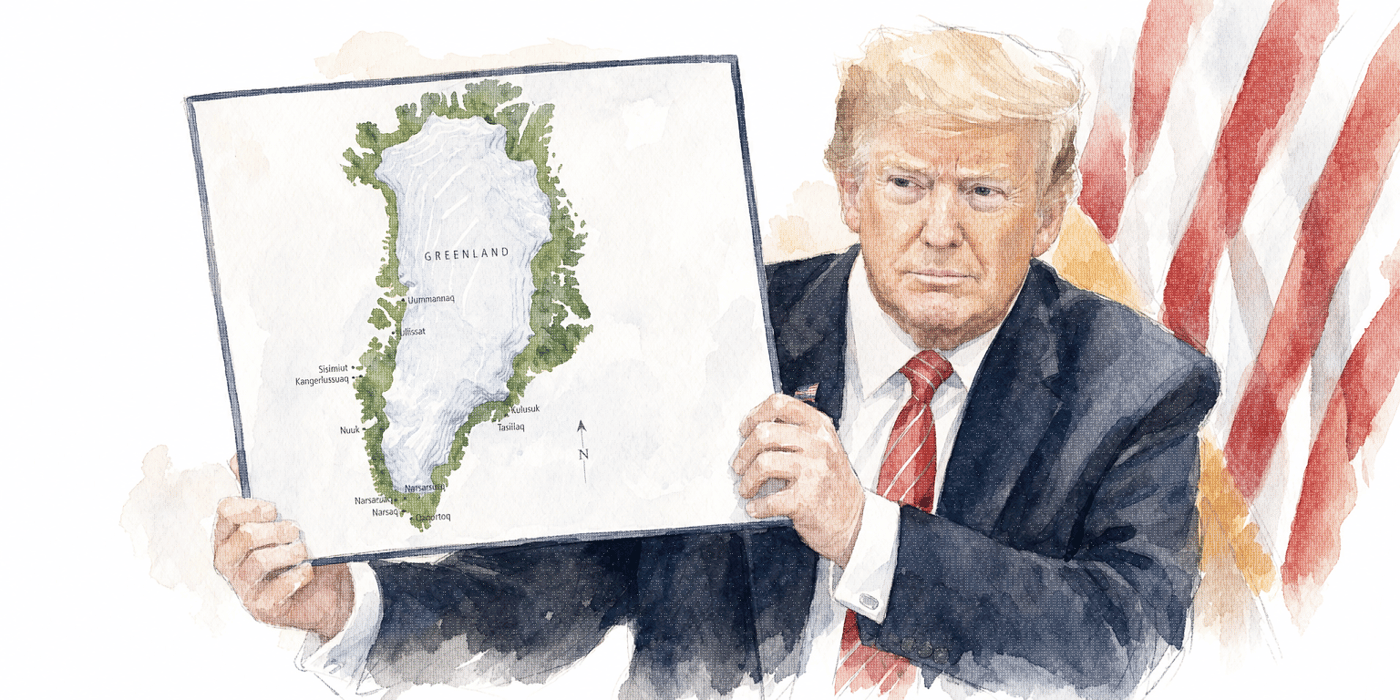
Since his first term, Trump has flirted with the idea of acquiring Greenland, the world’s largest island, from its current owner, Denmark. His reasoning was fairly sound.
Strategically, Greenland sits close to the U.S. and makes up the right brim of the geographical hat above us, alongside Canada and Alaska. It is also one of the last areas in our half of the world controlled by a European power. Its proximity to Russia and China makes it a major factor in the race for world supremacy.
Economically, the island is a potential gold mine. It currently relies on over a billion dollars of subsidies from the Danish government, but its large mass of untapped mineral resources could even threaten China’s stranglehold on the rare-earth mining and refining industries. Its Arctic location may present a valuable opportunity, as melting ice caps provide new trade routes between Europe, Asia, and North America. Add this on top of Greenland’s growing fishing and tourism industries, and you have a staggering possibility on the cards for both American and Greenlandic businesses.
But naturally, in today’s political landscape, Denmark and Greenland were not happy about these prospects. Neither was the rest of Europe, but could you really blame them? They have been conditioned to gag at the slightest hint of imperialistic tendencies ever since 1945. That’s understandable given the trauma the World Wars inflicted on the continent.
Obviously, we shouldn’t invade the sovereign territory of another ally, but in communicating that he thought about doing so, Trump indicated that Greenland needed to be, at the very least, under U.S. protection. Chinese foreign investment in the territory had skyrocketed, with hundreds of millions of dollars invested in Greenlandic infrastructure. At one point, Chinese investments totaled as high as 11% of Greenland’s entire GDP. Furthermore, the U.S. maintains one critical Space Force base in northern Greenland, which helps shield much of the continent from missile attacks. Allowing China into the Greenland equation could be a grave mistake.
So once again, Trump went back to his bread and butter. He made a deal.
While the deal itself has yet to be released, it promises to be beneficial to both sides. The Americans benefit because China and Russia are getting cut out of the Greenlandic economy. It seeks to build on the previous defense agreement from 1951 and would continue on in the event of Greenlandic independence. The president made it very clear:
The United States will FOREVER have the complete ability to do what is necessary in Greenland in order to secure and defend the security of Greenland, and the United States of America. Additionally, from now on, no U.S. adversary can EVER have a base in Greenland, have a military presence in Greenland, or make sensitive investments in Greenland, without our express written approval.
On the flip side, Greenland can now pursue any and all American investment opportunities without threat of annexation. The territory can finally become profitable and help stimulate both the local island economy and the broader Danish economy.
Denmark itself will see this as a massive win. In the public eye, it stood up to Trump’s “imperialist tendencies” and became the level head that prevailed here. The White House will have no issue letting Denmark run with that narrative, as it makes little difference.
But most importantly, a deal like this eases Greenland’s and Denmark’s anxieties about cooperating with U.S. businesses and the military. Fears about Trump’s threats to annex Greenland have left the Danish apprehensive about engaging with American economic opportunities, as they didn’t want to encourage said threats. However, a deal that effectively recognizes Greenland’s current status will improve attitudes toward American investment.
Central to all of this is maintaining and expanding military activity in the area. If the Arctic becomes a profitable area of interest for the world’s major powers, the U.S. can’t afford to be left behind here.
In conclusion, Trump’s deal with Denmark is a win-win scenario and a major step toward shoring up American security interests up north.