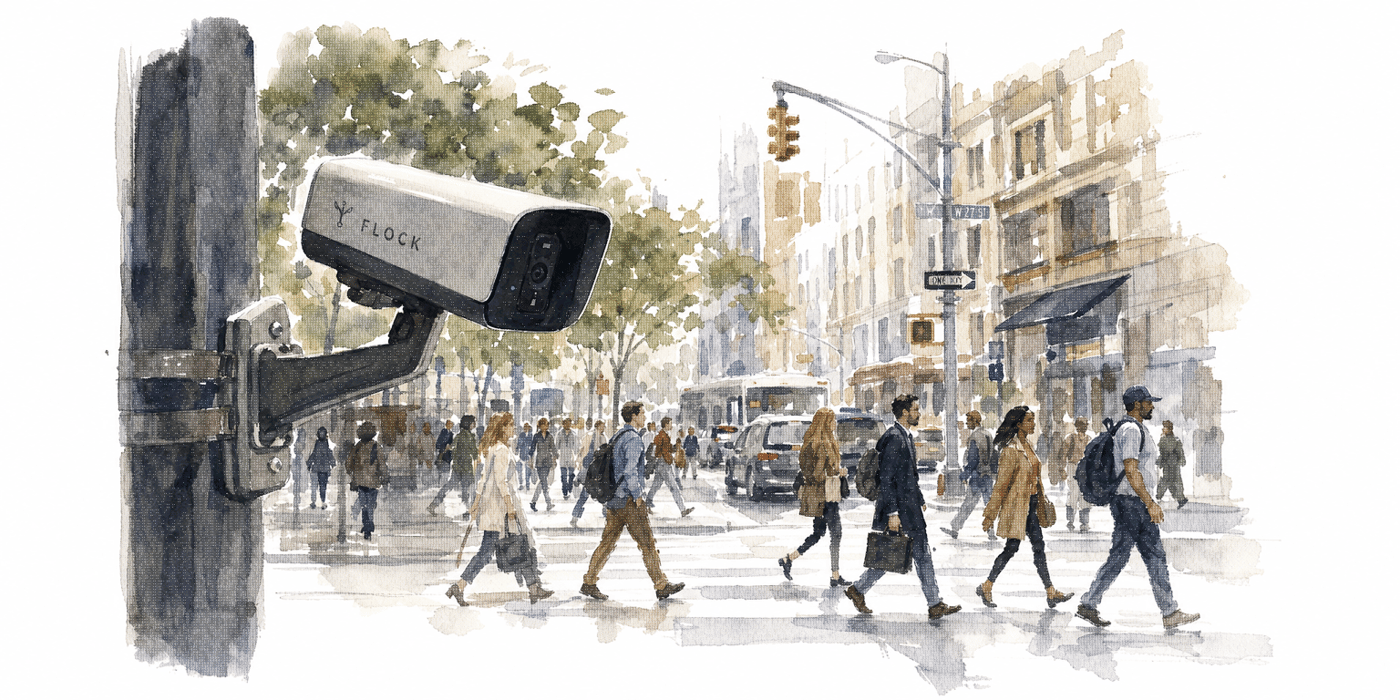

If there’s one thing that both sides of the political aisle can agree on, it’s that everyone loves their privacy. Now, there are different ways to interpret that, but the fact remains: No one likes feeling watched. It’s a human instinct that helps us sense danger.
That is why it baffles me that the camera makers at Flock Safety thought they could curry favor with the public. A notable characteristic of the American population is that they are not exactly fans of widespread government surveillance. Sure, we are being watched by our phones, computers, or cars, but most people see it as a necessary evil that they have consented to, unlike AI-guided public plate readers such as Flock.
The Fourth Amendment protects the people “against unreasonable searches and seizures,” and many people argue that cameras that can virtually track your every move from the second you leave your house until the moment you return are blatantly unconstitutional. Others argue that you have no expectation of privacy in public places like roads or store parking lots.
Flock cameras aren’t without positives. Police use them to prevent and solve crimes such as robberies, murders, and kidnappings.
But we’ve also seen this technology misidentify people in some very serious cases. For example, one woman was arrested and held in jail for nearly two weeks, including 86 hours in solitary confinement, for a crime she did not commit — all because a Flock camera mistakenly flagged her.
Typically, if a human makes a mistake in an arrest, the officer can acknowledge it, and everyone can move on. Flock’s AI, however, will believe that it is 100% correct about everything. Do we really want to give artificial intelligence the power to change an innocent life for the worse, perhaps forever?
The aforementioned woman testified at a Senate hearing chaired by Republican Josh Hawley and Democrat Dick Durbin, two who don’t agree on most other issues. The hearing served as a public shaming of sorts of Flock Safety and its supporters, and the criticisms are well founded. Mountains of evidence show that this technology has unlawfully searched and seized entire livelihoods based on constant location tracking.
There have also been numerous cases of stalking that have been rooted in Flock cameras. At least 50 cops have been arrested for tracking persons of personal interest who had not broken the law.
Hawley himself put it best: “If you haven’t heard of Flock, all I have to say is Flock’s probably heard of you.”
Furthermore, Hawley and Durbin invited the CEOs of Flock Safety, Axon Enterprise, Motorola Solutions, and Verkada to testify about and defend their license reading technology. None of them turned up for the hearing.
No wonder the current Flock ownership is attempting to sell the company. The best value you are going to get for it might be now.
It seems that Flock has finally given up attempting to be popular and is now looking for ways to survive. The company will still have some support from the local police and some members of the Trump administration as it cracks down on crime. But if Flock or similar companies ever thought that there is or will be any public support for AI surveillance of any kind, then they are sorely mistaken.
So, what happens to this technology going forward? Again, there are benefits. In some places, it has become a vital tool for law enforcement to clean up the streets and catch criminals much sooner than they otherwise would. Even some of the biggest Flock adversaries have acknowledged that. However, those who testified in the Senate hearing proposed strict guardrails, such as requiring warrants to search certain things or imposing rules on information retention and access.
The opposition will want to eliminate the technology, and I can’t say I don’t understand their sentiment. What nobody wants to happen is for us to accidentally foster a Big Brother-esque surveillance state. However, even valid criticism shouldn’t lead us to destroy these cameras, as some arsonists have done before. This movement should find legal ways to fight.
All this to say, Flock cameras have done both good and harm. The public is generally annoyed or even infuriated by Flock’s attempts to push these cameras into their lives. Clearly, something must change. The remaining question is, to what extent?