
A contradiction in modern progressive activism is becoming utterly baffling. Some of the people most vocal about women’s autonomy and LGBTQ rights are also now the most eager to defend radical Islamist movements whose values directly conflict with both.
In America, feminist and LGBTQ activists describe bodily autonomy, equality, sexual freedom, and the right to live openly as nonnegotiable. They regularly carry out entire protests based on their belief that those freedoms are under threat in the U.S., framing their activism as a fight against oppression and erosion of fundamental rights.
This makes the embrace of radical Islam particularly difficult to reconcile.
The same activists who insist women must control their own bodies, clothing, education, and relationships — and that LGBTQ people must be free to love and live openly — are now actively rooting for religious and political systems where those very freedoms are severely restricted. And you don’t have to imagine what that looks like: countless women and LGBTQ people are living under those laws right now.
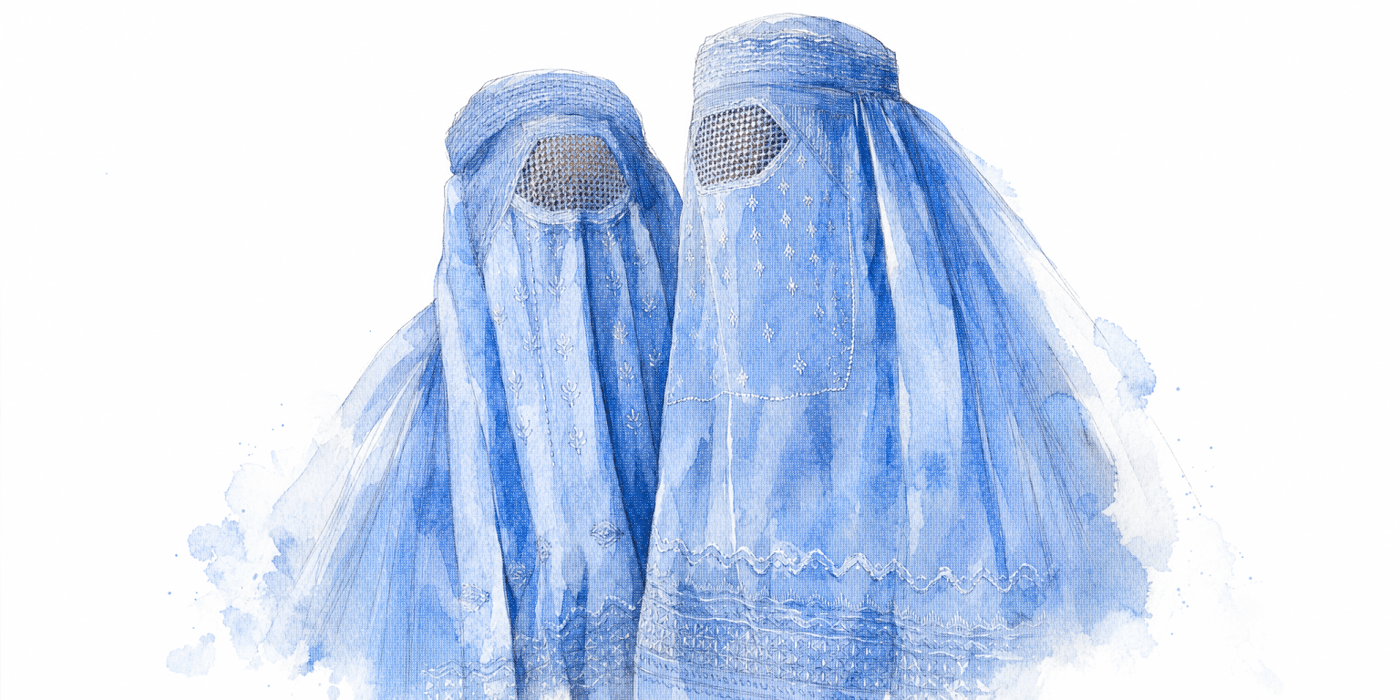
In Afghanistan, girls have been prohibited from attending school beyond sixth grade. By the end of 2025, UNICEF estimated that more than 2.2 million adolescent girls would be excluded from education. The Taliban also extended restrictions into medical education, further limiting women’s ability to become nurses and other healthcare professionals.
UNICEF’s Catherine Russell described this dark reality bluntly: “While millions of children around the world return to classrooms for the new academic year this month, Afghanistan’s girls are denied this fundamental right. It is one of the defining injustices of our time.”
And losing access to an education doesn’t just take away a girl’s future in the classroom — it can determine the course of the rest of her life.
Child marriage remains another enormous problem. UNICEF reports that roughly 29% of Afghan women ages 20-24 were married before turning 18, and has warned that depriving girls of education increases their risk of being forced into marriage as a minor.
Iran provides an equally uncomfortable comparison.
Iranian law allows girls to marry at 13 — and as young as nine with judicial approval. A married woman can be prevented from obtaining a passport or traveling abroad without her husband’s permission. Male heirs generally receive twice the inheritance of female heirs, and under Iranian law, a woman’s testimony is worth half that of a man’s.
Then came the “Woman, Life, Freedom” uprising.
After 22-year-old Mahsa Amini died in custody following her arrest by Iran’s morality police over her hijab, outrage quickly spread across the country. As Yousef Azizi wrote in The Arab Weekly, “Her death sparked widespread outrage, particularly among women and girls, which soon spread to broad sections of men and young people across the country.”
For these women, oppression wasn’t a political talking point — it was their daily reality. Unlike women in the West, who can protest in the afternoon and still be home in time for Desperate Housewives by dinner, an Iranian woman taking to the streets risks imprisonment, torture, or even death.
And when even those consequences aren’t enough to stop Iranian women, it tells you just how dark their reality must be. By contrast, it’s hard to imagine many Western women protesting at the risk of losing their favorite latte — never mind losing their lives.
Iranian security forces responded to the women’s public demonstrations with extraordinary brutality. The UN cited credible reports that more than 550 protesters were killed, including at least 68 children. Amnesty documented widespread torture, sexual violence, and tens of thousands of arbitrary arrests.
More recently, Iranian opposition media reported that nurses who treated wounded protesters were arrested, tortured, and sexually assaulted. According to accounts from people close to the situation, one nurse was left in such severe psychological distress after the ordeal that she reportedly asked doctors not to save her life.
And the clash between the freedoms Western activists champion and the reality under these systems doesn’t end with women’s rights.
LGBTQ rights present an equally difficult contradiction.
Iranian law criminalizes same-sex sexual conduct; male same-sex conduct can carry the death penalty, while other same-sex conduct can be punished by flogging.
And the problem extends beyond Iran. Amnesty International reports that same-sex relationships between men are criminalized in Gaza, carrying up to 10 years in prison, with no legal protections against anti-LGBT discrimination or harassment — which sits uneasily beside the strong support the Palestinian cause has received from irrational Western LGBTQ activists.
Ironically, persecution has driven some LGBTQ Palestinians to flee to Israel for safety — the very country some pro-Palestinian LGBTQ activists portray as the greater threat. Queer Majority points to the case of 25-year-old gay Palestinian Ahmad Abu Marhia, who had sought refuge in Israel before being kidnapped and taken back to the West Bank, where he was “beheaded in the West Bank city of Hebron.” Footage of his killing was then proudly uploaded to social media by those who had carried out his death sentence.
Yet in Western cities, we regularly see banners proclaiming “Queers for Palestine” and similar alliances between progressive activists and deeply conservative Islamic movements — even as these same activists call for the elimination of Israel, the country with the most developed protections for LGBTQ people in the Middle East.
Activists’ reluctance to acknowledge the ideological collision staring them in the face might be amusing if it weren’t so absurd — and potentially dangerous when those alliances begin shaping American politics.
The question is, what is at the root of their support for cultures that fundamentally oppose their very existence?
One is the modern “oppressor versus oppressed” worldview: once a group is classified as marginalized, Western activists instinctively identify with it, even when that group’s cultural or religious values directly contradict progressive ones.
Reason’s Billy Binion describes how that thinking can produce some strange ideological alliances:
At the heart of this contradiction is the tendency within social justice movements to pick a clear protagonist and antagonist, the oppressed and the oppressor, and to proceed from there in one-size-fits-all fashion. Some progressives decided long ago that Palestine is the former and Israel is the latter, which is the seed from which everything must grow. Palestine, then, stands not only for anti-colonialism but also LGBT rights and reproductive rights, despite that those rights, in any meaningful sense of the word, do not actually exist there.
Another possibility is that many activists are encountering a distinctly Western, progressive interpretation of Islam — one emphasizing inclusion, equality, and tolerance while rejecting or reinterpreting traditional teachings on gender and sexuality.
Yes, moderate, reformist, and LGBTQ Muslims exist. Islam encompasses nearly two billion people, countless cultures, and widely differing interpretations — so it is unfair to assume that every Muslim wants an Iranian or Taliban-style government.
But it would be equally naive to assume that the Islamists seeking political power in America share that progressive interpretation. Any candidate with a background in a culture based on severe restrictions on women’s overall humanity, the very existence of LGBTQ individuals, and an overall hatred of America itself should be judged by their refusal to condemn the inhumane practices of its extremists rather than the softer version of Islam that Western activists point to to justify their support.
Liberal activists can’t reasonably defend Islamist candidates or groups that proudly hate liberal causes and people.
That inconsistency — to put it mildly — deserves scrutiny.
They need to understand that the freedoms that allow American women and LGBTQ people to reject traditional roles, criticize religion, choose how they dress, and openly live as they please are not universal. They exist because American law protects individual liberty — including the freedom to criticize America itself.
But anyone embracing political Islam while assuming its most oppressive and inhumane doctrines could never reach them should listen to the women fighting those exact doctrines in Iran and Afghanistan.
There, they aren’t fighting over language, cultural offenses, or pronouns. They’re risking death to be seen as human and control their own futures.
Left-wing activists are free to argue that America still falls short. But they should be careful not to champion political systems that would strip away everything they criticize America for failing to protect.