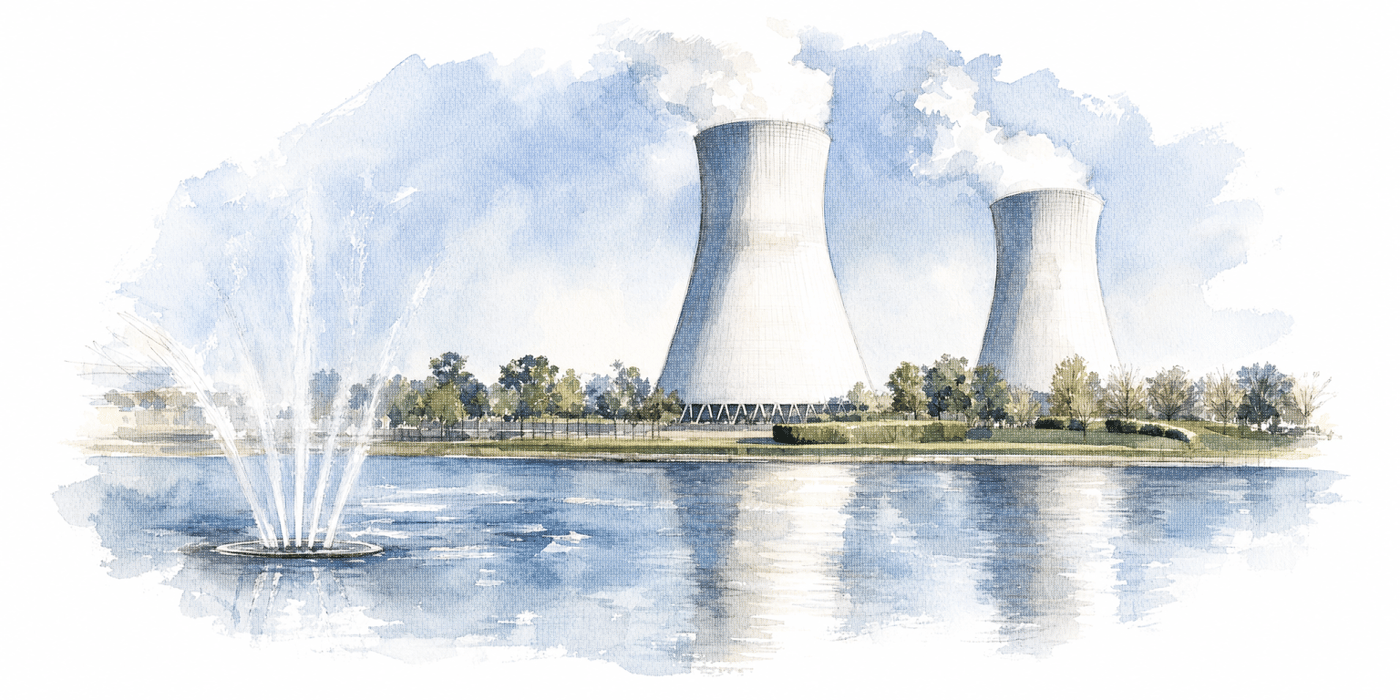

For decades, nuclear power has occupied a strange place in American politics. Environmentalists who demand an end to fossil fuels have often resisted one of the largest sources of low-carbon electricity available, while many conservatives have historically treated nuclear power with skepticism because of its cost, regulation, and perceived danger.
That alignment is beginning to change.
President Donald Trump has made expanding nuclear power a significant part of his energy agenda. Last year, he signed executive orders directing the Nuclear Regulatory Commission to streamline licensing, establish deadlines for applications, and reduce regulatory barriers to new reactors. His administration has set a goal of expanding American nuclear capacity from roughly 100 gigawatts in 2024 to 400 gigawatts by 2050.
I am not a nuclear scientist, and I do not pretend to know whether nuclear power should become America’s dominant energy source. Nuclear plants remain extraordinarily expensive to construct, nuclear waste presents legitimate challenges, and when nuclear accidents occur, the consequences can be catastrophic.
But the debate over nuclear power demonstrates a broader problem: Government cannot regulate every conceivable risk out of existence without imposing costs of its own.
Consider the Shoreham Nuclear Power Plant on Long Island. Construction began in the 1970s, and the plant was essentially complete by 1983. But state and local officials argued that Long Island could not be adequately evacuated in the event of a serious accident. The dispute over an emergency evacuation plan became the primary obstacle preventing Shoreham from operating at full power.
By the end, the plant had cost roughly $5.5 billion to $6 billion and never generated electricity commercially. Much of that cost ultimately fell on Long Island ratepayers, who were saddled with years of additional charges. A New York State audit later noted that Shoreham contributed significantly to Long Islanders paying among the highest utility rates in the country.
That does not mean officials were irrational to consider evacuation. The government has an obvious responsibility to protect people from genuine dangers. But risk must be measured against reality, not fear.
Chernobyl understandably transformed the public perception of nuclear power. It was a genuine catastrophe. Yet it also involved a Soviet reactor design, operating practices, and safety failures fundamentally different from modern American nuclear facilities.
Even the health effects of Chernobyl are often misunderstood. The World Health Organization reports that among roughly 530,000 recovery workers, the average radiation dose was about 120 millisieverts. For comparison, the CDC says acute radiation sickness generally requires a whole-body dose of roughly 700 to 1,000 millisieverts delivered over a very short period, although mild symptoms can begin at lower levels.
A dose of about 4,000 millisieverts received at once is enough to kill roughly half of those exposed. In other words, the average Chernobyl recovery worker received only a fraction of the radiation associated with acute radiation sickness, while most surrounding residents received far less.
Measured across the electricity it produces, nuclear power is among the safest energy sources available. Estimates compiled by Our World in Data find nuclear dramatically safer than coal, oil, and natural gas when you account for deaths from accidents and air pollution. Its safety record is roughly comparable to wind and solar.
None of that makes nuclear power risk-free. Nothing is.
We accept risk every day because eliminating risk entirely would make modern life impossible. Americans drive cars despite tens of thousands of traffic deaths each year. We build bridges, pipelines, factories, airports, and power plants knowing that something can go wrong.
The proper question is whether the benefits justify the risks and whether those risks can reasonably be managed.
Nuclear power should face serious safety standards. But there is a difference between regulation designed around realistic dangers and regulation driven by the assumption that any risk is unacceptable.
If a community does not want a nuclear reactor, it does not have to build one. But that decision should belong to the people who actually live there, not to Washington regulators who effectively decide in advance that nuclear power is too dangerous for anyone. There is a difference between setting reasonable safety standards and making an entire source of energy nearly impossible to build because of a worst-case scenario that modern technology has made increasingly unlikely.
America needs enormous amounts of reliable electricity, particularly as artificial intelligence, manufacturing, and data centers increase demand. Nuclear may be part of that answer. The government should at least allow Americans to find out.