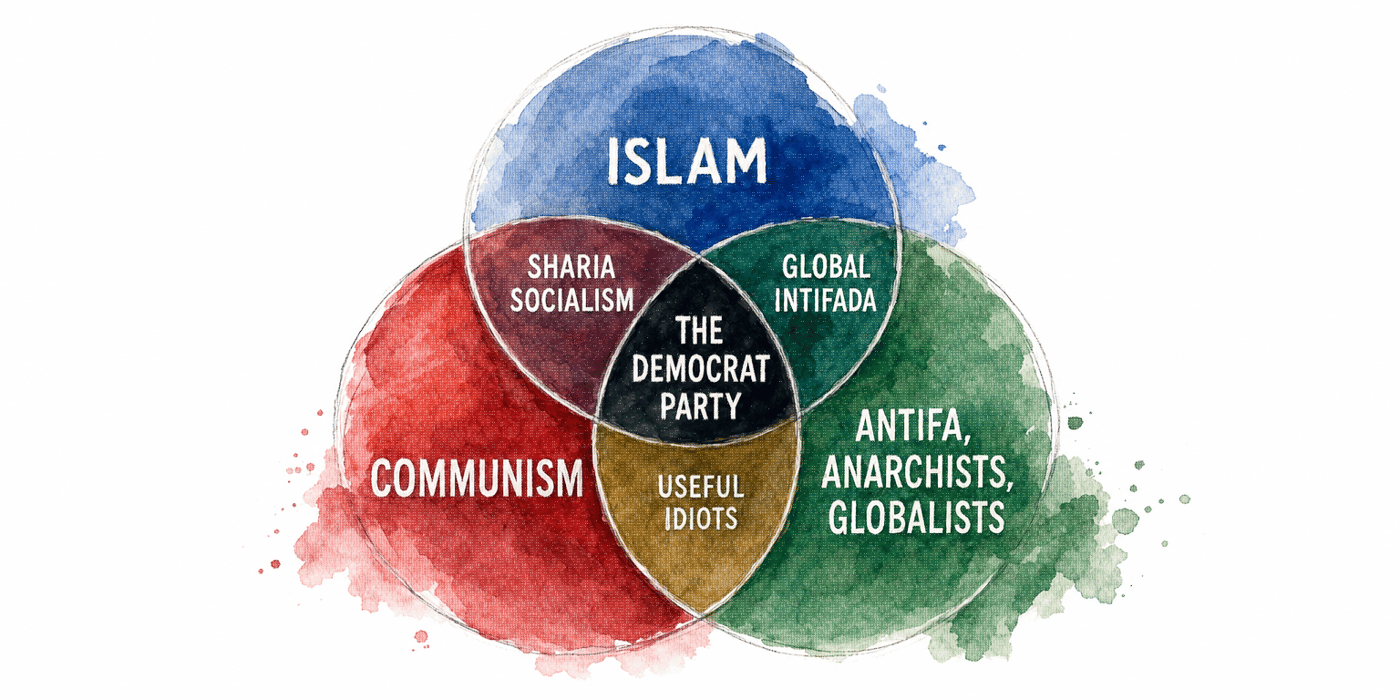

Young people are generally supposed to be open-minded and willing to consider different ideas and perspectives as they navigate their way through life.
But these qualities can leave them susceptible to manipulation by those more interested in power than in sharing wisdom with our next generation of leaders. Coupled with Gen Z’s deficit of knowledge in history and politics, it’s no wonder some groups see an opening to push their agenda on impressionable minds.
Take Sharia Law. Two polls published this week, one by Our Republic and another by Rasmussen, show four in 10 young Americans supporting it.
Sharia is a system of Islamic religious law and moral guidance based on the Quran and governing public and private conduct, including marriage, inheritance, daily worship, ethics, social interactions, finance, and even civil and criminal matters.
That doesn’t sound too bad on the surface. After all, all societies have laws governing these matters. But taking off the veil of sharia reveals a more sinister objective.
“Sharia is the Islamic practice of ruling by an iron Muslim fist — that is, of requiring all to bow down and obey the strict religious-slash-political orders of the carefully selected few,” writes Cheryl Chumley at The Washington Times. “It’s the law that says women can’t drive or show their faces or hands or legs or any skin whatsoever in public. It’s the Islamic belief that anyone outside the Muslim faith is an infidel and must either convert, or die, or in some cases, pay a tax — a jizya. It’s the Muslim practice of cutting off the hands of thieves and marrying off little girls to older men and teaching the next generation about the evils of the West, of Israel, of America, and training that terrorists, err, the faithful, who die during the cause of bombing infidels go to heaven and have lots of virgins.”
Young people tend to be more skeptical of authority and tradition, which likely accounts for sharia’s higher approval numbers in polling data among those in their teens and twenties rather than a blanket approval of sharia itself. Still, the data is concerning.
According to One Republic, “21% of likely voters said they have a mostly or somewhat positive opinion of sharia, compared with 57% who have a negative opinion. Positive views were much higher among younger Americans, including 43% of voters ages 18-21 and 39% of those ages 25-29.”
Interestingly, the same age group has a negative view of Christianity.
A study by the Barna organization reveals, “Among young non-Christians, nine out of the top 12 perceptions were negative. Common negative perceptions include that present-day Christianity is judgmental (87%), hypocritical (85%), old-fashioned (78%), and too involved in politics (75%) — representing large proportions of young outsiders who attach these negative labels to Christians.”
If there’s a silver lining in the troubling numbers, Rasmussen reports, “83% of all Likely Voters oppose allowing sharia to become the legal code for everyone in an American town, city, or state, even if a majority of residents wanted it. However, 27% of voters under 30 would support allowing a community to adopt sharia under those circumstances, compared to just two percent (2%) of those 40 and older who would support such a proposal.”
The problem is that where sharia law has been implemented, even by a minority in power, those who criticize it face a strong backlash with charges of racism or anti-Muslim hatred. But do they know anything about sharia or what it would mean if it were implemented in the towns and cities where they live? One wonders why authoritarian approaches such as socialism, communism, and sharia are suddenly so popular among our youth.
While many young people on the Left tend to be more positive about sharia law and its effort to reshape our liberal society into one controlled by strict mandates, some young conservatives also support a political, economic, and social philosophy known as post-liberalism that rejects classical Western values and the emphasis on free-market capitalism, tradition, and individualism in favor of state intervention.
Post-liberalism has many supporters in the Catholic and protestant faiths. Like sharia, post-liberals worry that free markets and individualism are threats to the moral and social fabric of the nation.
“Post-liberals have largely de-emphasized their religious and social priorities in favor of a wide-ranging public-policy agenda,” writes James Patterson at National Review. “But I will stick to post-liberal economic policy — which is indistinguishable from progressivism. While previous generations of conservatives defended economic liberty and free markets, post-liberals blame these very values for the hollowing out of the American industrial base.”
Some of the ideas in the post-liberal movement are understandable. Americans in general, not just young people, are losing faith in our democratic institutions and in political leaders who seem to be more interested in serving donors than their constituents. The problem is that post-liberalism seeks to transform our society into something more totalitarian, move away from our Declaration and Constitution, and reject many of the principles that made our country great in the first place.
In practice, it’s not much different from sharia law. Although sharia and post-liberalism clearly have key differences, the takeaway from these two movements points to the same trend of young people embracing authoritarian political and social philosophies. One poll reveals that 31% of Gen Z survey respondents “do not buy into the value of democracy, have little confidence that the system works, and show higher support for authoritarian governments than other youth.”
America’s youth have a promising future. Despite our problems, we still live in a free country with boundless opportunities for success and happiness. Therefore, instead of putting faith in systems that empower elites and threaten our way of life, young people should reconnect with our country’s founding principles and embrace the principles that paved the way for two and a half centuries of freedom and prosperity.