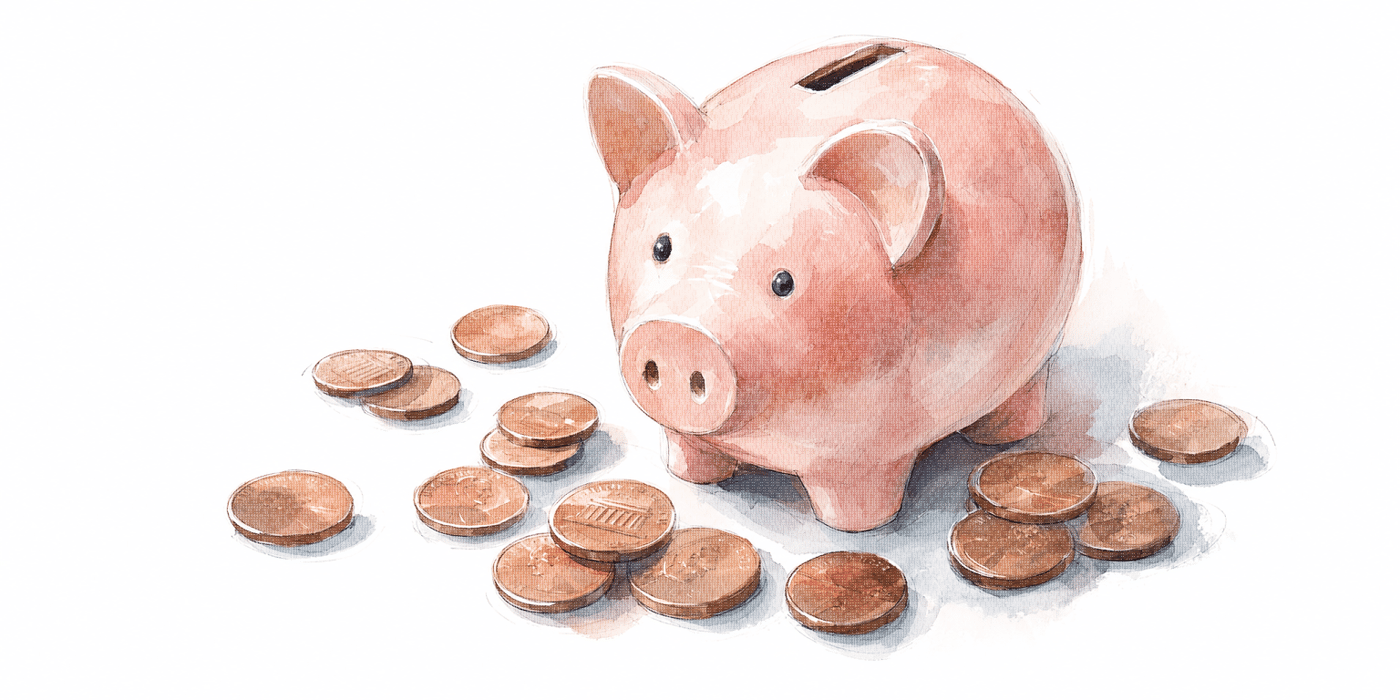

The U.S. Mint stopped making pennies at the end of 2025, and a bill to formally and permanently end penny production awaits President Donald Trump’s signature. Congress is not exactly known for common sense, but bipartisan majorities passed the Common Cents Act last month.
Given that it costs four cents to make each one-cent coin, the math clearly doesn’t work — even in Washington. When the Trump administration stopped the penny presses in December, it estimated savings of $56 million.
California Democrat Representative Robert Garcia cosponsored the bill, saying, “When it comes to taking on waste and making sure our tax dollars are spent wisely, it’s common sense that we should stop making a coin that costs nearly four times more than it’s worth to produce.”
The bill also addresses the nickel because that five-cent coin costs a whopping 13 cents to produce. (For the record, a dime costs less than six cents to make, and a quarter costs nearly 15 cents.) The legislation allows the U.S. Mint to use zinc instead of copper to save money when making the nickel. Michigan Republican Lisa McClain, chair of the House GOP Conference and also a cosponsor, said, “My bill gives Treasury a path to make nickels at a lower cost without disrupting how Americans use them. It is a simple reform that saves money and brings a little more common sense to government.”
Wyoming Republican Senator Cynthia Lummis added, “More and more Americans are paying with credit cards, debit cards, and stablecoins for everyday purchases that once would have been made with cash or coins.”
Or, as the late, great Yogi Berra once put it, “They paid me in cash, which is almost as good as money.”
Is it, though?
Indeed, this whole thing should have us pondering our entire monetary system.
For me, that means traveling back in time nearly a century. In 1933, Franklin D. Roosevelt made one of his many moves that prolonged the Great Depression: he issued Executive Order 6102, in which he claimed the authority to “prohibit the hoarding of gold coin, gold bullion, and gold certificates within the continental United States by individuals, partnerships, associations and corporations.” The word “hoarding” does a lot of heavy lifting in that sentence, especially given that the U.S. government quickly became the only legal hoarder of gold after forcing citizens to turn it in.
Roosevelt also formally suspended the gold standard, and Congress eventually passed the Gold Reserve Act. When Roosevelt stole acquired Americans’ gold, he paid them a fixed $20.67 per ounce. A year later, the Gold Reserve Act arbitrarily changed that price to $35 per ounce, “effectively increasing the gold on the Federal Reserve’s balance sheets by 69 percent,” notes History.com. “This increase in assets allowed the Federal Reserve to further inflate the money supply.”
How convenient.
Fast-forward to 1971, when President Richard Nixon officially ended any connection to the gold standard by suspending the post-WWII Bretton Woods system. From there on out, the U.S. has had a fiat currency, essentially worth only what the government tells us it’s worth.
Speaking of valuation, the Federal Reserve policy is to devalue that currency at 2% every year, which, similar to FDR’s goal, allows the government to borrow more for less, while essentially taxing Americans.
If you haven’t noticed, inflation over the last five years has been a tad higher than 2%. Average annual inflation since 1971 has been just under 4%.
In fact, $1 in 1971 is worth approximately $8.25 in today’s dollars, a loss of roughly 88% in purchasing power. Now, that’s not the complete picture given the advance of technology and so forth, but moving off the gold standard arguably worked well only for the government. Unless you think $40 trillion in debt is a bad thing.
So, you offered a penny for my thoughts, and I gave my two cents. Currency production is about a whole lot more than how many pennies you find in the couch cushions or your car’s cupholder. U.S. monetary policy could use a far more extensive upgrade.