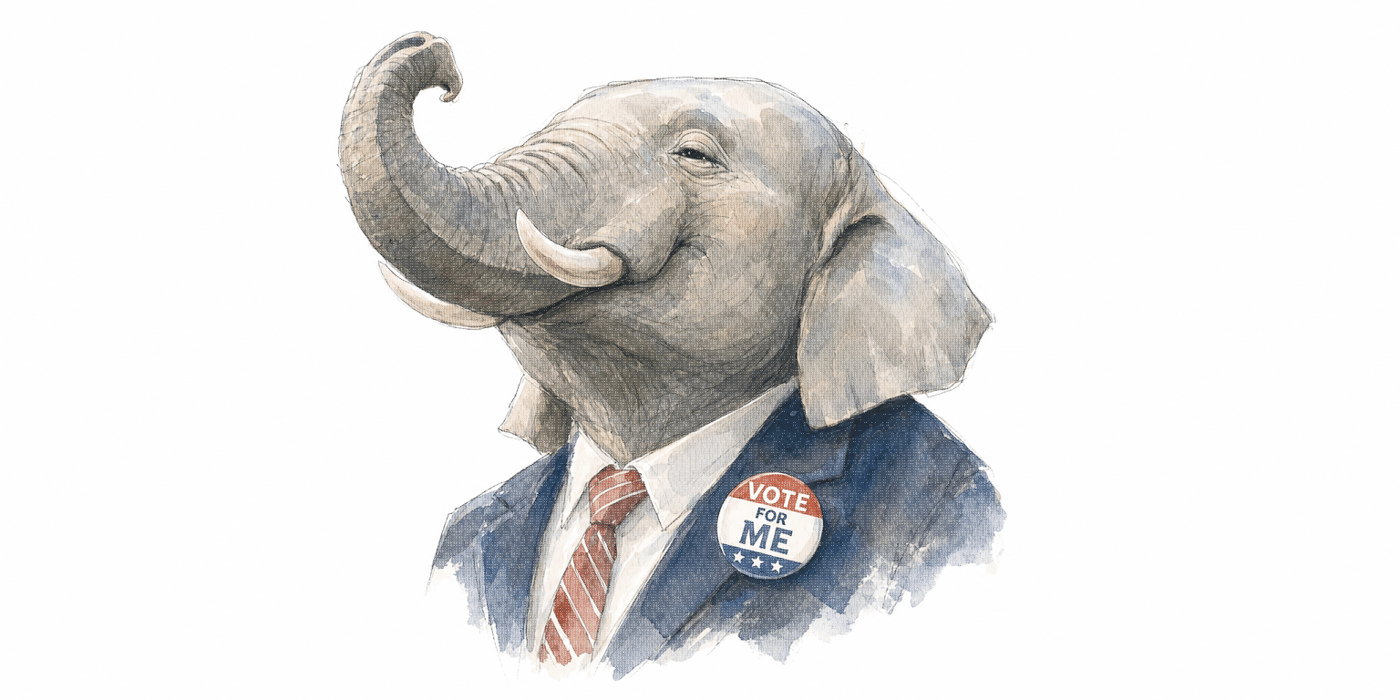

If history has taught us anything about contemporary American politics, it’s that polls can’t be trusted, and a slight shift in support from one voter group can dramatically shape the country’s direction. This time, the usual partisan political rhetoric is being overshadowed by real kitchen-table issues like jobs and the economy, along with the president’s unpopularity.
Republicans face an uphill battle. Historical trends show the party out of power typically picks up seats in the midterms, and with Democrats needing only a net gain of three seats to win the House, they don’t need much to take back the gavel from Speaker Mike Johnson.
Making matters worse, Republicans haven’t done much of what they promised. Neither the president nor party leaders are talking about our $40 trillion national debt. Gas prices rose and stayed above $4 a gallon, grocery costs are taking more of our paychecks, industrial jobs haven’t returned to American towns, and interest rates on homes keep rising.
As Merrill Matthews explains at USA Today, “A Republican president is facing his second midterm elections. His popularity is in the tank, in part because he took the country into a costly, unpopular war he thought would end quickly. Inflation is too high and federal spending under his party has exploded. The economy, while reasonably strong, faces headwinds. His party could be headed for a major defeat in November.”
Matthews adds, “You may think I’m describing President Donald Trump. I’m actually describing President George W. Bush in 2006, when a blue wave cost Republicans dozens of seats and handed Democrats control of the House and the Senate, along with a majority of governorships and a string of state legislatures. History doesn’t repeat itself, but sometimes it comes close. That appears to be what’s happening heading into November.”
None of this means Trump and the Republicans will experience the same drubbing as did Bush and the GOP in 2006. Then again, it’s hard to buck historical trends with less than three weeks until Election Day.
On the campaign trail in Texas, a state that hasn’t sent a Democrat to the U.S. Senate since 1988, Vice President JD Vance admitted, “We know that we’re swimming upstream. But I think that we have as good a chance as I’ve ever seen to really defy those historical trends. So we’re not giving up anywhere. We’re just trying to win the races that we can and focus where we can.”
Winning some of those races might be a challenge, especially with indications that even stalwart Trump supporters are lacking enthusiasm.
The Hill reports, “More than one-fourth of President Trump’s 2024 voters believe Republicans would be more likely to win the midterms if they break away from the president this November, a Politico-PF Global poll found. Twenty-six percent of respondents who voted for the president in 2024 said the Republican in their district would have a better chance of winning if they turned their back on Trump. On the issues, 57 percent said Republicans should break with Trump over the Iran war, 61 percent said they should break with him over the economy and 67 percent said so over immigration and border control.”
Meanwhile, President Trump recently promised $5,000 “dividend” checks if Americans keep Republicans in power in both houses of Congress this November. It was a move out of the bread-and-circus days of the Roman Empire, would cost over a trillion dollars, and needs congressional approval. In the unlikely event it would happen, those checks would be a band-aid for deeper issues and may not be enough to drive Republican voters to the ballot box.
Money is a big part of American politics, especially during an election season, and Republicans are looking for big donors to push them across the finish line. One of those is Elon Musk.
“Elon Musk has poured more than $276 million into Republican groups since July, making him the biggest known donor of the 2026 midterm election,” reports CNBC.
It’s far bigger than Musk. “Republicans have a gaping financial advantage over their Democratic counterparts,” notes the Associated Press, adding it’s “a disparity that has been a rare bright spot for a party that is bracing for major potential losses amid deep voter frustration over the president’s performance, stubbornly high prices and the unpopular war with Iran. They have been using the money to blanket the airwaves in the race’s final stretch.”
Part of the final stretch doesn’t merely involve campaign contributions, but old-fashioned stump speeches across the country. And in classic Trump fashion, the president isn’t wasting a moment to convince Republican voters and Americans in general that a Democrat Congress would take the country on the wrong path. From Ohio to Arizona to Alaska, Trump isn’t going down without a fight. He’s touting low crime numbers, the removal of violent illegal aliens, and a secure southern border.
Still, should Democrats win one or both houses of Congress, it’s important to keep in mind what could change. For example, a Democrat Senate could block appointments of federal judges and senior administration officials. A Democrat majority in the House would most certainly spark more investigations of the Trump administration and might lead to a new impeachment.
On the other hand, while Democrats would control funding of the government, their majority wouldn’t be substantial enough to let them run away with their radical agenda. For example, despite threats from the Left to pack the Supreme Court and abolish ICE, Trump would retain his veto power to check any challenges to his agenda.
In a few weeks, we’ll know whether the polling data showing a blue Democrat wave is real or underestimated support for the president and Republicans. Either way, a messy and complex political cycle is about to get much clearer.