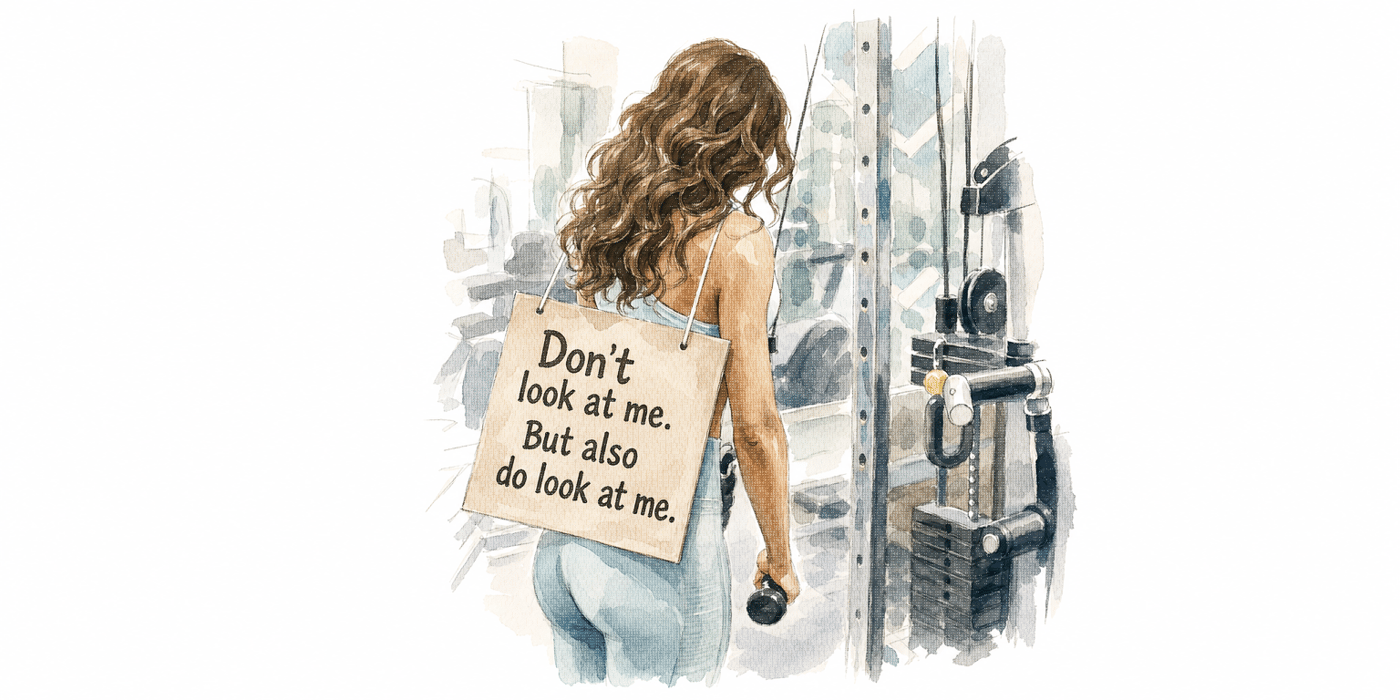

Apparently, men can’t win at the gym anymore. Look at a woman, and you’re a creep. Ignore her, and you’re part of the problem. One woman publicly shames men for so much as glancing at her, while another openly admits she dresses provocatively to attract their attention.
And somehow, men are supposed to know the difference. Which makes the outrage over comedian Shane Gillis’s recent joke about women’s gym attire all the more ridiculous. Women across social media insisted their outfits had absolutely nothing to do with attracting male attention. They were simply dressing for themselves, and men needed to mind their own business.
Well, apparently, somebody forgot to tell the women openly admitting they’re wearing those exact outfits because they WANT men to notice them.
In one video, a woman declared, “Okay, we need to bring back hitting on women at the gym because I genuinely miss it!” She said she deliberately wears skimpy outfits to encourage men to talk to her. Another complained that men have become too respectful and explained that women sometimes stare at attractive guys hoping they’ll approach.
These women prove that Shane Gillis had a point.
But they are once again suggesting that men are the problem, just for an entirely different reason. Perhaps they should have a word with their fellow female content creators. After all, between the hysterical outrage over a joke and women losing their minds when a man dares to comment on their workout, is it really any wonder men are playing it safe and keeping to themselves?
One viral gym encounter perfectly illustrates why men hesitate to even step into the same workout space as a woman, let alone dare to speak to her.
In the video, a woman complained that an older man had sexually harassed her at the gym. That’s a serious accusation. But what actually happened?
According to her account, the man was lifting weights in front of a mirror, so she repeatedly moved aside to avoid blocking his view. That’s when he jokingly referred to himself as a “dirty old man” and told her he didn’t mind her standing in front of him.
Was it necessary? Not remotely. Was it an obnoxious comment? Absolutely.
But rather than simply telling him his comment was inappropriate and moving on, she involved gym management, tracked him down after he had already walked away, and berated him for making her uncomfortable. She followed him around and hurled f-bomb-laden insults. Even after he said he was sorry, she continued her vulgar tirade, eventually prompting him to rescind his apology and tell her she was “nuts.”
That’s where this entire situation highlights a deeper problem: the growing tendency to treat every uncomfortable interaction as though it’s a serious offense.
There’s an enormous difference between genuine harassment — a man following a woman around, making repeated sexual remarks, or refusing to leave her alone — versus an awkward, unwanted comment. Treating every uncomfortable interaction like a major violation of women’s rights is ridiculous.
And this woman presented her experience as if it were further proof that men disrespect women and deny them peace, arguing that Gillis’s joke only made life harder for women.
Yet all she really did was reinforce the thing that men already know — far too many women are looking for reasons to be angry with men. They create a more hostile gym environment for women, not a comedian who simply pointed out that some women’s workout attire looks more like underwear than appropriate public clothing.
Women themselves have created impossible standards for gym etiquette. Men don’t know which women want to be left alone and which ones want them to step up, or who will welcome conversation and who might publicly humiliate them for even trying.
Then there’s the issue of attraction, which undeniably influences how women respond to romantic attention. A comment from a man they find attractive might be considered flattering, while the exact same comment from someone less attractive is suddenly labeled creepy. That leaves men navigating another minefield of constantly changing expectations.
In our culture, the wrong desires often shape every interaction. Is a woman dressing to attract attention, or looking for an opportunity to turn an innocent comment into rage bait for clicks? Either way, men are expected to take the risk, never knowing whether they’ll end up with a dinner date or a court date. That’s an absurd amount of pressure on men who simply want an ordinary social interaction.
Men aren’t mind readers. So if women want men to start approaching them again, they need to spend less time losing their minds over a comedian’s joke and stop treating every awkward interaction like a federal crime.
Sometimes, a little perspective and common sense go a long way.