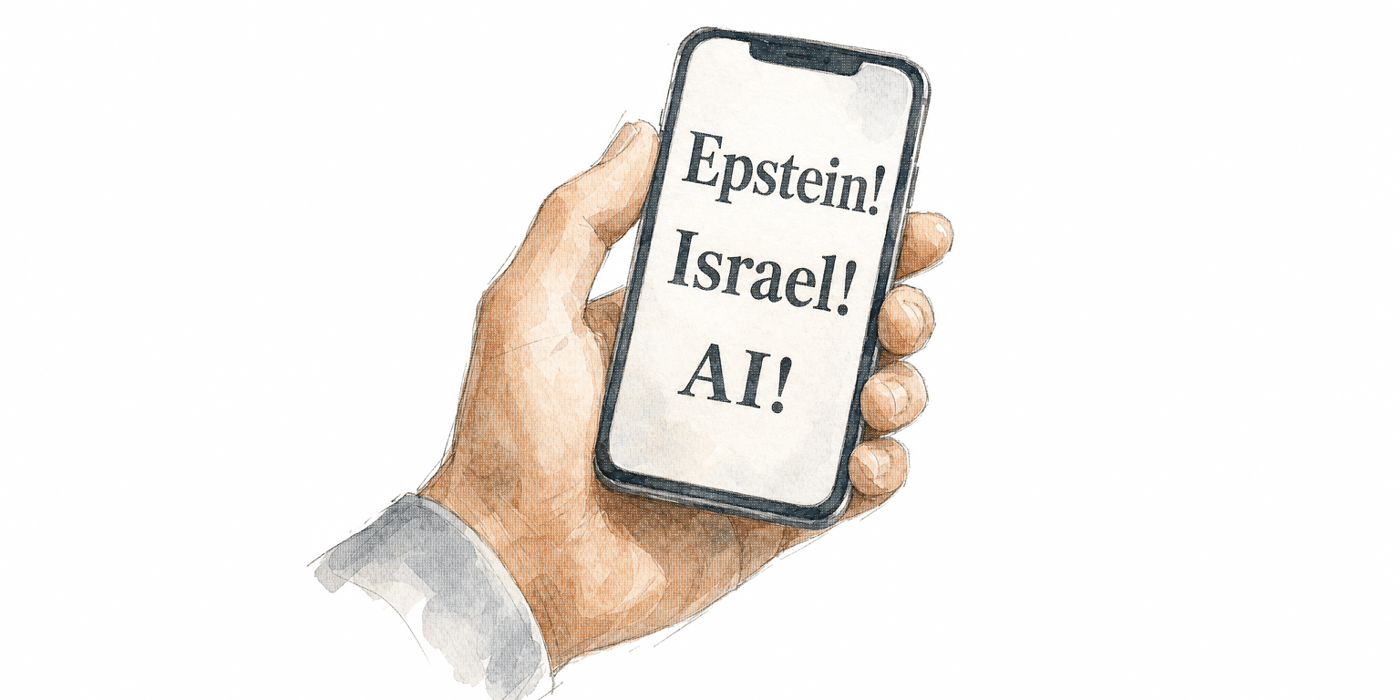

Imagine being a young American whose understanding of politics comes mostly from social media. Depending on your feed, you might believe Republicans protect sexual predators, Israel controls the American government, and artificial intelligence is being built to eliminate your job for the benefit of billionaires.
Those claims may sound absurd to someone who follows politics closely. Yet they are gaining traction online, and Republicans have done little to challenge them.
Generation Z may be a relatively small share of the electorate, but its political influence is larger than its numbers suggest. Young people help shape what spreads across social media — not simply because influencers post, but because audiences decide what to share, repeat, and turn into the conversation. That gives a political claim reach far beyond the people who first hear it.
The 2026 midterms showed how serious Republicans’ messaging problem has become. Democrats won control of both chambers of Congress, handing Republicans a worse defeat than many expected. Affordability was a major factor: voters remain frustrated with the cost of living, and Republicans failed to convince them their policies were improving their financial circumstances. Still, the party also struggles to reach young Americans, where political opinions are increasingly formed and spread.
For decades, conservatives have complained about bias in the mainstream media. Yet many young Americans now get their political information from TikTok, Instagram, and X, where controversy often travels further than accuracy. A careful explanation of government policy may reach a few thousand people. A sensational claim that a foreign government controls a politician can reach millions — if enough viewers share it.
The Epstein files controversy showed how quickly Republicans can lose control of a story. The Trump administration’s delays and inconsistent messaging raised legitimate questions about transparency. Democrats, joined by some Republicans, turned those questions into a political liability. Yet little attention was paid to why the Biden administration had not publicly released much of the same material during its four years in office. Online discussion was filled with speculation and accusations, often presented without sufficient evidence. Republicans failed to explain their position, while users shared the claims that made the controversy seem most explosive.
Anti-Israel conspiracy theories offer another example. Claims that Israel secretly controls American politicians, once associated mostly with fringe movements, are increasingly circulating among mainstream political audiences. This is no longer confined to the political left. Former Florida Republican gubernatorial candidate James Fishback made opposition to American support for Israel a central part of his campaign against Byron Donalds. His campaign showed how anti-Israel rhetoric can gain traction in Republican politics, especially among younger audiences.
Criticizing Israeli government policy is not inherently antisemitic. Debating American foreign policy is different from promoting the conspiracy theory that Israel controls American politicians. Republicans should address that distinction directly. If they leave the claims unanswered, social media users can spread them as fact.
The same pattern is shaping the debate over artificial intelligence. Many young Americans hear that AI will eliminate jobs, destroy industries, and concentrate wealth among a handful of technology companies. The conversation focuses so heavily on potential harms that it often overlooks what AI could make possible, especially in education.
For generations, wealthier families could afford private tutors, test preparation, and specialized instruction that many other families could not. AI could make some of those advantages widely available. A student struggling with algebra can get an explanation without hiring a tutor. Someone studying Latin can get help with grammar and vocabulary. Students preparing for exams can generate practice questions aimed at their weak spots. Conservatives should be making that case. Instead, they have allowed predictions of technological catastrophe to dominate the conversation.
The Republican Party cannot expect young voters to support policies they do not understand, especially when the claims they see shared most often portray those policies as dangerous.
Blaming the mainstream media or dismissing young voters as uninformed will not fix the problem. Republicans need to explain their policies clearly and challenge false claims where young people encounter them. Just as important, they need to understand that online influence does not end with the person who posts. It grows when audiences choose to spread it.
Generation Z may not yet make up a large share of the electorate. Its influence over the political conversation is already significant — and the ideas it helps circulate today could shape elections for decades.