
Last week’s Democrat wipeout of Republicans in the midterm elections left everyone asking questions about the future of both parties, what might become of the MAGA movement, and whether the socialist uprising within the Democrat Party will survive the selection of party leaders in the House and Senate.
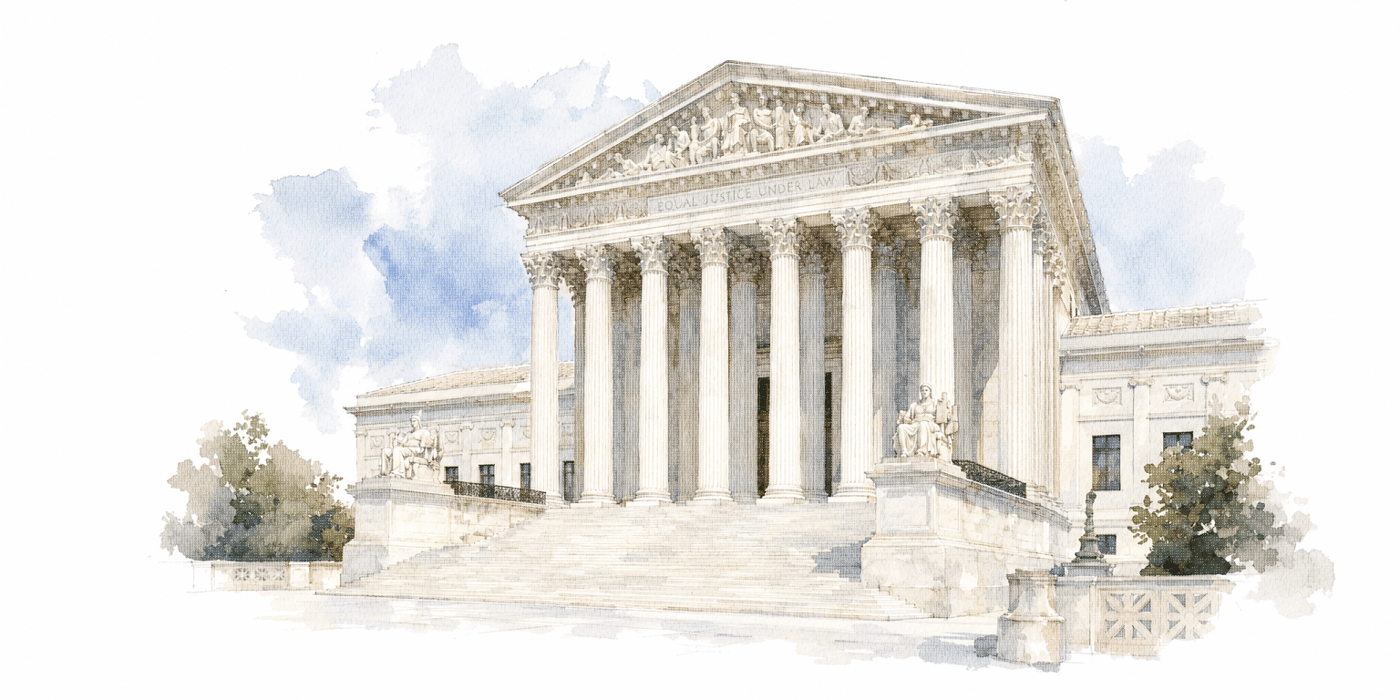
Another question that might have an equally significant impact on the country’s future is the Supreme Court. It’s not news that Democrats have long threatened to pack the court with leftist justices, but how they and the Republicans proceed in the coming weeks and months might shape the direction of the nation’s highest court for years.
Two Republican justices, Samuel Alito and Clarence Thomas, are under some pressure to consider retirement. But even with President Donald Trump still in the White House, it’s unlikely a Democrat Senate would approve any (decent) Republican nominees to replace them.
“Republicans’ loss of the U.S. Senate in the midterm elections could have far-reaching consequences for President Donald Trump’s judicial agenda, threatening his ability to reshape the federal courts and raising new questions about the future of the Supreme Court’s 6-3 conservative majority,” Fox News reports. “With Democrats set to take control of the Senate in January, Republicans face a shrinking window to confirm Trump’s judicial nominees, while any future Supreme Court vacancy could leave the president dependent on Democratic support to install a replacement.”
Leaders of both parties face a political predicament, and historical precedent only complicates each party’s next move.
As legal analyst Jonathan Turley explains:
Timing has always been a looming question for justices who want to see their seats filled by like-minded jurists. However, it is difficult to walk away from being one of nine. Some served beyond their own capabilities in clinging to the Court, becoming befuddled and isolated with age. Others stayed too long to guarantee the preservation of their own legacies. The most recent example is Ruth Bader Ginsburg. Some of us wrote for years that Ginsburg was risking her legacy by not retiring while Barack Obama was president. After Trump appointee Amy Coney Barrett replaced her, many liberals (who were consciously silent before her death) lamented her decision. ...
For two years, there has been speculation that Thomas (78) and Alito (76) might retire to allow a Republican president and Republican Senate to select their successors. Both declined. If they were hoping for a two-year cushion, that window just closed with a resounding bang. Even if they were to resign in the next two years, it is unlikely that President Trump could replace them with a conservative nominee.
As the political landscape shifts ahead of the new Senate session in January, the battle over the Supreme Court enters a tense period of strategic waiting and political maneuvering. With Republicans racing to confirm pending federal judges during the lame-duck session and Democrats preparing to use their incoming majority to block any new Trump nominees, the immediate future of the bench hinges on the personal decisions of its two oldest conservative members, Justices Thomas and Alito.
Should Alito or Thomas retire now, the current Republican majority in the Senate could confirm anyone President Trump nominates. Certainly, Democrats would try procedural and political stall tactics to slow the process, and they would point to the way Republicans refused to allow President Barack Obama’s nomination of Merrick Garland to proceed months before the 2016 presidential election while confirming their own choice of Amy Coney Barrett days before the 2020 presidential election.
There’s no doubt the move would create a firestorm, with Democrats pointing to the old McConnell rule that the Senate shouldn’t fill a Supreme Court vacancy in a presidential election year, one that Republicans put aside when Trump nominated Barrett. Should they get away with it, Republicans will be accused of thwarting the will of the voters and making the court even more partisan than many Americans already think it is. Republicans would also risk giving more credence to the idea that the Supreme Court should be reformed, playing right into the hands of Democrats who want to pursue term limits and packing the court with left-wing justices.
Then again, Republicans might have nothing to lose at this point. After all, they’ve already lost everything except the presidency, and that, too, could fall out of their hands two years from now. If Alito or Thomas don’t plan on serving into the next decade, Republicans will have to play hardball politics, protect two conservative seats, and call the Democrats’ bluff on expanding the court.
For now, though, it doesn’t look like Alito or Thomas have any plans to hang up their judicial robes.
Legal analyst James Zirin opines at The Hill, “According to The New York Times, Alito has told friends he does not plan to step down before the end of the court’s term in June, even though Democrats will assume Senate control in January. Alito shared his plans with friends after the election results were clear this week. As recently as last month, the conservative Alito had rejected the idea that he would step down if Democrats took control of the Senate.”
Likewise, there aren’t any indications that Thomas plans to step aside.
That said, Supreme Court predictions are just political speculation. The 2026 midterm elections may have settled the question about control of Congress, but for now the balance of power remains to be decided.