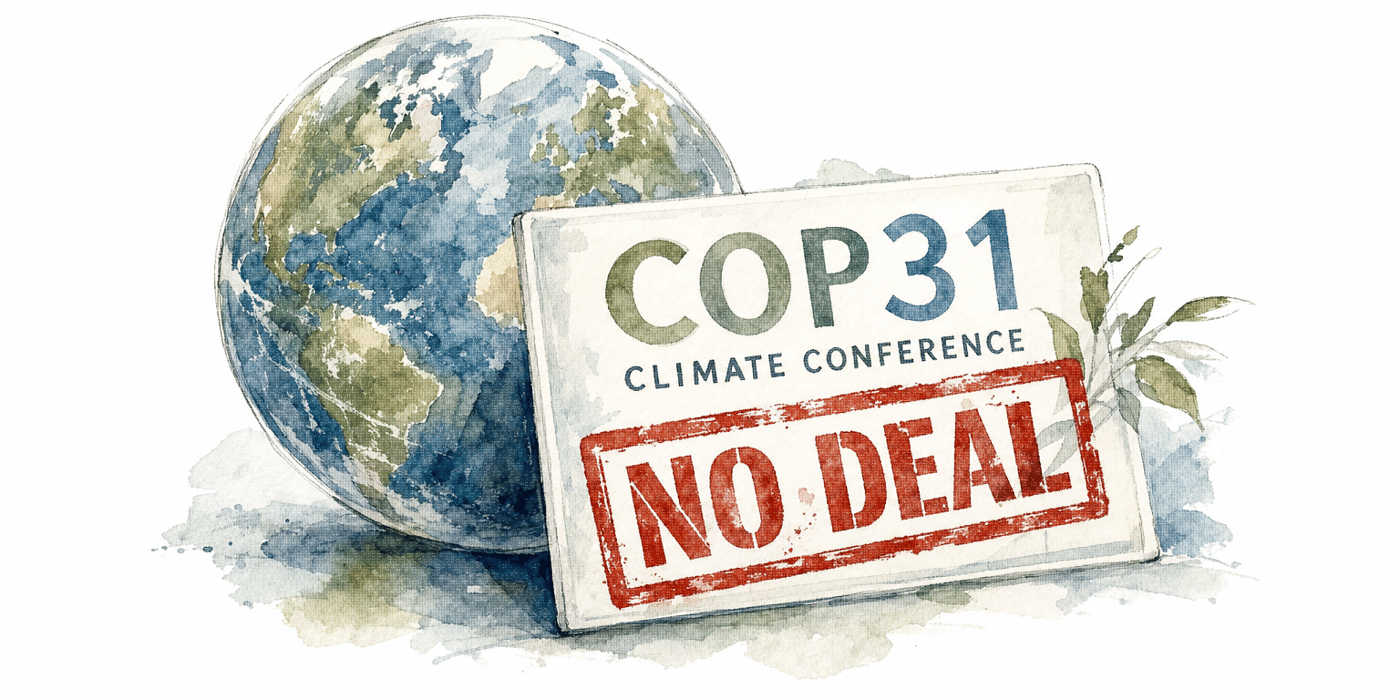

The 31st annual UN climate confab of anti-fossil-fuel demagogues ended over the weekend after failing to produce yet another toothless deal to point to as “evidence” of their great concern for the environment.
COP31, advertised as a joint hosting effort between Australia and Turkey, was held in the seaside city of Antalya, Turkey, with Australians leading the negotiations. Yet after two weeks of talks and debates, the conference failed to reach a major agreement on climate change.
The failure stemmed from two factors. First, it failed to demonize fossil fuels, as the proposed agreement never even mentioned the term. Second, it failed to produce an actionable plan for redistributing wealth from rich nations to poorer nations.
As has always been the case, the primary motive behind the whole globalist climate change concern is the consolidation of power and influence into the hands of a cabal of elitist globalists. The trouble is, none of these globalists can agree on how to implement a power-sharing deal.
COP31’s failure to produce any significant deal is the first since the 2009 conference. It also proves embarrassing for UN Secretary-General António Guterres, as this will be his last climate conference before he leaves office. Of course, Guterres blamed the failure on the same old, tired villain: Big Oil. He complained that “powerful fossil fuel interests” had taken “a page from Big Tobacco’s playbook: distorting the science, delaying policy, blocking action, and piling up huge profits while people everywhere pay the price.”
Talk about the pot calling the kettle black. The deserved failure of these annual climate alarmist conferences is that they rely heavily on misinformation and bogus notions of the power of nations to exert control over the global climate. Furthermore, how many times have their doomsday prognostications failed to materialize? The answer is every single time.
Unsurprisingly, the lack of any deal from COP31 also roused the ire of failed presidential candidate and climate grifter Al Gore, who condemned the failure to arrive at a deal as “outrageous that a handful of petro-states have veto power over any mention of fossil fuels.”
Gore, true to his globalist views, called for eliminating the sovereignty of individual nations, contending, “It’s time that we empower those leaders with a reinvigorated multilateral process that reflects the latest science and represents the will of the majority of the world.” Gore cosplays as someone concerned about climate change, rakes in millions appealing to climate activists, and refuses to practice what he preaches.
But of course, Gore is far from the only one. Indeed, the UN’s annual climate confab seems to exist so world leaders can gather in a fancy location, enjoy fine dining and entertainment, congratulate themselves for “caring” about the planet, and then jet back to their homes. It’s a bad joke.
At least this time, enough dignitaries were honest enough not to completely demonize the world’s leading source of cheap energy just to suggest they care about poorer nations.
To grow, poorer nations must invest in cheap energy development, which happens to be fossil fuels. This reality explains both China’s and India’s significant economic development over the last few decades.
Trying to force poorer nations to adopt “green” energy as a viable means of developing their economies is simply a way to keep these countries economically depressed. And the truth is, it does not reduce carbon emissions, especially in these developing economies, because it pushes people to rely on the dirtiest forms of energy to survive.
So, COP31’s failure is good news for the planet and people’s economic outlook.