
Perhaps it’s a reaction to the rise of the socialist Left, but it seems the new argument on the Right is about the “common good.”
It was all the rage at National Review in recent days, as contributors Dan McLaughlin, John Puri, Michael Brendan Dougherty, Luther Ray Abel, and Charles C.W. Cooke were among those arguing over the term, its meaning, and its merits.
Their coverage of the subject reminded me of the time a decade ago when the venerable magazine used an entire issue to criticize Donald Trump as he was seeking his first term. It’s appropriate that the battle lines in this fight about “common good” began among some of these younger members of the Right who have come of age in the era of Trump. Their definitions of conservatism and the role of government have been shaped by events of the last decade, good and bad.
Certain aspects of government, such as the tax cuts President Trump achieved in his first term and the rooting out of fraud and pruning of the regulatory state he’s pursued in his second, have been straight from the libertarian-infused smaller-government conservative playbook. Trump, however, countered them with increased second-term spending and the idea of government owning a stake in private industry to achieve certain goals, such as AI development. Perhaps the latter is an example of the “common good,” although, if you believe McLaughlin, the meaning of the term is vague enough that “If you spend any time listening to the people most fond of invoking the common good, you will swiftly notice that they don’t all use the same ... definitions.”
The libertarian, small-government aspect is best taken up by Abel, whose piece contends, “The common good cannot be imposed but is rather a blessed byproduct of individuals voluntarily engaging with one another within a structure that least diminishes natural law.” Puri’s reaction runs along those same lines. He emphatically rejects “the capacity of statecraft to help manufacture this good life for hundreds of millions of Americans,” adding, “Especially because government already tried to mass-produce the good life in the postwar era. And many of the deficiencies common-good conservatives bemoan today can be attributed, at least in large part, to those policies.”
On the other hand, Dougherty’s thesis — “A younger faction is asserting itself for a politics of the common good, precisely because they feel that something has been robbed from the commons” — rings true when you consider the Trump-era generation. “They feel that the previous generation was blessed with certain items that were the free, non-exhaustible cream of a functional high-trust civil society,” adds Dougherty, “and that generation did not preserve this treasury for us.”
Personally, though, I think Cooke makes the better statement: “I’d like to suggest that we ought to be a lot less interested in the terminological question (i.e. what does the ‘common good’ mean?), and a lot more interested in the practical aims of those who are advancing it as a political option (i.e. the matter of what those who use it actually want to do with the government).” We know the Left’s perspective on the subject because, to them, We the People are nails, and they hold the hammer.
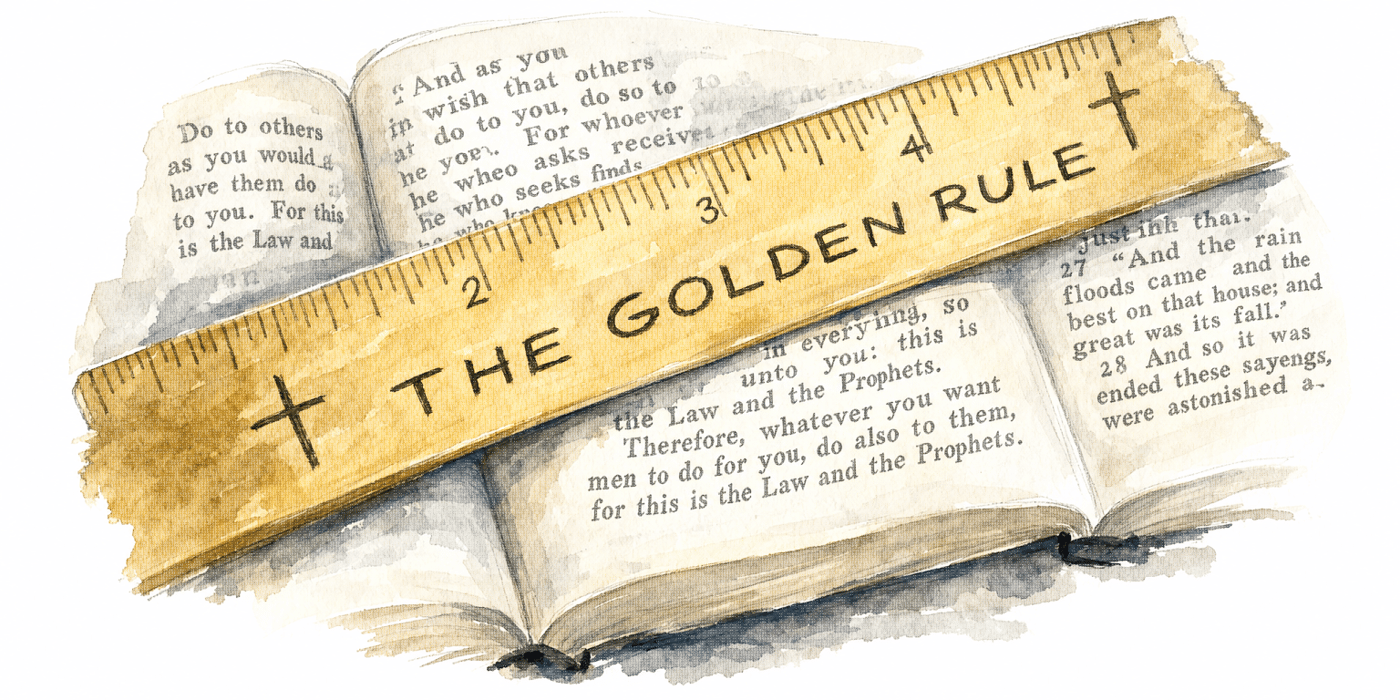
But the government doesn’t provide what composes the common good. It’s as simple as following the Golden Rule — you know, the classic one, not the modern version which goes, “He who has the gold, rules.” If you do unto others as you would have them do unto you, you’ve already subordinated much of your self-interest to the common good.
However, it’s not a leap to consider the argument about government providing the common good, particularly when we’re only a generation or two removed from Americans supposedly willing to grant their “fair share” to the tax man during a prosperous economic period — a time when houses our ancestors owned, as well as the two cars in the driveway, were paid for by a single breadwinner with his factory job. The Left often uses the 90% marginal tax rates we had at that time under President Dwight Eisenhower to make the tax system seem more successful and progressive. But they forget that we didn’t yet have Medicare, Medicaid, or a significant number of federal government welfare programs on the books. That definition of “common good” wasn’t in the public vocabulary then.
When “common good” became about the role of the federal government, we as conservatives lost the thread. It may not be popular, but we need to create a better definition before it’s too late to help anyone. As a fine man recently asked me, “Conservatives need a message that conveys compassion, but also one that recognizes that government is the wrong vehicle for anything of the sort. How can Republicans sell this to voters?”
Given the Left’s pie-in-the-sky promises that everything can be free — despite more than a century of repeated failure — perhaps it’s time to get back to those Golden Rule basics.