
There are plenty of explanations for Abdul El-Sayed’s victory in Michigan’s Democrat Senate primary.
He had the support of Bernie Sanders, Alexandria Ocasio-Cortez, Elizabeth Warren, and much of the progressive activist class. He successfully appealed to younger and college-educated voters. He also benefited from a Democrat Party that has moved significantly further left over the past decade.
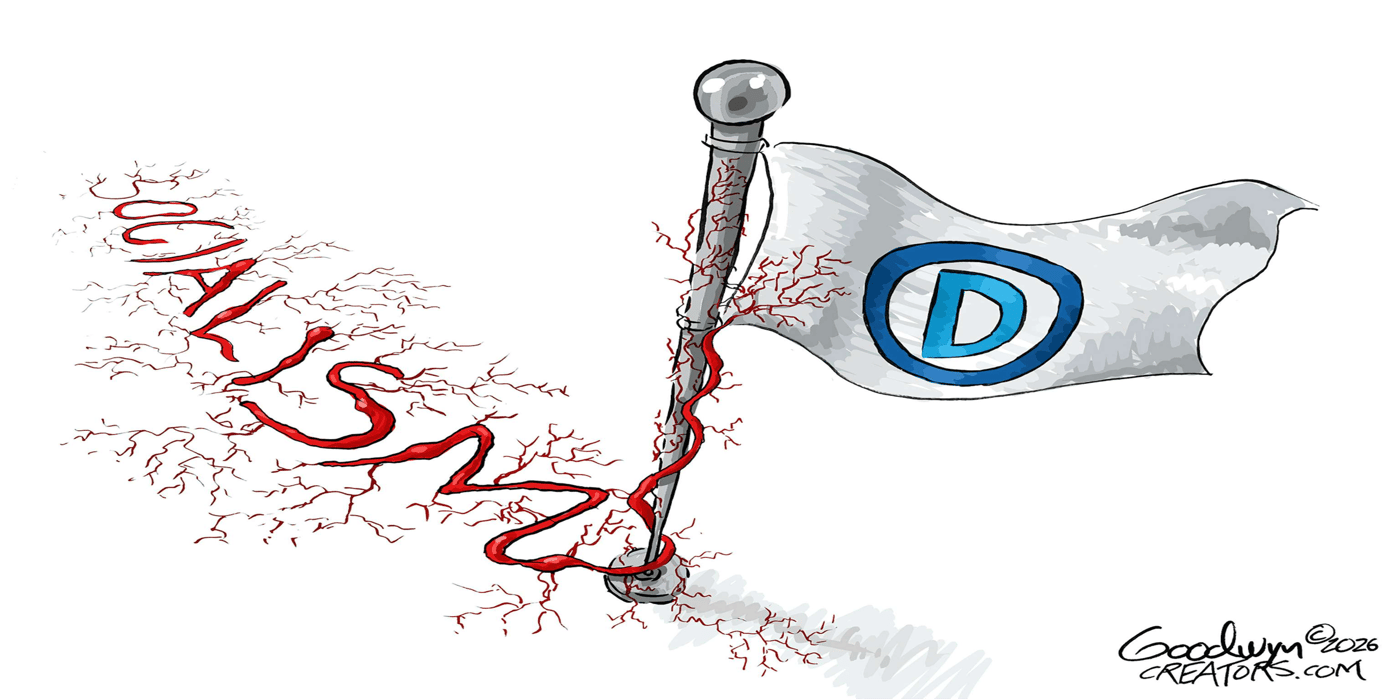
But the deeper issue goes beyond a single candidate or one primary. El-Sayed’s victory reveals that the Democrat Party is no longer seriously attempting to fight socialism.
Michigan’s primary was divided almost directly in half. On one side was Representative Haley Stevens, the candidate supported by much of the Democrat establishment. On the other was El-Sayed, the preferred candidate of the socialists and progressives.
El-Sayed narrowly won. That would be significant in any state. But Michigan is not California or Massachusetts. It is one of the most important swing states in the country, and Democrats cannot automatically expect any candidate they nominate to win the general election.
President Donald Trump carried Michigan in 2016 and 2024. El-Sayed will now face Republican Mike Rogers in a race that could help determine control of the Senate.
Democrat leaders understood that risk.
Chuck Schumer, Gretchen Whitmer, and other establishment Democrats supported Stevens. Outside groups spent millions of dollars attempting to defeat El-Sayed. But even while opposing him in the primary, Democrat leaders never treated his ideology as beyond what the party should accept.
Once El-Sayed won, Democrats did not reject him. They did not warn that his policies were too radical for Michigan. They did not argue that socialism had gained too much influence within the party. Instead, they began falling in line behind him.
There is obviously still a divide within the Democrat Party. But that division is no longer over whether socialism belongs within the party. It is over which faction will control it.
El-Sayed also understood that openly identifying as a socialist could hurt him in a competitive state. He distanced himself from the label and did not receive an endorsement from the Democratic Socialists of America.
His policies, however, tell a different story.
El-Sayed supports Medicare for All, free childcare, ending military aid to Israel, and abolishing ICE. He campaigned with some of the most prominent socialist politicians in the country and relied on many of the same voters who have fueled the socialist movement nationally.
At the core of his campaign was the belief that the government should assume greater control over healthcare, childcare, immigration, and much of Americans’ economic lives.
That is socialism, regardless of the label attached to it.
El-Sayed recognized that he could support much of the socialist agenda without calling himself a socialist. He could describe the same policies as progressive, avoid the political consequences of the label, and still receive support from the movement’s most influential leaders.
That strategy worked. It also demonstrates how dramatically the Democrat Party has changed since 2016.
When Bernie Sanders challenged Hillary Clinton, the Democrat establishment treated his movement as a threat. Party leaders made clear that Sanders was an outsider attempting to take control of the party.
Ten years later, the candidates shaped by his movement are no longer outsiders. They are winning Democrat nominations in swing states, and the establishment is supporting them once they win. The establishment had years to draw a line. Instead, it repeatedly moved that line to accommodate the socialist Left.
Perhaps Democrats simply believe Trump poses a greater threat to democracy than the socialists who openly seek to destroy it as we know it. But one thing is clear: Democrats have chosen their path, and it may already be too late to turn back. The socialist movement is now too deeply embedded within the party to be removed anytime soon.