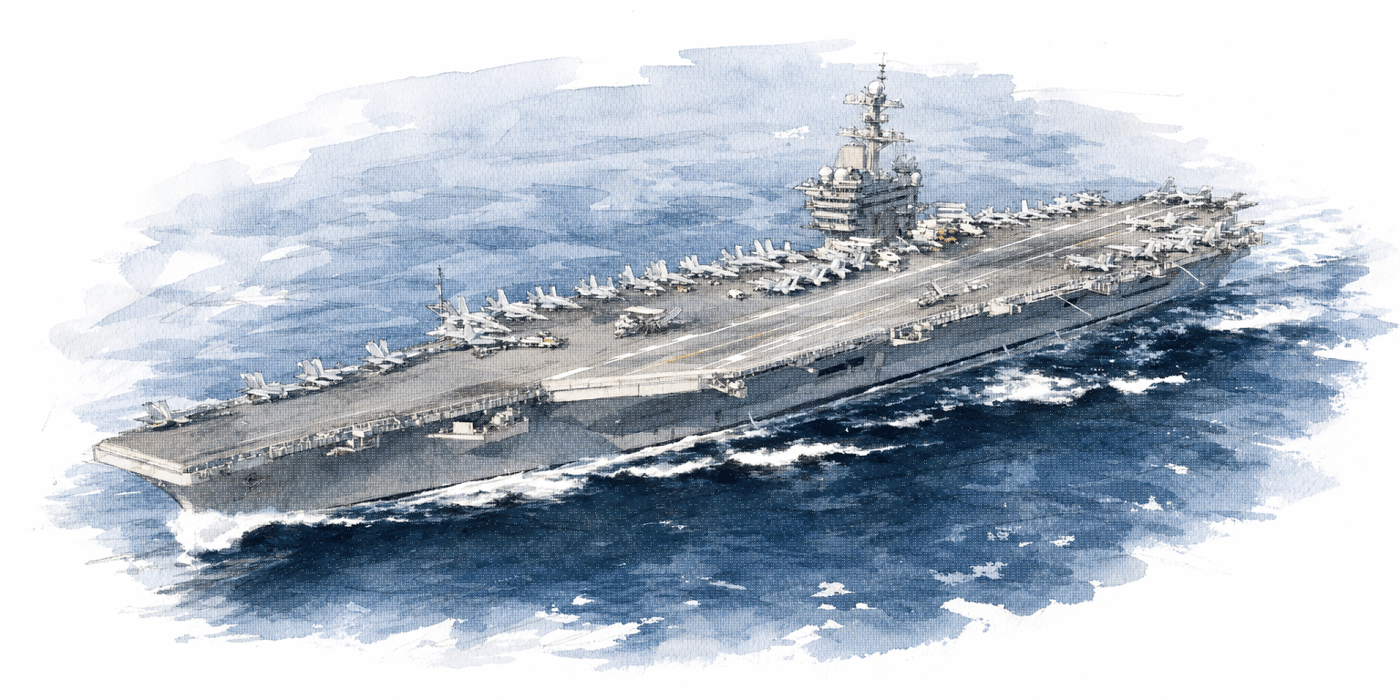

In the coming days, the USS Abraham Lincoln will be relieved by the USS George Washington, and those sailors will embark on a long-awaited return. The Lincoln has been the workhorse of our on-again, off-again war against Iran, docked for over 260 days in the Middle East. On his recent visit to the ship, Central Command commander Admiral Brad Cooper credited the sailors with “a performance for the ages” before telling them the words they’ve been longing to hear: “and now you’re going home.”
As Cooper wrote in The Wall Street Journal, “I was blown away by this strong group of high-achieving Americans standing tall with justified pride in everything they have accomplished. I also saw the reality of more than 260 days at sea with more than 150 days in a combat zone, while speaking with sailors in spaces most guests don’t see. Recent media reporting has portrayed varying perspectives on operational tempo, crew morale and the realities facing our deployed forces. What I found aboard the Lincoln is that many elements of those stories are old news.”
Admittedly, the Lincoln was placed in a tough spot, as its deployment began before our combat operations in Iran did. While they would have run drills, that doesn’t fully prepare sailors for the reality of a drone attack or pilots having to fly a mission against live enemy fire. Most of the personnel could handle this change of plans, but reports of rotted food, moldy showers, and mental stress leading to sailors threatening to jump overboard after the deployment was supposed to be completed in May attracted the notice of elected officials.
As always with our current administration, Democrats pounced, writing a letter last week complaining, “The Lincoln’s extended deployment is accompanied by deeply troubling reports about sailors’ mental health and living conditions.” But as The Wall Street Journal’s editorial board rightly points out, some of that is on those same Democrats and their inaction. “If Democrats are so concerned,” they write, “perhaps they could expedite passage of the $17 billion for U.S. military operational costs that the Administration requested? Democrats have been refusing to pass a special appropriation for Iran lest anyone think they support the Commander in Chief.”
Yet this overuse of equipment and personnel is getting worse in the Navy. If the war in the Middle East continues, we’ll likely hear about the same issues with the USS George Washington sometime early next year. As the Journal continued, “The USS Gerald Ford this year returned from a record 326 days deployed. The USS Dwight Eisenhower deployed in 2023 for about 270 days, and the USS Harry Truman did in 2024 for 251 days. That means longer and more expensive maintenance and more stress on personnel, who may decide to leave the service.”
It’s also difficult on the families as deployments run months longer than planned. High school senior Shelby Sanders, whose mother is serving onboard the USS Lincoln, told the Military Times, “I don’t know how to enjoy starting my senior year when my mom isn’t here, you know?” Sanders said. “Will she be back before homecoming? My birthday? Christmas? I have no idea, and that’s all that I think about.” Other family members also complained to the outlet about how depressed their loved ones serving onboard the Lincoln sounded.
Our prayers and sympathies are often with military personnel and their families, but it’s important to note that long deployments are not new.
Also, as The Washington Post reported, Cooper witnessed “camaraderie, teamwork and resilience,” but he cautioned, “This doesn’t mean that all is perfect.” Cooper stressed that mental health is “another aspect of individual health and requires our attention just like physical health and spiritual health.”
It comes down to this bottom line, though. As our Brent Ramsey, a retired Navy Captain, has often reported, our shipbuilding prowess needs significant improvement. Last fall, he called for a Manhattan Project for building ships, but we’ve made little progress as Congress hasn’t put up the funding, nor has there been a nationwide push to train people in the shipbuilding trades. (It’s almost like we need a military-style recruitment for that as well.) Right now, we have worldwide demands but a dearth of ships to address them, leading to longer deployments. Fortunately, recruitment hasn’t been a problem as the Navy met its annual goal three months early this year. But stories like this can change that.
Those aboard the USS Lincoln are certainly making a sacrifice, as those aboard the USS George Washington will soon be. Of course, the strategy we’ve been using in the Middle East can legitimately be debated, as at times we’ve been using a sledgehammer to kill an ant. Discussions about munitions are an important part of this debate, but without ships to project the naval power we wish to employ, all those weapons would be rendered useless.
Unfortunately, unlike the days of old, politics no longer stops at the water’s edge, and the Navy is finding this out firsthand. Those onboard the USS Abraham Lincoln are pawns in that battle, too.