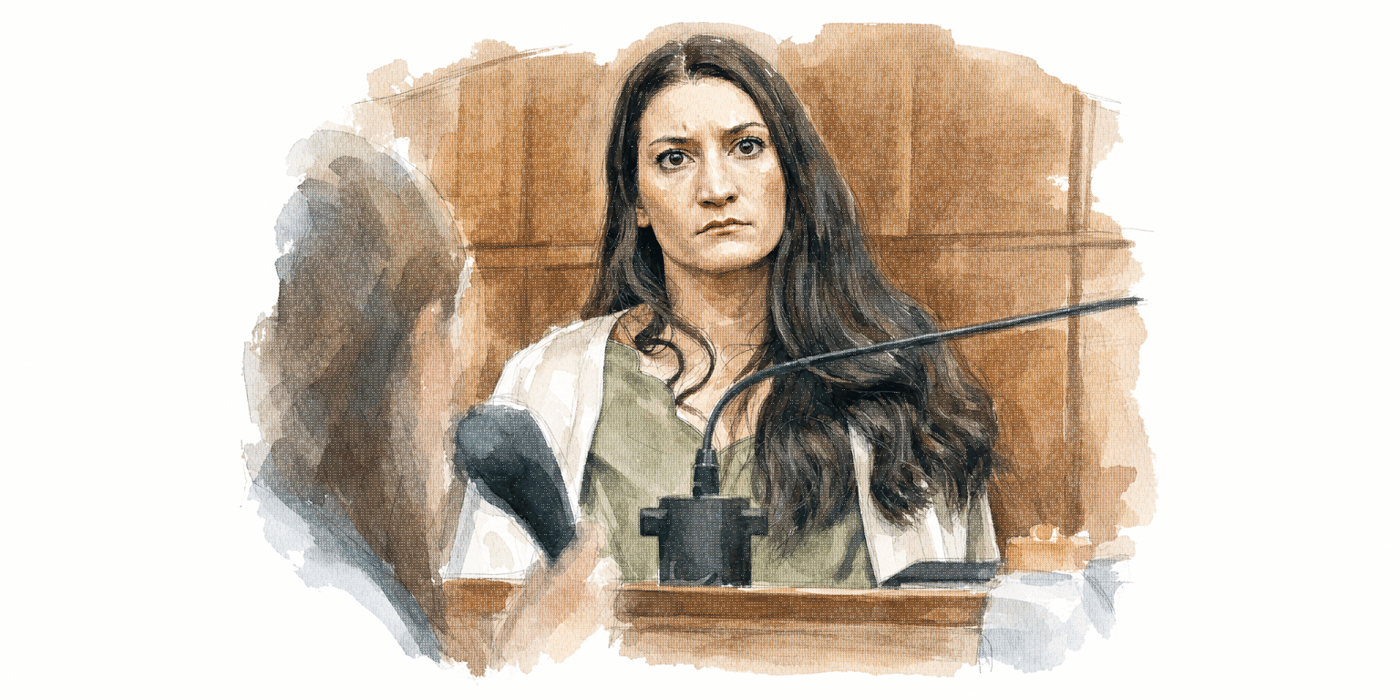

A tragic court case has been dominating national headlines of late. It is the murder trial of Lindsay Clancy, a young mother who confessed to strangling her three young children to death in January 2023 before attempting suicide, leaving her paralyzed from the waist down.
Again, Clancy does not deny killing her children, who were ages five, three, and eight months at the time of their deaths. Instead, Clancy and her defense team argue that she is not guilty by reason of insanity.
She evidently has a history of struggling with bipolar disorder as well as what the defense team is terming postpartum depression, following the birth of her children. This eventually became a postpartum psychosis, which is a rare form of a severe mental health episode in which a woman after giving birth experiences hallucinations, delusions, paranoia, or other significant behavior changes.
Furthermore, Clancy’s defense contends that a regimen of various drugs, which she had been prescribed to address and mitigate her mental health issues, actually contributed to her psychosis.
Her now ex-husband, who is serving as a witness for the defense, blames her murderous actions on the psychosis and her mental health struggles. Indeed, the records show that they had repeatedly sought mental help for Clancy, and just days before the murders, Clancy had spent two weeks getting treatment in a psychiatric facility.
However, the prosecution argues that Clancy knew what she was doing, as evidenced by her planning the murders, including setting up the time by sending her husband out to the store.
The prosecution further argues that Clancy’s insanity plea isn’t supported by psychiatrist Dr. Jennifer Tufts, Clancy’s telehealth doctor. Tufts testified that she saw “no signs of psychosis or mania” the day before Clancy murdered her children. “She was completely denying any suicidal ideation or homicidal ideation,” Tufts testified. “There were no signs of psychosis or mania. So there were no serious signs that her safety or anyone else’s safety was at risk.”
There is no question this is a challenging case because it raises the question of culpability in a seriously compromised mental state. Because Clancy may have been experiencing this severe postpartum psychosis, is she criminally liable for her actions? Or, could much of the blame be laid upon the medical community, the doctors and professionals who prescribed medications to Clancy that may have exacerbated her apparent fragile mental health condition?
The trial is happening only to determine whether or not Clancy should be held criminally liable, not to determine who killed the children, a reality Clancy freely admits.
But outside of the trial, we are witnessing a troubling phenomenon, what might be best described as tribalism. A number of predominantly women on social media have begun peddling baseless, counter-evidential conspiracy theories to defend Clancy.
Some, for example, have attacked her ex-husband, suggesting that he either manipulated her into committing the crime, or even that he himself committed the murders and then pinned the blame on her.
These types of responses are reminiscent of the ridiculous conspiracy theories that were spun by certain social media personalities following the assassination of Charlie Kirk. It did not matter that all the evidence pointed one direction; these conspiracy-minded folks injected their own narratives and motives into the crime, and by so doing, defended the criminal.
Some other recent examples of this type of evidence-free justification include the defenders of Luigi Mangione and Karmelo Anthony. In both cases, the actions of two murderers are not in dispute, but that has not stopped their defenders from arguing for them online and financially contributing to them. For some strange reason, they see themselves in these individuals, and therefore instinctively seek to excuse their criminal behavior.
In so doing, they sow doubt and contempt for the American justice system. And instead of furthering the case for a more just society, they do the opposite, opposing jury decisions based on their own tribal or political interests rather than the evidence.
Irrespective of how the jury will rule in this Clancy murder trial, the bigger social issue is whether Americans will trust and defend our justice system. As flawed as some elements of it may be, it is still a whole lot better than mob rule and lynchings.