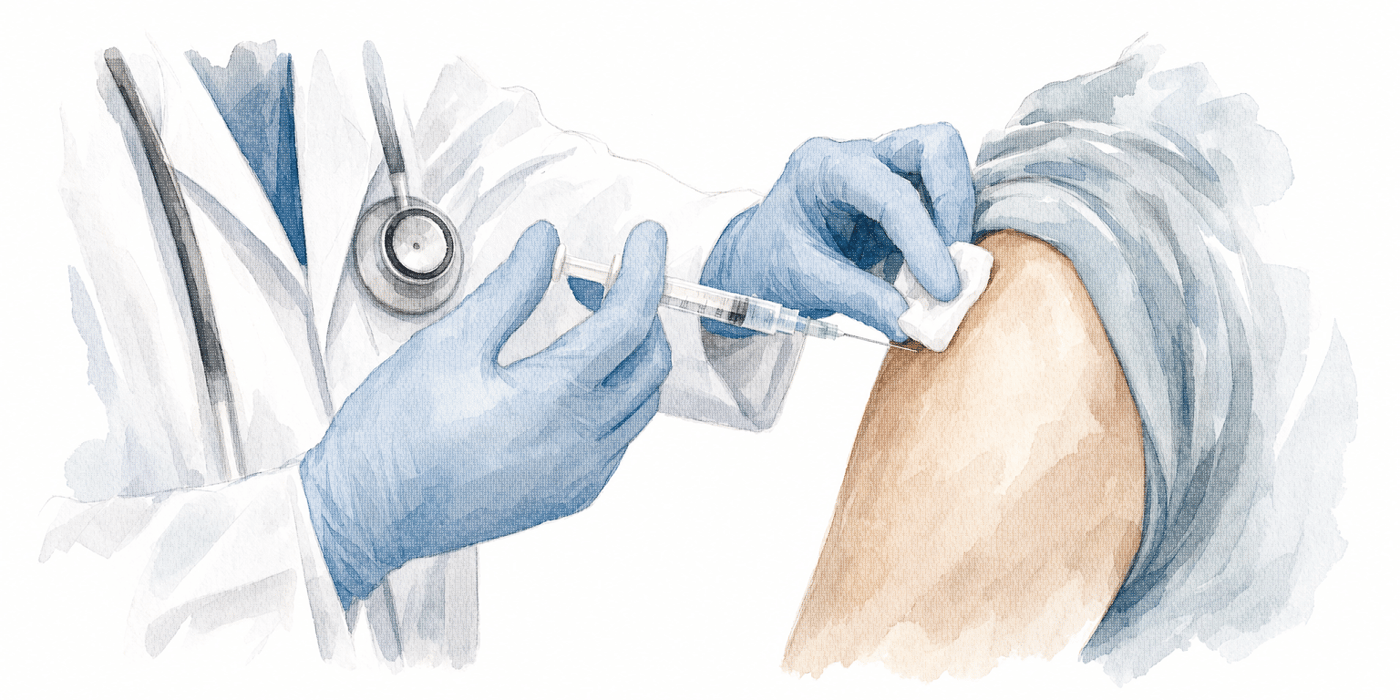

For decades, vaccines have been widely accepted as an effective way to deter and even eliminate the major diseases of centuries past. Diseases that once haunted and devastated whole countries, such as smallpox, yellow fever, and polio, have become nothing more than a history lesson. Parents had few reservations about taking their children to get their shots.
All of that changed with the COVID-19 pandemic. Between the unprecedented global fear and the breakneck pace and politicization of the vaccine’s development and rollout, it was understandable that — to put it mildly — people didn’t trust the mandate.
The mistrust was amplified by employers who forced even healthy young adults to take the vaccine. Worse, thanks to Joe Biden’s administration, many Americans faced a choice — get the vax or lose your job. Other people, antagonized by the skeptics, doubled down on the “vaccinate everyone” stance, going so far as to accuse those against it of violating public safety and putting everyone around them in grave danger.
Some people “trust the science” too much, regardless of results, while others lost trust in science despite the results.
That brings us to the current development in vaccines. Moderna, one of the primary COVID vax developers, announced a breakthrough on a vaccine that reportedly prevented the return or spread of Melanoma, a deadly skin cancer. In joint development with Merck, the companies harnessed mRNA technology, and it’s the first cancer vaccine to pass a Phase 3 clinical trial and is ready for FDA approval. Unlike the COVID vaccine, this will be administered only to those who want it, and it will build a foundation of results ideally free from political controversy. Given time and data points, we will soon know how effective this technology can be in fighting a cancer that afflicts 100,000 and kills 8,000 Americans annually.
If you had given this news to people 10 years ago, they would have been overjoyed and seen it as a huge success, a generational breakthrough.
Unfortunately, the skepticism from the days of COVID has mutated into vaccine opposition so strong that measles has returned in America for the first time since the 1990s. (To be sure, you can also blame mass migration from countries without widespread measles vaccination.) Even President Donald Trump, who authorized Operation Warp Speed for the COVID vaccine in the first place, recently ventured into the dubious debate that vaccines cause autism.
On the other hand are those who believe that all vaccines are good for you, and that everyone should blindly trust the medical professionals. While this position is certainly less prevalent nowadays, it would be remiss to consider it fully abandoned.
The two sides of the divide are so antagonistic toward the opposing viewpoint that they fail to see the middle path that emphasizes the benefits of both. It’s as if researchers could figure out how to cure every other disease in existence, and nobody would notice because everyone is fighting over pseudoscience and agency.
If only we could just go back to common sense.
On one hand, people should absolutely make their own decisions on whether to take any vaccines. Likewise, parents should make the best possible decision for their children. Refusing to take any vaccine should not hamper the individual’s employment or ability to do daily activities. The public’s mistrust of unproven technology, especially when the government is involved, should not be weaponized against them.
On the other hand, publicly available vaccines have undergone extensive testing and trials. Shots like those for measles and polio will most likely do what medical professionals say they will do. Most vaccines have decades of research and results to back them up, and the newer versions will prove themselves in time. mRNA-based vaccines are still new, and their rushed rollout gave them an abysmal first impression with COVID-19. That was mostly not the technology’s fault, and it needs another chance to prove its effectiveness against other diseases without the pressure of a rushed release or political bickering.
Vaccines have historically had a strong track record, but one pandemic-fueled government and media nightmare greatly obscured it. It’s time to see vaccines for what they are: effective tools to improve your long-term health, but not something that should be forced upon those who don’t want them. Both vaccines and their skeptics have been needlessly antagonized over the past few years. Progress and public health depend on some resolution.