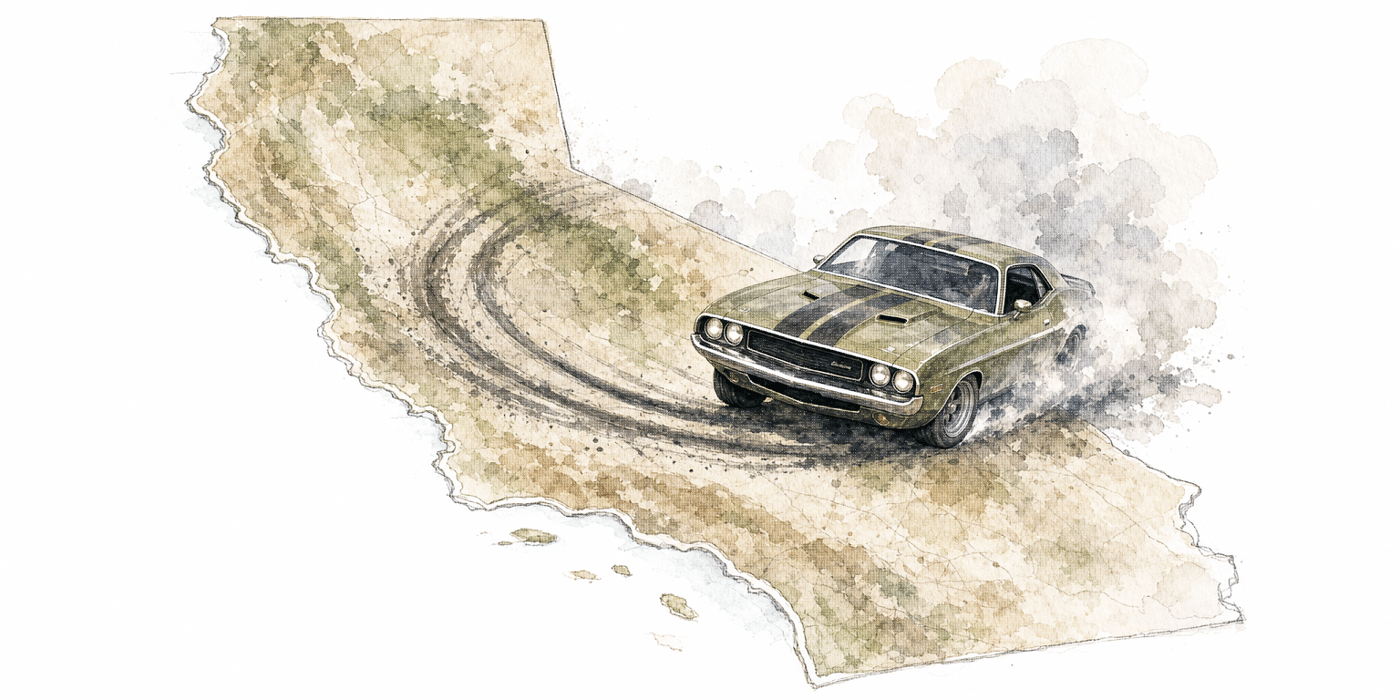

If you’re still a driver in California, you’re saddled with some of the highest gas prices, highest gas taxes, and worst roads in the nation. The state government decided to address the issue — not by lowering gas taxes or increasing supplies, but by imposing new regulations on replacement tires that will take effect in 2029.
The California Energy Commission (CEC) explains it this way: “The tires that come on new cars are typically designed to give drivers better fuel mileage. But average replacement tires are less efficient, meaning that consumers often lose mileage and range when they replace their tires. These cost-saving standards are designed to ensure that replacement tires are at least as energy efficient, on average, as tires sold on new vehicles.”
The devil is in the details on this one because each side has competing claims. The state tells us, “The incremental cost for consumers is very low — only $1.50 per tire during Phase 1 (2029-2033) and $6.50 per tire during Phase 2 (2033 and beyond). A typical driver of a gasoline car with more efficient tires will save $179 of gasoline over the life of a set of tires, or about seven times the incremental cost.”
However, the editors of The Wall Street Journal remind us, “California regulators notoriously low-ball the economic costs and exaggerate the benefits of their endless rules. They continue to insist the state’s green-energy mandates save money for consumers, though California’s electricity rates are more than double those in neighboring states. State energy efficiency requirements don’t offset the higher rates.”
On that note, manufacturers and consumer advocacy groups contend that the cost for replacement tires will be much more than the CEC claims. They also argue, “The fuel savings associated with rolling resistance improvements are modest, generally on the order of one to two percent improvements in fuel economy.”
Given tires generally last about 50,000 miles and my truck gets about 25 miles per gallon, I’d save maybe 20-40 gallons of gas in that timeframe — so the payback period would really depend on whether the state or the manufacturers know best.
As the New York Post reports, “According to the Tire Industry Association, average tire prices could increase from $81 to up to $157. If someone purchased four new tires for his car, the difference could exceed $300 per vehicle.” That’s a lot of gasoline.
Yet it’s also a lot of tires, which means companies who want to compete in California’s massive market (by itself, it would be the world’s fourth-largest economy) will have to grin and bear it. That seems to be Michelin’s stance, the lone major tire manufacturer applauding the state’s edicts. “California’s direction is consistent with Michelin’s all-sustainable and holistic approach for reducing the impact of tires at every stage of the life cycle without compromising safety and other performances that are important to consumers,” said Francesca Mosteller, Director of State and Local Government Affairs for Michelin North America. “We support the efficiency goals and believe the proposed thresholds in this rulemaking are technically feasible within the defined timeframes.”
Being European-based, Michelin has worked with similar EU standards adopted in 2012, although they’re not as stringent as California’s would be.
Moreover, what starts in California doesn’t stay in California. The other West Coast states and much of the Northeast adopted the Golden State’s emission regulations, so it’s logical that those loony leftist states will soon follow suit with tire regulations, forcing manufacturers to adapt.
Granted, there are exemptions for various specialty tires. But for most of us, replacement tires in a few years will be even more of an expensive headache because someone in California followed the logic that initially gave us the contention that keeping our tires inflated would save us enough oil that we wouldn’t need offshore drilling. Instead, we simply ignored the tire gauges and used technological improvements to make ourselves the world’s largest oil producer, eliminating the problem.
It’s amazing what the private sector can do if the government would just keep its nose out of it.