

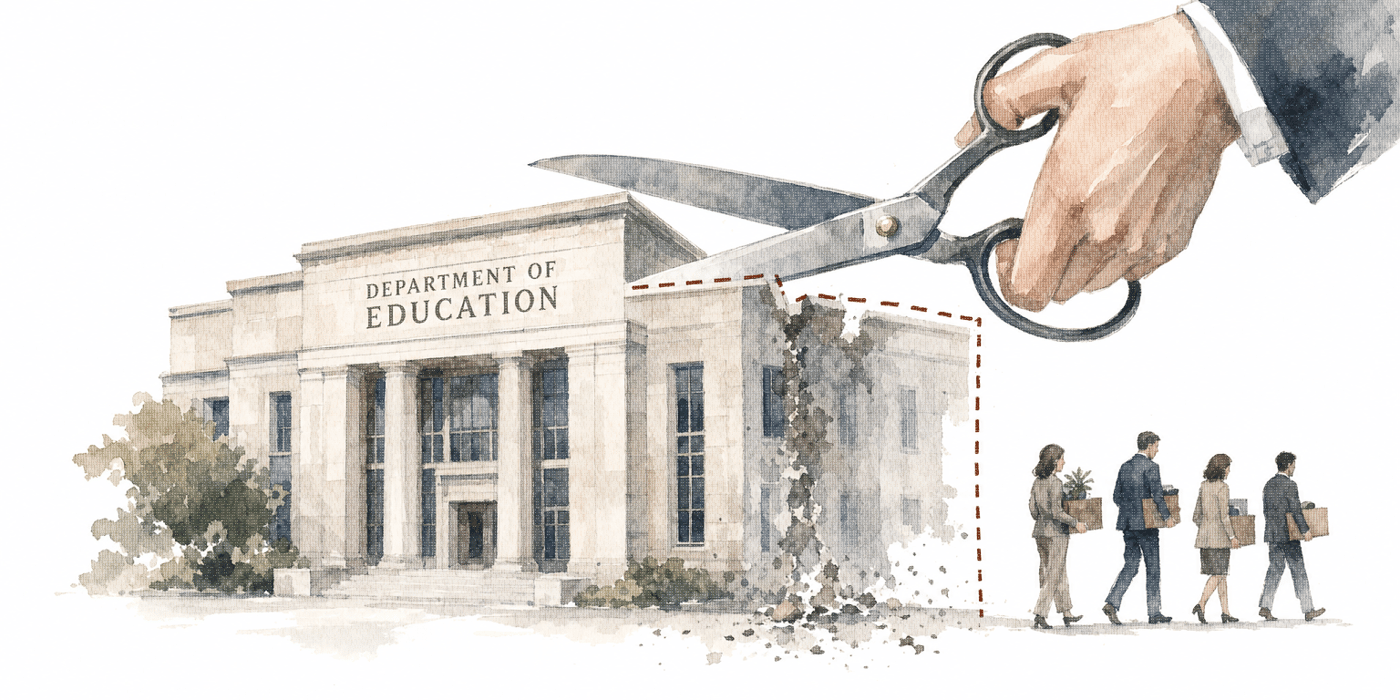

When Department of Education (DOE) Secretary Linda McMahon was tasked with lancing the DOE blister, many thought she was given the task of Sisyphus. Under former President Joe Biden, this bureaucratic behemoth had a disastrous Free Application for Federal Student Aid (FAFSA) rollout that delayed the application by months and left students, families, and colleges scrambling. A year and a half into President Donald Trump's second term, however, McMahon and her team have been Herculean in completing their tasks — proverbially mucking out King Augeas's stables (and they didn't even have to reroute two rivers to do it).
The DOE's workforce has been reduced by 50%, and many jobs have been handed off to other executive departments. For example, the Office of Career, Technical, and Adult Education is now under the oversight of the Department of Labor, and student loan portfolios have been moved over to the Treasury Department.
The DOE is smaller due to the plethora of interagency agreements that have helped it to downsize and reorganize.
Perhaps one of the biggest boons to the American people in terms of streamlining student loan portfolios is that the Treasury can now crack down on illegal immigrants bilking U.S. taxpayers.
Other agencies, through interagency agreements with the DOE, have stepped up to the plate and are enforcing federal law to stop practices that stole from the American taxpayer.
For example, in early August, the Department of Justice (DOJ) filed complaints against three more states — Connecticut, New York, and Vermont — for providing in-state tuition to illegal aliens (the DOJ has sued 14 other states for allowing this travesty). Federal law forbids states from giving financial benefits to illegals seeking higher education. Nevertheless, some states set aside specific financial aid for students who are not legal U.S. citizens.
The effort to shrink the DOJ is occurring alongside a broader administrative-wide push to ensure that federal benefits are reserved for those legally entitled to receive them. Treasury Secretary Scott Bessent, for example, recently announced proposed regulations aimed at preventing people unlawfully present in the U.S. from receiving refundable portions of certain federal tax credits.
"Under @POTUS, the days of illegal aliens collecting taxpayer-funded benefits are over," Bessent said in a post last week. "The federal law is clear, and @USTreasury is enforcing it. American taxpayers should not be forced to foot the bill for benefits going to those who are barred by law from receiving them. These proposed regulations end the abuse, protect the integrity of the tax system, and put Americans first."
This particular measure could save taxpayers as much as $3 billion. It won't make a dent in our $40 trillion debt, but hey, money saved is money earned, right?
The DOE's bureaucratic bloat is definitely receding. However, the biggest monster remains the teachers' unions, which have too much power and too little interest in actually educating children. American Federation of Teachers President Randi Weingarten was one of the first to call any moderation effort at the DOE "cruel."
In a recent statement, Weingarten criticized the capping of loans for graduate students. The teachers' unions are out for blood, suing the federal government for what Weingarten called "one of the most cynical, cruel components of the Trump tax bill: the cuts to the higher education student loan program." She argued that these cuts will make it harder for students to enter professions such as teaching, nursing, social work, and architecture. Last I checked, teaching and nursing were achievable in undergraduate programs, and the borrowing cap applies only to graduate and professional degrees.
Weingarten also argued that this cap will make graduate school more expensive and unattainable for working-class students. Interestingly, the opposite might prove true: Unlimited federal borrowing has driven tuition prices sky-high, but the borrowing cap may force universities to reassess their rates and offer more competitive prices.
The DOE downsizing effort has been largely successful. It is certainly irritating the right people. It will be intriguing to assess again, at the end of Trump's term, where the department stands.


