

Columnist.
When did government enforcement become government tyranny? When did liberty become license?
As Christians look skyward and sing, no voice, inward or outward, is isolated in that noisy chorus.
Christmas Eve of 1929 was frigid and snowy, which encouraged cheerful hearth fires in the cold and drafty offices of the West Wing.
The man who wrote under the name O. Henry was an American original. He already had many imitators. He has never had an equal.
Over the years, the secularization of Thanksgiving has all but erased its original spiritual significance.
Mrs. Fergusson had never been flustered in her life, but the stare from Washington's cold blue eyes unnerved her.
A public execution is a ghastly form of performance art, and John André flawlessly acted his part.
The professional soldier in Simon Bolivar Buckner was relieved that a fellow soldier would not needlessly die.
Trumbull put into remarkable perspective the aspirations of a people fighting for their country and making it a nation.
People would remember 1816 as "Eighteen Hundred and Starve to Death" because of the killing frosts that devastated crops in the crucial growing months of June, July, and August.
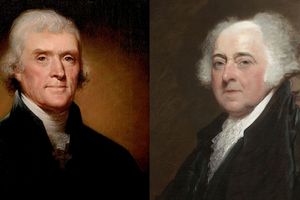
John Adams knew that as long as there is liberty, sages and argonauts cannot die.
Warren had done more than die for his country. He had died for an idea.
A perfect melding of verse and faith had at the end made Julia Ward Howe a woman like her mother.
Elizabeth Clay was an American heroine left unsung because she lived a quietly courageous life too easily overlooked by history.
The lad showed up when America was fighting for its life and asked for nothing more than a chance to help.
In 1826, Irish leaders planning a celebratory banquet for St. Patrick's Day invited Mexican officials and foreign diplomats to attend.
His colleagues dubbed him "Old Man Eloquent."
This year, to celebrate George Washington's birthday, we travel back to his youth when Virginia's colonial governor Robert Dinwiddie sent him into the trackless Ohio Country.
It is sad that he is defined by an episode whose meaning was possibly bent to a purpose and consequently could have been misunderstood.
He had accomplished what the rest of the world had long thought impossible. Stephen Decatur had managed to pacify the Mediterranean Sea.
