
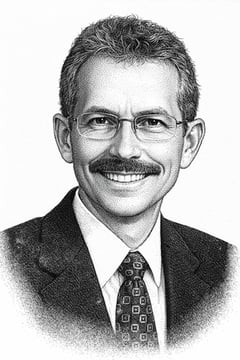
Columnist.
America’s agricultural resources are among the best in the world. American farmers, or perhaps we should call them America’s agribusiness professionals, produce essential financial crops including wheat, corn, beans, grapes, apples, etc. We are all dependent on their productivity. Indeed, American farmers are among the most productive in the world.
C. J. Box is a New York Times best-selling author. Although he has published some stand-alone novels, he is best known for his Joe Pickett series. The 17th Joe Pickett novel is scheduled for release next spring. These novels feature a Wyoming game warden who encounters all the stresses and dilemmas associated with big game hunting in one of America’s most rural states. The dilemmas that Pickett encounters provide some insight into red-state America and the angst felt by frustrated conservative Americans.
In predictable economic times, it makes sense — indeed it is essential — to put money aside and save for the coming rainy day. Trouble is brewing for each and every one of us. For some, it is just two appliances failing in the same month. For others, it is the unexpected loss of employment due to a company buyout or a changing marketplace. For some, it will be a cancer diagnosis with many expenditures, no matter how strong your insurance plan. Have you prepared for your rainy day?
Mary Poppins was “practically perfect in every way,” except that Mary Poppins isn’t real. I fall very short of “practically perfect” in any way, every single day. I do things I regret; even more I fail to do things I should. Beyond these sins of omission and commission, however, even when I do the right things, I often do them for the wrong reasons. Hester wore a scarlet “A” on her chest. I wear almost the entire alphabet. Perhaps my “A” is for arrogance; my “G” is for greed; and my “J” is for jealousy. My “S” is in the largest font of all and represents selfishness. I’m just getting started, but that’s enough self-disclosure for now.
Dream surveys consistently show that dreaming about being back in school is among the top three content areas of our adult dreams. College is often described as being the best years of our lives (though I don’t care to repeat those years), yet our college dreams are more often nightmares than glowing memories.
During the commencement ceremony at Grove City College in Grove City, Pa., where I am a professor, we will be singing Isaac Watts’ “O God, Our Help in Ages Past.” Tears will come to my eyes as we harmonize the line, “*Time, like an ever-rolling stream*, bears all its sons away.” Once again men and women, students that I have come to admire and value, will leave our hallowed halls and begin their new lives. In most cases, my aging mind will forget their names, but I will remember our conversations and lessons. These will not be forgotten. These students have met all the qualifications for their degrees and will spread across the globe as they pursue new opportunities of employment and service.
In recent years there have been far too many cases in which elections in America have been rigged. As a result of court involvement, the guilty parties have in some cases spent time in prison, in some cases been released on parole, and in some cases paid fines for their involvement. You might assume that new safeguards have been put in place to restore public confidence in the fairness of elections in America. Unfortunately, however, many proposed safeguards have been politicized in ways that have prohibited their use. In a recent sampling of voting fraud in America, the Heritage Foundation reported on almost 300 documented cases from 43 states. In each and every one of these cases, either the individuals were convicted of fraud, or the results of the election were overturned.
Described by the Belaruskaya Entsiklopedia as the “largest technological disaster of the 20th century,” the catastrophe at Chernobyl was the equivalent of 350 atomic bombs being dropped on Hiroshima. To increase your understanding of this tragic event, I highly recommend Svetlana Alexievich’s book, “Voices from Chernobyl: The Oral History of a Nuclear Disaster.” Alexievich was recently honored as the winner of the 2015 Nobel Prize in Literature, a well-deserved honor.
In “Pleading Guilty,” best-selling novelist Scott Turow wrote, “What kind of ethical social system takes as its fundamental precepts the words ‘I’ ‘me’ and ‘mine’? Our two-year-olds start like that and we spend the next twenty years trying to teach them there’s more than that to life.” Fyodor Dostoyevsky, in his novel, “The Possessed,” built his entire tome around this idea, as he described humanity as we become possessed with self. His portrayal is so compelling that I personally consider this the greatest novel ever written.
Of course, it’s not a new verb; it’s in older dictionaries. I have been hearing it much more frequently, however, and I am becoming alarmed. We as a society are much more aware of the risks of being concussed, and we have developed strict and cautious protocols, whereby individuals having been concussed are told to avoid physical exertion and to limit activities that require thinking and mental concentration, such as schoolwork. Some have been told to stay home from school for weeks in order to facilitate their recovery.
In his 1850 short story, “The Great Stone Face,” Nathaniel Hawthorne described the legend of the Old Man of the Mountain: “At some future day, a child should be born hereabouts, who was destined to become the greatest and noblest personage of his time, and whose countenance, in manhood, should bear an exact resemblance to the Great Stone Face.” In this short story, immortalizing this geological structure in the White Mountains of New Hampshire, a series of high profile figures is each declared to be the front runner, until the local citizen, Ernest, determines that the resemblance is lacking.
As a college student, in an era when college tuition was much lower, I was able to pay my college bills without taking any loans. First, I had the support of my parents. They paid my bill in full for my freshman year, with the understanding that they did not have sufficient resources to continue that contribution for four years. In February of that year, I started working as a part-time janitor in a middle school. I spent most of my hours vacuuming, during which time I memorized vocabulary words for the foreign language I was studying, multitasking as much as I could. I accepted extra hours whenever they were offered, which often meant shoveling sidewalks and mowing grass.
According to a recent report by the Centers for Disease Control and Prevention, life expectancy in the United States is the longest ever, approaching 79 years. This was highlighted in the recent Time cover story, “This Baby Could Live to Be 142 Years Old.” With very few exceptions — such as the flu pandemic of 1918, which caused the life expectancy to temporarily plummet by a dozen years — our life expectancy has continued with a positive trend line throughout our nation’s history.
