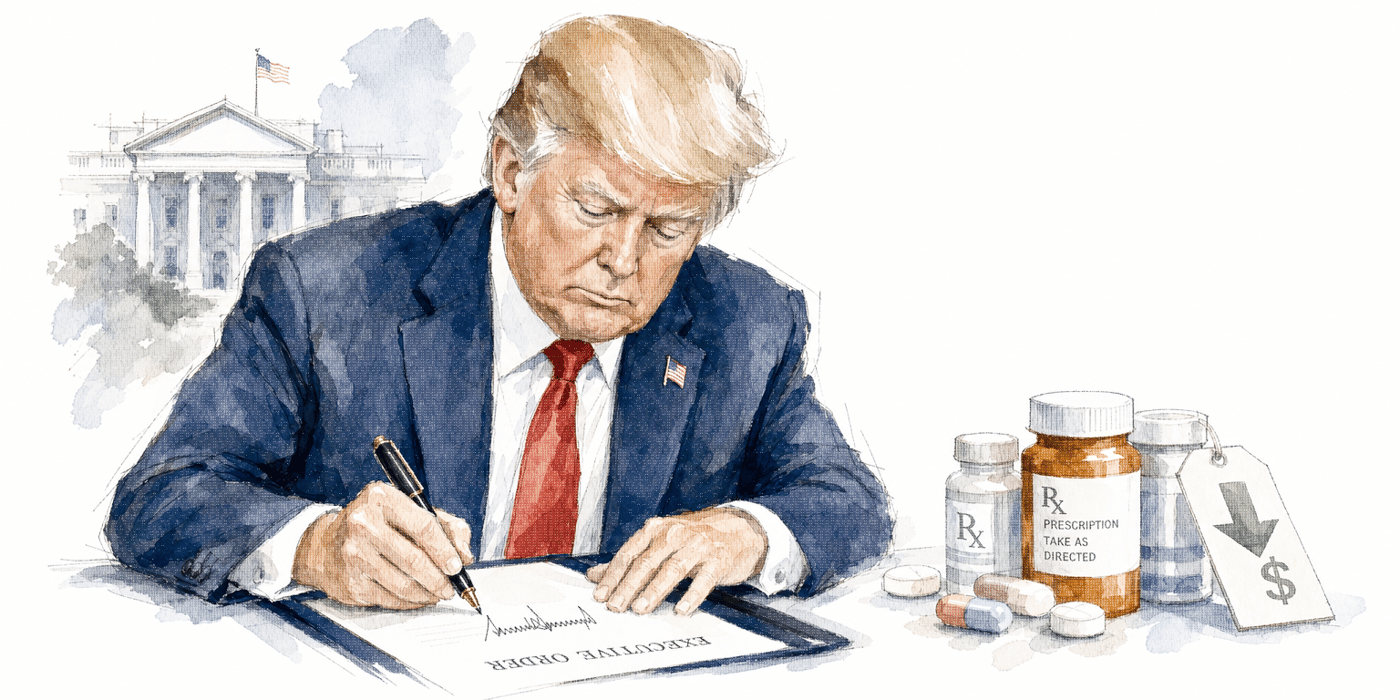

On Monday, President Donald Trump announced that nine more pharmaceutical companies have agreed to lower drug costs for state Medicare programs, bringing the total to 26 drugmakers that have joined the “most-favored-nation” drug pricing policy.
This policy took effect in February. As a result, Medicaid beneficiaries are saving millions — and with this latest infusion of drugmakers, Americans will continue to experience the biggest price cut for medicines in 60 years.


.@POTUS announces a major expansion of his Most Favored Nation drug pricing initiative — with nine new pharmaceutical companies committing to deliver their lowest drug prices for American patients.
“With today’s announcement, we now have 26 companies representing 90% of the domestic pharmaceutical market, and the other 10% are also coming in,” President Trump said. “They have no choice.”
Frankly, the incentive to join this administration’s effort to lower drug costs is pretty alluring. Companies that comply are exempt from future tariffs.
Trump has also called on Congress to codify these agreements and “make them permanent.”
With the midterm elections coming up in two months, affordability is the buzzword. Americans are struggling with high consumer prices and high interest rates. Trump is a shrewd politician — he knows the castle is safe only if the cottage is happy, and there isn’t much he can do about interest rates, which are controlled by the Federal Reserve. Reducing drug costs, however, is a relief to the millions who need it.
This is particularly game-changing for those fighting rare and chronic illnesses such as glaucoma, macular degeneration, hemophilia, Parkinson’s disease, and various forms of cancer.
However, it is also worth noting that, while drug prices are coming down, some new cures still lack approval. In a Washington Examiner op-ed, health economist Fred Roeder cites gene therapies as an example:
In 2025, the Food and Drug Administration approved about 10% fewer drugs than in the two previous years. Several gene therapies, usually costly but only needed once in a lifetime, were rejected by the FDA. These therapies could save the lives of young patients born with rare hereditary diseases. While decisions to block the approval of expensive gene therapies mean lower drug expenditures in the short term, they also are a death sentence for patients who don’t have years to wait for a new FDA leadership.
All in all, Trump’s drug pricing policy is a step in the right direction and really good news for the American people. Hopefully, it will have a ripple effect across the rest of healthcare, meaning lower doctor bills and lower insurance premiums.