
Republicans in Congress averted a government shutdown this week.
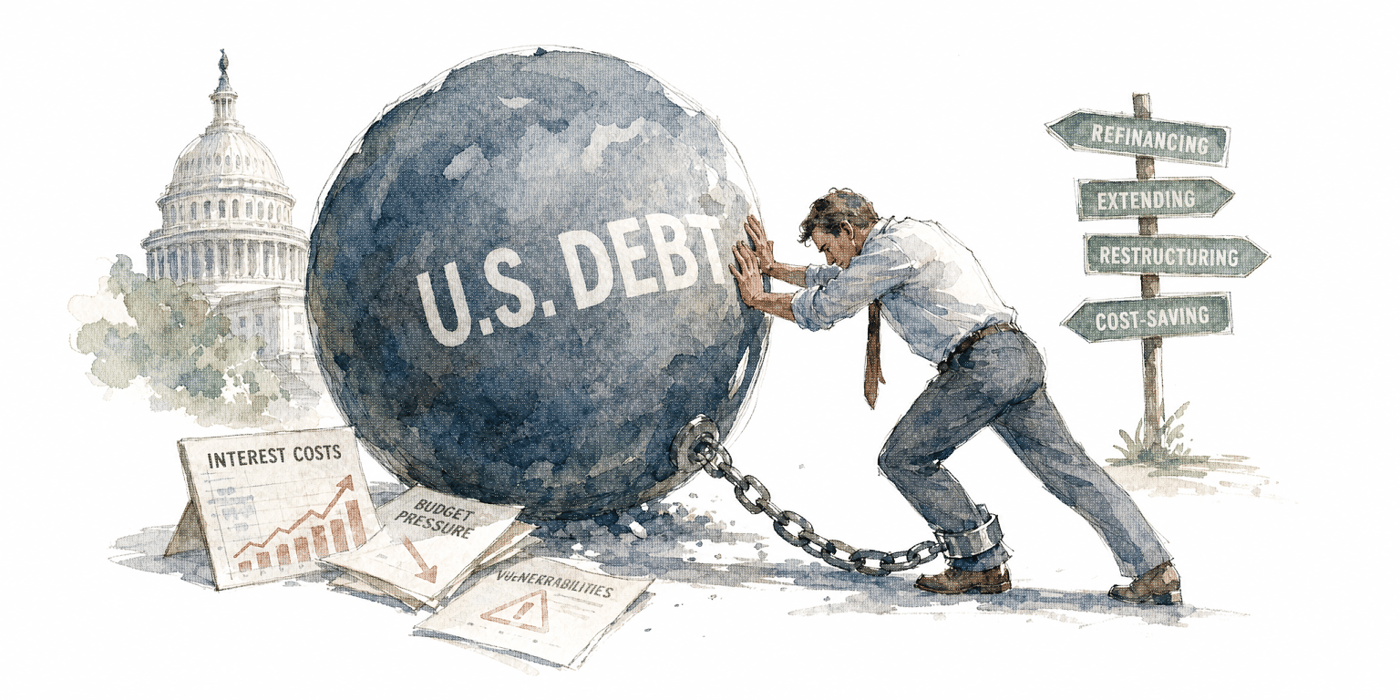
That’s good news, except it’s yet another moment when politicians took the easy way out instead of trying to solve the real issue of our national debt, which recently hit the $40 trillion mark. The short-term funding bill, already passed by the Senate, now heads to President Donald Trump’s desk, where his signature is a given.
As the editors at National Review write, “The unfortunate reality is that so long as the U.S. keeps piling up more debt, there is only so much that clever maneuvers can do to ease the costs and vulnerabilities that go with it.”
Just this week, Kenneth Rogoff, former economist at the International Monetary Fund and professor of economics at Harvard University, expressed concern over our growing debt during an interview at the annual meeting of the Federal Reserve in Wyoming. His outlook is a stark and serious assessment of our fiscal predicament. Reforming entitlements and tackling the debt will be “very difficult to do till we have a crisis that convinces voters something has to happen,” Rogoff explains. “They’re not convinced.”
Rogoff adds, “But I think a larger issue, which has been a big topic at this symposium for years and years, was a near religious conviction among academic economists in the journals that interest rates were gonna go down and down and down. So who cares how much debt you owe? You’ll never have to pay interest on it. And I think that’s dominated the political landscape.”
In other words, neither Republicans nor Democrats seem to care about the debt, so they keep kicking the can down the road. Hitting the $40 trillion mark should have sent shockwaves through Congress and in the media. It was an earthquake, but no one noticed.
One consequence of hitting $40 trillion in debt is inflation. One consequence of inflation is raising interest rates to tame it. And higher interest rates only lead to greater debt.
In practice, higher interest rates mean that Americans with adjustable or variable-rate credit cards or home loans end up paying more in interest. New loans for homes, cars, or businesses are more expensive. That leaves less money to spend each month on consumer goods, groceries, or paying down bills. More broadly, it becomes more expensive for the government to borrow money to service the debt.
Entitlements and interest make up a big part of that debt.
According to the Tax Foundation, “Spending on entitlements and interest on the debt is crowding out other federal spending, including defense and nondefense discretionary spending, and putting upward pressure on deficits and debt.”
It’s a never-ending, volatile cycle: a single statement from the Federal Reserve often causes a ripple effect, especially when that statement contradicts the president’s long-held position.
“Markets flipped on rate expectations,” CNBC reported following Federal Reserve Chair Kevin Warsh’s keynote speech last week at the Fed’s annual symposium in Wyoming. “Prior, they expected little likelihood of a rate increase until at least December; after that changed to a high probability of one when the Federal Open Market Committee meets in a little more than two weeks.”
The fact that Warsh and President Trump are now so amenable to raising interest rates, especially when it looks like Democrats will sweep into power this November, says a lot about the priorities of the Trump administration. Trump, who regularly insisted that interest rates were too high and previously called on the Fed to lower them, hasn’t expressed any concern over Warsh’s statements about a possible rate hike.
“Speaking to reporters in the Oval Office on Aug. 31, Trump said the U.S. economy could grow at a rate as high as 20%, but added that even such a boom should not prompt a Fed hike,” reports USA Today. Now, it looks like higher interest rates are back on the table.
One of the solutions for paying down our debt is to jump on the artificial intelligence bandwagon.
According to The Daily Economy, “If that sounds less like a policy plan and more like a retirement strategy built around winning the lottery, you’re not wrong. The entire scenario hinges on a massive if: that AI generates extraordinary revenue and does it quickly enough to outrun rising interest costs. But even if the government hits the tax revenue jackpot before Congress drives us off a fiscal cliff, it would be naïve to assume lawmakers would pay down the debt.”
And that’s the real problem. Congress doesn’t have the courage or even the interest in entitlement reform or cutting federal spending. Members are pinning their hopes on future revenue streams that may or may not develop. And if they do, lawmakers will just find new ways to spend it.
For now, the American people don’t seem to care much about the debt either. As some economists have warned, maybe a debt crisis will finally force all sides to address a problem we can’t afford to ignore.