
For almost seven weeks, jurors in Massachusetts heard testimony about a fact nobody seriously disputed: Lindsay Clancy killed her three children.
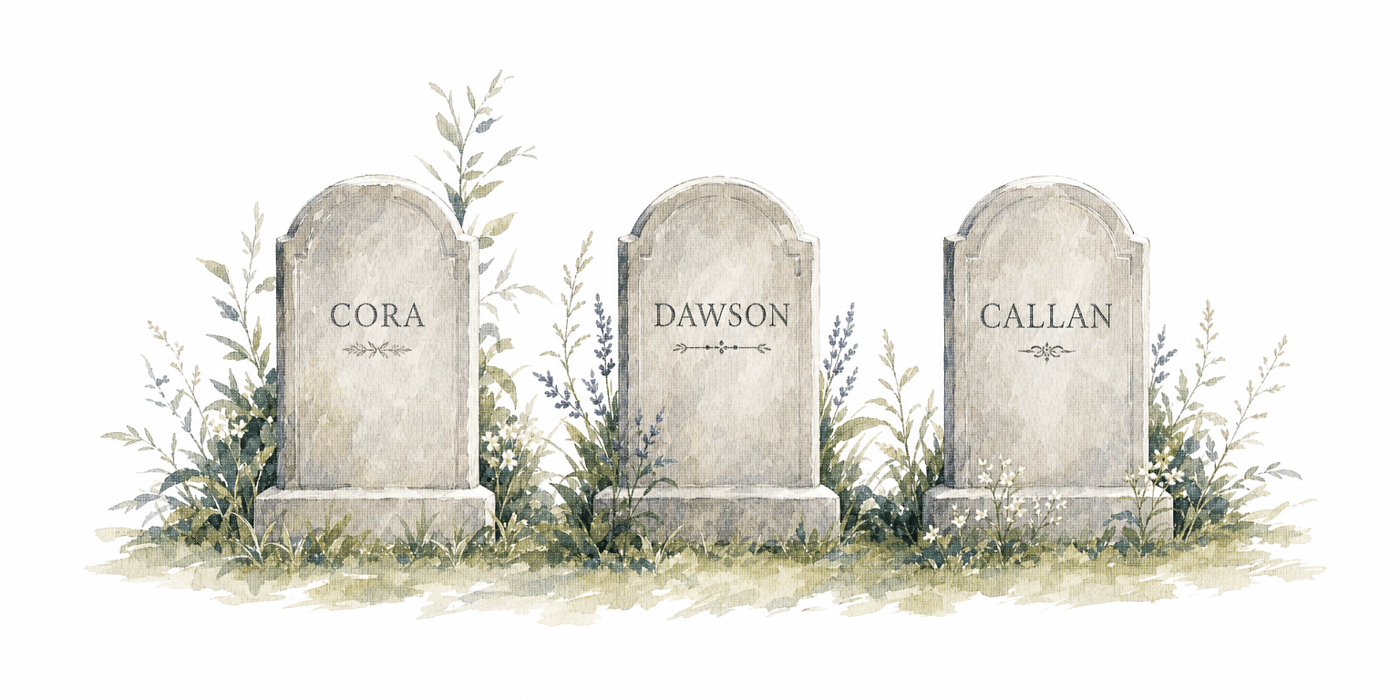
On January 24, 2023, Lindsay asked her husband, Patrick, to pick up dinner and run an errand for the family. While he was away, Lindsay strangled their three children — five-year-old Cora, three-year-old Dawson, and eight-month-old Callan — with exercise bands inside their Duxbury home. She then attempted to take her own life, cutting her arms and neck before jumping from a second-story window. She survived the fall but was left paralyzed from the waist down.
When Patrick arrived home, the house was completely silent, and no one answered when he called out. He initially assumed Lindsay was bathing the children, but after finding the bathroom empty, he went to the master bedroom. The door was locked, forcing him to break in. There, he found blood “sprayed” throughout the room and saw Lindsay lying in the snow beneath the second-story window.
Patrick rushed outside and desperately asked what had happened. Barely responsive, Lindsay told him she had tried to take her own life and that the children were in the basement. Moments later, Patrick can be heard on the 9-1-1 call screaming in horror as he discovered the lifeless bodies of his three young children. When the recording was played at trial, the devastating call visibly affected the jurors.
Lindsay has admitted to what she did. She later described killing Dawson first, then Cora, then Callan, according to testimony from prosecution psychiatrist Dr. Gregory Saathoff. She claimed that a male voice repeatedly commanded her to kill the children and herself, telling her it was her “last chance.” Another psychiatrist testified that Lindsay said she told her children, “Go to God,” as she strangled them.
So the trial was never really about who killed these children. It was about whether Lindsay Clancy was legally responsible for killing them.
The defense argued that she was suffering from postpartum psychosis, compounded by serious mental illness and a chaotic course of psychiatric treatment. Jurors heard that Lindsay had struggled for months with anxiety, depression, intrusive thoughts, and suicidal ideation; had sought extensive psychiatric help; and had been prescribed numerous medications. Her family described a dramatic deterioration in her mental health.
Defense psychiatrist Dr. Phillip Resnick concluded that Clancy was psychotic and experiencing command hallucinations, testifying that the mother of three described feeling as though an “external force” had taken over, leaving her no longer in control of her own body. But prosecution experts strongly disagreed.
Forensic psychologist Dr. Kirk Heilbrun testified that despite her mental illness, Clancy understood that killing her children was wrong and retained the ability to conform her behavior to the law. Saathoff questioned Lindsay’s description of the mysterious voice itself — particularly because she had never previously reported auditory hallucinations and claimed the voice disappeared immediately after she finished strangling Callan.
Then there was the planning.
Prosecutors argued Lindsay deliberately created a window of opportunity by sending Patrick to CVS and then to pick up dinner from a restaurant farther from their home. Phone evidence showed searches involving CVS, children’s laxatives, and the restaurant before Patrick left.
In closing arguments, prosecutor Jennifer Sprague rejected the defense’s portrayal of Lindsay acting involuntarily “like a puppet.” The prosecution’s theory was that Lindsay knew exactly what she was doing, understood it was wrong, and deliberately waited until she was alone with the children.
Defense attorney Kevin Reddington argued the opposite: the medical system had failed a severely mentally ill woman, and that illness ultimately destroyed the entire Clancy family.
And that left 12 jurors with an extraordinarily difficult question.
Not whether Clancy was mentally ill. Clearly, she was struggling.
The question was whether that mental illness eliminated her criminal responsibility for killing three children.
After roughly 40 hours of deliberations over seven days, they couldn’t agree. The reported split was 11-1 in favor of finding Lindsay not guilty by reason of insanity. The foreperson complained that one juror was refusing to apply the reasonable-doubt standard properly. Reddington fought to have that juror removed, but Judge William Sullivan refused. An emergency appeal failed, and the trial ended in a mistrial.
What happened afterward was almost as disturbing as the circus surrounding the trial.
Reddington publicly went after the lone holdout.
“They know that they were robbed by one man, for whatever his agenda was,” he told reporters before adding, “I hope that guy can sleep well at night.” He called Lindsay a “fantastic, wonderful individual” and said his “heart breaks for her,” arguing that she deserved the acquittal.
But another statement after the mistrial deserves considerably more attention.
District Attorney Timothy Cruz said, “This was and has always been about getting justice for those three little babies. We’re here at this courthouse today because those children are not.”
Exactly.
Because somewhere along the way, Lindsay Clancy became the central victim in a story where three small children were strangled to death.
Hundreds of supporters gathered outside the courthouse, many of them women who identified deeply with Lindsay because of their own experiences with postpartum depression, anxiety, or other maternal mental-health struggles. National coverage has documented women traveling across the country to support her and describing her story as representative of broader failures in maternal mental healthcare.
There is nothing wrong with demanding better treatment for postpartum mental illness. We absolutely should.
There is nothing wrong with having compassion for a mother suffering from severe psychiatric problems. We absolutely should.
But compassion becomes twisted when we romanticize someone who killed three children, turning a horrific act into something that somehow elevates her above the countless women who face similar struggles, fight through them, and make it to the other side without taking the lives of their innocent children.
And some of the cultural conversation surrounding this case has gone even further, treating Lindsay’s actions almost as the horrific but understandable endpoint of motherhood, inadequate mental healthcare, societal expectations, and a system supposedly failing women — as if this is something we should now expect.
That should alarm every mother — and every sane, moral person who understands the broader consequences of such a profound erosion of our society’s moral foundation.
Millions of women experience postpartum depression. Some experience psychosis. Countless mothers have felt overwhelmed, frightened, depressed, or desperate.
Yet the fact remains that the overwhelming majority of mothers — even those struggling with mental illness, severe sleep deprivation, or a lack of meaningful support — do not murder their children. They should be the women we encourage struggling mothers to look to for inspiration — not those who gave in to their darkest moments and made their innocent children pay the ultimate price.
Mental illness can help us understand behavior. In rare circumstances, the law recognizes that it can be so severe that a person cannot be held criminally responsible — and that was precisely the legal question this jury was asked to decide about Lindsay Clancy.
But acknowledging mental illness cannot require abandoning moral judgment altogether.
We can simultaneously say that Lindsay Clancy desperately needed help and that postpartum mental illness deserves serious attention while also recognizing that Cora, Dawson, and Callan were innocent human beings whose lives mattered, and that they deserve justice for the horrific way their lives were taken.
Sympathy should never require us to forget the victims, nor should we ever elevate the person who committed the unimaginable above those who suffered at their hands.
When society becomes comfortable celebrating the person who killed three children rather than demanding justice for the children themselves, something much bigger than one jury verdict has gone terribly, terribly wrong.