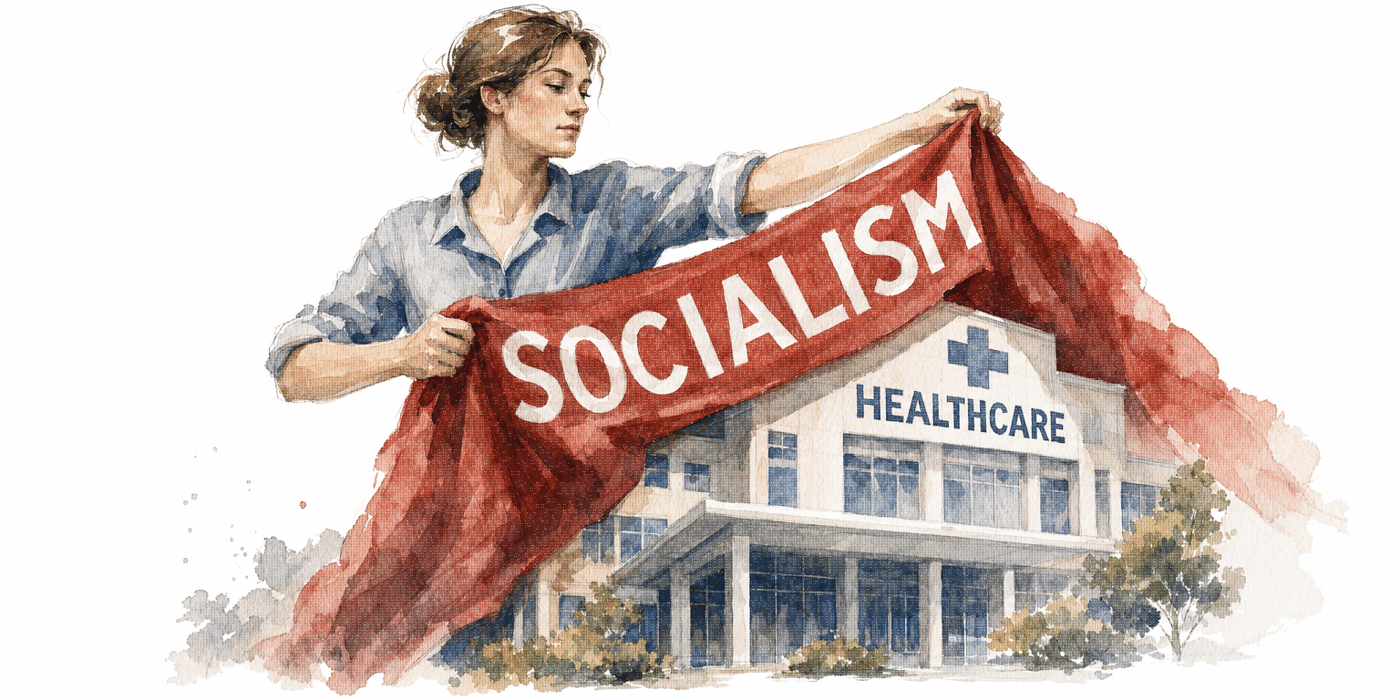

There’s a lot of talk these days about the high cost of living, and while most of us worry about paying for gas, food, rent, and other necessities, the exorbitant cost of healthcare is also really adding to the stress of making ends meet.
One reason why healthcare costs are soaring is the ironically named Affordable Care Act signed into law in 2010. Also known as ObamaCare, the act promised something it couldn’t possibly deliver. Funding healthcare with taxes propped up the system for a while, but then it became unsustainable. When the federal government steps in and pledges to pay for healthcare, it removes incentive for providers, insurers, and healthcare facilities to keep costs down.
The reality is no one cares about the cost of a product if someone else is paying for it. Even employer-provided health plans mask the true expense. Workers don’t question or even bother to check healthcare costs if the bill is paid. But the money comes out of paychecks that shrink as health plans rise.
After the pandemic, the initial $130,000 income limit for ObamaCare was raised so that anyone could get health coverage, even millionaires. In other words, many Americans were getting other Americans to pay for the total cost of their prescriptions and surgeries. As more people joined a government entitlement, healthcare costs surged. Instead of finding ways to cut costs, providers and drug companies took advantage of the system.
After the pandemic-level subsidies ended in 2026, millions of people dropped out of the Affordable Care Act. Without those taxpayer contributions, many Americans still on the plan faced the outrageous costs of healthcare that had been masked. It was a stark moment that exposed ObamaCare’s corruption and inefficiency.
Another factor driving rising healthcare costs is burdensome, bureaucratic government regulation, which makes it difficult for new companies to enter the market, reducing competition and slowing innovation.
According to Americans for Prosperity:
Under the ACA, insurance plans are mandated to cover a long list of “essential health benefits,” even if families don’t want or need them. This means more expensive plans for everyone, and forces younger, healthier Americans to make tough choices about their insurance. At the state level, additional regulations called certificate-of-need laws can make things worse. These regulations require new hospitals, clinics, and doctors’ offices to obtain government permission before construction can begin. These laws protect established providers from competition and reduce access — especially in rural areas, where options are already limited.
And let’s not forget about fraud. Any government health entitlement is bound to be rife with it, especially at the federal level. One glaring example is the skin patch scheme in which fraudulent claims were made at the expense of taxpayers. Claims skyrocketed from $200 million in 2019 to more than $14 billion in 2025. Earlier this summer, as part of the 2026 National Health Care Fraud Takedown, the Department of Justice charged more than 400 defendants involved in various schemes. Health and Human Services Secretary Robert F. Kennedy Jr. claims more than $100 billion per year is stolen from Medicare and Medicaid.
Democrats have taken up the mantle of affordable healthcare for decades, but they only have one answer: socialized medicine. They want government bureaucrats and politicians to run the healthcare industry at taxpayer expense while masking the laundry list of negative outcomes of that approach. So desperate to convince Americans to embrace socialized medicine, Democrats like Senate candidate James Talarico claim that letting the government run healthcare is part of being a good Christian.
As for Republicans, President Donald Trump has pledged to reduce the costs of expensive prescription drugs by implementing what it known as Most Favored Nation drug pricing. On the surface, it sounds good, but in reality it ties drug prices in the U.S. to the systems of socialized medicine in other countries.
As Hannah Lape of Concerned Women for America writes:
Tying U.S. prices to prices set by severely flawed foreign government-run health systems is not a morally neutral policy choice. It risks importing the anti-American assumptions and mechanisms those systems use: bureaucratic gatekeeping, delayed access, and quality-of-life judgments that reject the inherent dignity of all human life.
Some of the approaches to lowering healthcare costs include direct primary care, where patients pay health providers directly, eliminating the insurance middleman. Other solutions include health savings accounts, which keep patients directly connected to the costs of healthcare, and association health plans, where workers and small businesses form groups to keep insurance rates lower. Reforming certificate of need laws and occupational licensing would streamline healthcare services. And we need to continue cracking down on those stealing money from Medicare and Medicaid.
As the Foundation for Economic Education explains:
Decades of tax law, licensing rules, and centralized drug approval had built a system that hid the cost of almost everything from the patient. Fixing it doesn’t require choosing between compassion and markets. It requires giving each its proper role. Let insurance do what it does well. Protect families against catastrophic losses. Let transparent prices, competition, and patient choice do what they do well. Make routine care easier to see, question, and compare.
Whatever we do, the current approach isn’t doing anything other than keeping millions from having access to quality healthcare and pushing others to their financial limits to get it. Politicians, drug companies, and insurance providers like the current system, and that’s the best reason to change it for the better.