
Back in 2021, an NBC Sports reporter misheard a chant at a NASCAR race and thought the fans were shouting, “Let’s go, Brandon!” The reporter was interviewing Brandon Brown, a race car driver, so it sort of made sense — maybe. However, the crowd was actually shouting, “F**k Joe Biden!” After the episode, “Let’s go, Brandon” became a G-rated euphemism that people used to express their dismay at President Joe Biden strangling the economy with hyperinflation, among other radical left-wing policy moves.
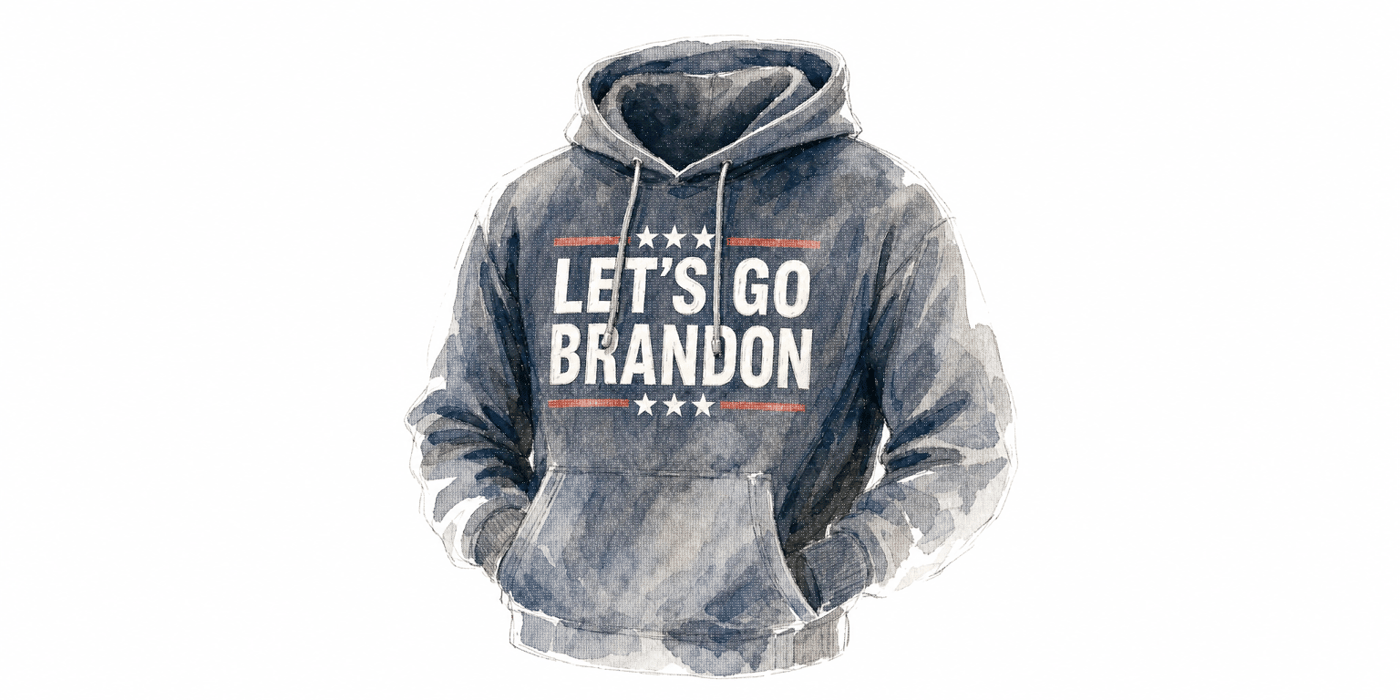
A Michigan mother from Newaygo County was so taken with the phrase that she bought “Let’s go, Brandon” sweatshirts for her sons that Christmas. When the boys went back to school wearing those sweatshirts, the assistant principal insisted that they take them off because they were obscene. Failure to do so would result in punishment or even suspension.
Schools have every right to enforce whatever dress code they desire. However, schools are also supposed to be a marketplace for incubating and exchanging ideas, including political ones. Some may argue that political shirts (which can encompass inflammatory views) distract from the learning environment, but who’s to say? One teacher may find a political shirt harmless, while another may vehemently disagree. Perhaps the teachers are the problem, not the students.
Furthermore, these particular sweatshirts did not say “F**k Joe Biden” or even “FJB”; they said, “Let’s go, Brandon.” While culturally and politically informed people know exactly what that euphemism is, it doesn’t by itself use any vulgar words. It’s not a school dress code violation under obscenity standards, though it does offend the political beliefs of a certain party and therefore might provoke a political discussion.
The family decided to fight back legally, arguing the euphemism ban violates the First Amendment. The shirt’s language isn’t explicit; it leaves interpretation up to the reader, and interpretation is subjective.
According to Conor Fitzpatrick, chief supervising attorney for the Foundation for Individual Rights and Expression (FIRE) and one of the lawyers defending the boys, “The First Amendment permits schools to censor nondisruptive political speech for ‘lewdness’ or ‘vulgarity’ only if it is ‘plainly’ so, not if any teacher could ‘reasonably’ view it that way.”
In 2024, a district court in Western Michigan said that the lettering was close enough to a swear word to be deemed offensive. A court of appeals upheld that ruling. Now the family’s lawyers at FIRE have filed a petition for certiorari, meaning they are appealing to the U.S. Supreme Court. If accepted, this case would be an interesting exercise in discovering what speech students are actually allowed to have. The answer should be any and all political speech, as long as it isn’t profane or criminal.
As it stands now, the district courts have set a dangerous precedent. They have said that if a teacher deems something offensive, then they can demand the removal of the offending item. That could change from class to class. The standards should be clear-cut. What is “offensive” speech in school — euphemisms cleverly designed to fly under the radar, or actual curse words?
If SCOTUS takes on this case, it could ensure that schools do not cross the line when it comes to freedom of speech and the First Amendment.