
Tariffs almost always run counter to free-market economics. They are a direct form of government intervention, raising the price of foreign goods and interfering with the natural balance between supply and demand. Conservatives therefore have good reason to be skeptical of them.
The basic economics are simple. A minimum wage set above the market rate can make hiring more expensive, leaving low-skilled workers without jobs. A tax on a product raises its price, discouraging consumers from buying it and businesses from producing it. Tariffs operate in much the same way. They increase the cost of imported goods, distort prices, and ultimately leave American consumers paying more. Under normal circumstances, that is bad economics.
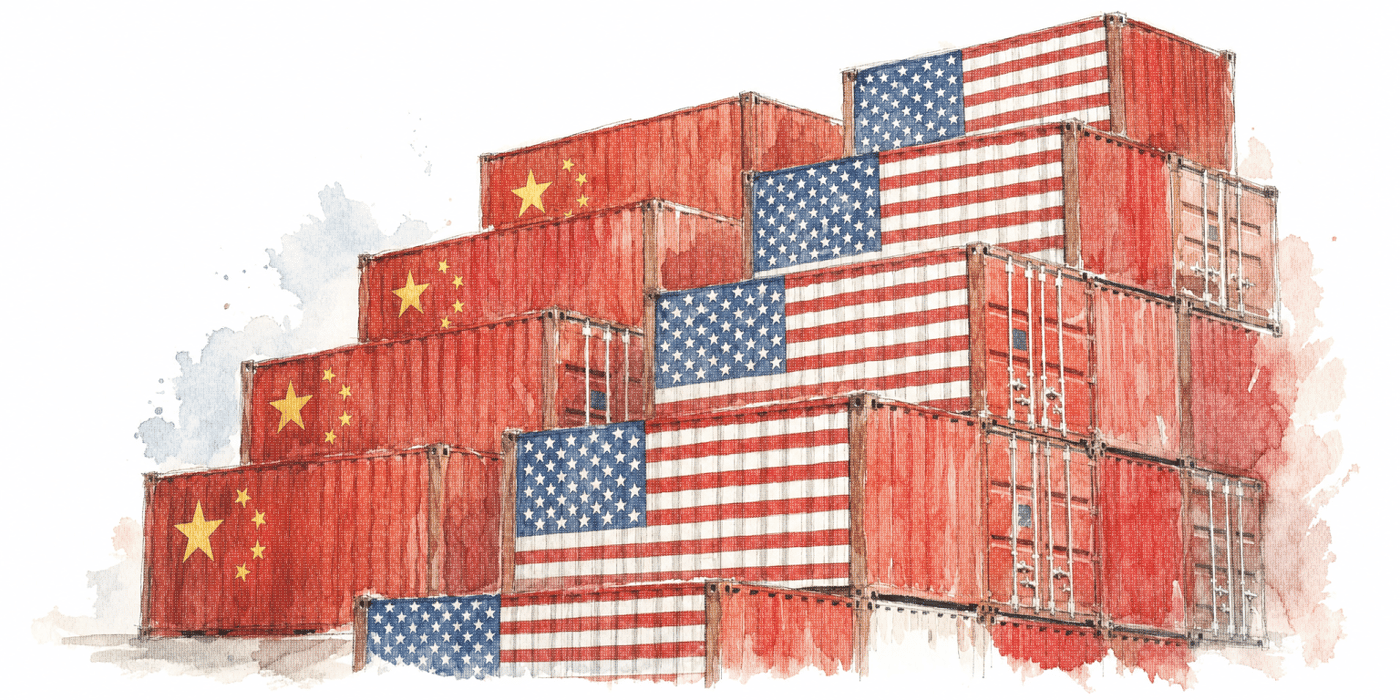
At first glance, President Donald Trump’s tariffs on China would seem to violate the same principle. If China can manufacture a product more cheaply than the United States, traditional free-market economics says there is nothing inherently wrong with Americans buying it from China. Comparative advantage allows countries to specialize in what they produce most efficiently, lowering prices and increasing overall wealth.
But that logic assumes both sides are competing under market conditions. China is not.
China officially describes its system as a “socialist market economy,” and its major industries operate with levels of government support that fundamentally alter competition. The Organisation for Economic Co-operation and Development (OECD) found that between 2005 and 2024, Chinese industrial firms received, on average, three to eight times as much government support as firms based in OECD countries. These benefits include direct grants, tax concessions, below-market loans, and other advantages that their foreign competitors cannot necessarily obtain.
The consequences are easiest to see in individual industries.
Consider solar panels. Chinese companies now account for more than 90% of global solar-module shipments, while producers in OECD countries have seen their combined share collapse from roughly 80% in 2005 to less than 10% today. This transformation was not simply the result of Chinese manufacturers discovering more efficient production methods.
The OECD found that solar manufacturing was the most heavily subsidized of the 15 industries it examined between 2005 and 2024, with Chinese producers receiving by far the largest share of government support. Beijing helped its manufacturers finance enormous production expansions, allowing them to compete at prices that would be difficult for unsubsidized businesses to sustain.
By 2024, global solar manufacturing capacity had grown to more than twice global demand. Prices fell so dramatically that some Chinese manufacturers were selling panels below their own break-even costs. In a free market, companies that consistently fail to cover their costs must eventually reduce production or shut down. Government assistance can allow firms to continue operating despite those losses, placing unsubsidized competitors at a significant disadvantage.
Steel provides another example. Chinese steelmakers have benefited from direct grants, tax concessions, and below-market financing, alongside less transparent forms of assistance, including preferential access to land, energy, and raw materials.
These subsidies have had a measurable impact on global competition. According to the OECD, government subsidies explain approximately 22% of the global market-share gains achieved by expanding firms between 2005 and 2023. For Chinese firms, that figure approaches 60%.
What appears to be the success of private competition is, to a substantial degree, the result of government intervention.
China’s advantages also extend beyond subsidies. The U.S. Trade Representative has documented coercive technology transfers, trade-secret theft, and state-supported cyber intrusions aimed at obtaining valuable American commercial information. In its 2018 Section 301 investigation, the U.S. government estimated that these practices caused at least $50 billion in annual harm to the American economy.
A free-market system rewards entrepreneurs who discover better ways to manufacture products and meet consumer demand. China’s economic strategy has rewarded the theft of American intellectual property, allowing firms to reproduce innovations without bearing the costs of developing them.
Trade with China is not ordinary competition between businesses operating under the same rules. It is an unequal game: American firms must survive on their own revenues, while Chinese firms benefit from the financial and political power of one of the world’s largest governments.
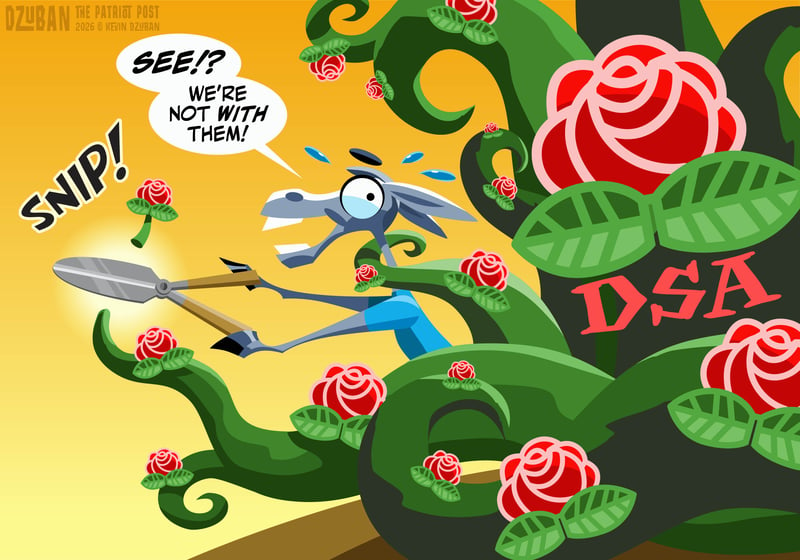
New York City Mayor Zohran Mamdani’s municipal grocery program offers a domestic illustration of the same economic problem. The city has allocated $70 million to develop five government-owned grocery stores and plans to cover major expenses, including rent and property taxes. The administration promises to sell a basket of essential groceries at prices 30% below typical retail levels.
Consider what that means for a privately owned grocery store across the street. Its owner must pay rent, property taxes, and other operating expenses while competing with a government-backed store relieved of several of those costs. Even if the municipal store offers lower prices, those prices do not demonstrate greater efficiency. They may simply reflect expenses transferred from shoppers to taxpayers.
A business does not become more efficient merely because the government agrees to pay its bills.
None of this means tariffs are without consequences. American importers and consumers still bear their costs, and poorly designed tariffs can protect inefficient domestic businesses while raising prices for everyone else. Washington should not impose tariffs simply because an American company cannot compete with a better foreign product. Competition is precisely what makes capitalism work.
But competition requires prices that reflect economic costs rather than the strategic ambitions of a foreign government.
When American businesses face competitors supported by enormous state subsidies, government ownership, and stolen technology, refusing to respond lets a foreign government manipulate them without consequence. Free markets deserve protection from government intervention — including government intervention coming from Beijing.