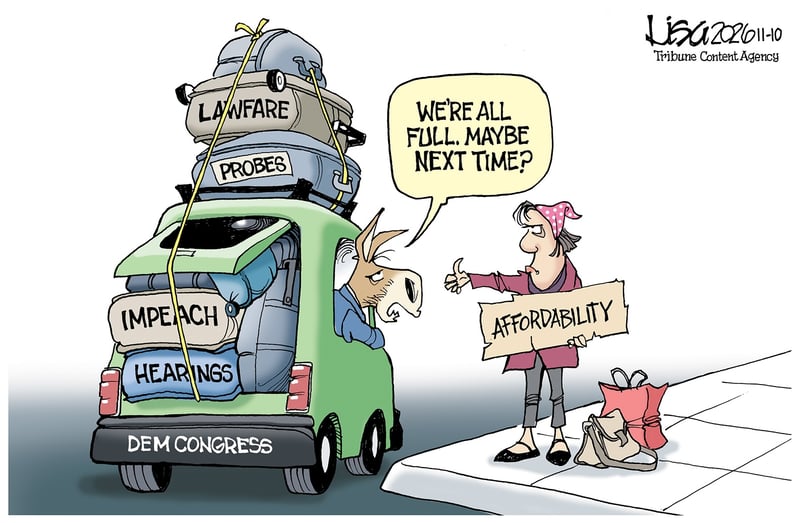

Robert Garcia is one weird dude, but that doesn’t mean he can run roughshod over the Constitution.
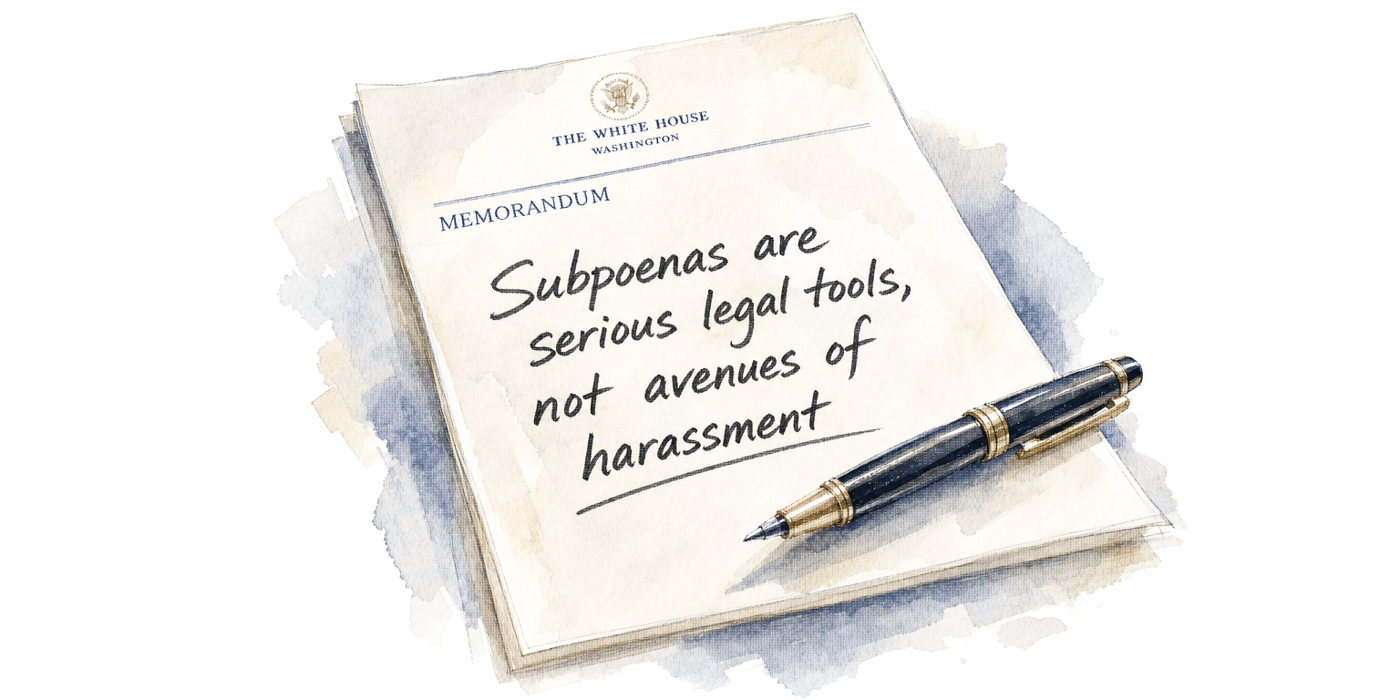
That’s the essence of a sternly worded three-page memo to Garcia from White House Counsel Will Scharf — a memo that reminds Democrats there are limits to their congressional oversight powers, and limits to their ability to hand out subpoenas “like candy” and “Mardi Gras beads,” and limits to their ability to haul before their committees not only Donald Trump’s cabinet members but also private citizens.
Garcia, the California congressman and soon-to-be chair of the House Oversight and Government Reform Committee, fancies himself “the absolute gayest” member of Congress, and he apparently thinks that his sexual preference gives him carte blanche to harass and intimidate those American citizens who deigned to work for or financially support President Donald Trump. But don’t take my word for it. Here’s how Garcia himself put it recently:
Just because you’re Kimberly Guilfoyle, or you’re Kristi Noem, or you’re Pam Bondi, and you’re no longer in office, that doesn’t mean that we’re still not interested in accountability for all of your crimes and grift. We’re not gonna, uh, I, we’re not gonna forget. Like, y’know, like, we, we can’t forget about these folks that are causing harm, like, y’know, I think it’s like, I mean, maybe it’s, maybe it’s because, I’m like, I’m gay, but, like, you know, like, like, pettiness is a thing. Like, I, I’m, I am, I’m mad, you know?

“Maybe it’s because I’m gay, but pettiness is a thing. We’re not going to forget these crimes.” —Rep. Robert Garcia on prosecuting Trump’s administration
I’m not sure how to shrink down Garcia’s self-loathing gayness — nor his separate fetish for a fictional child-murdering clown — but isn’t it interesting that the only names he named in that rant were women?
Unfortunately for Garcia, we’ve got, like, a system of checks and, like, balances, y’know?
Last week, I noted Garcia’s ominous warning to Republicans. “LAWYER UP,” he all-capped, and his comments since then shouldn’t give any of us confidence that he was merely on some post-election high.
The Trump administration, though, has no doubt been planning for this eventuality — and probably since 2024, since they knew that the Republicans’ razor-thin margin in the House was unlikely to withstand a midterm election. And so it was that Scharf gave Garcia a little constitutional lesson.
“I wish to remind you,” began Scharf, “of the foundational limits that the Constitution imposes on congressional investigations and subpoenas, which you and members of the new Congress have evinced a clear intent to transgress.”
When a lawyer uses words like “evinced,” you know he’s serious. Scharf continued:
Beyond being inconsistent with the clear, well-recognized constitutional limitations on your investigative functions, threats to executive branch officials designed to deter them from public service, or process designed merely to abuse or instill fear in the recipient may cross the line into blatant criminality. And issuing unlawful subpoenas with the intention of depriving citizens of their constitutional rights and privileges may warrant further investigation.
That last point seemed especially targeted toward the Democrats’ desire to investigate a well-known private citizen named Elon Musk.
Article III Project senior counsel Josh Hammer clearly approves of Scharf’s shot across the bow. As he told Fox News this morning, “The key points of Will’s excellent letter to the Congress is this: Congress is a legislature of enumerated powers. We know that as a basic feature of constitutional structure. James Madison writes this in The Federalist number 45. You can just open your Constitution and go to Article I, Section 8. There are 18 specifically enumerated powers of Congress. What Will is saying ... is that ... if you are going to be engaged in investigations and subpoena power, it has to be in pursuit toward the ends of fulfilling one of your specifically enumerated powers.”
This is setting up to be a slugfest between the executive and the legislative branches. And, as Hammer adds, that’s probably where it’ll stay. The courts don’t tend to wade into disputes between Article I and Article II powers because such head-butting is a traditional feature of our constitutional system. “It’s going to be a fascinating battle for the next two years,” he said. “There’s going to be a lot of executive privilege, a lot of Democratic overstepping, no doubt, and I think Will Sharf has gotten off to an excellent start.”
Not everyone, though, thinks this is excellent. The New York Times, in fact, is downright indignant. In a piece published yesterday, the Times sees Scharf’s letter as somehow menacing while seeing the Democrats’ repeated vows to harass and even prosecute Trump officials and private citizens as no big deal. As the Times fumes, “Mr. Trump has made threatening to prosecute his personal and political adversaries a hallmark of his rhetoric since his 2016 campaign, when his rallies featured ‘Lock her up!’ chants about Hillary Clinton.”
Remind me again: Did Trump ever lock Hillary up?
Perhaps the strongest argument for Scharf’s letter is also the tersest. As Hammer put it, “There is no retribution clause in Article 1 Section 8 of the Constitution. That is not a legitimate function of the government.”