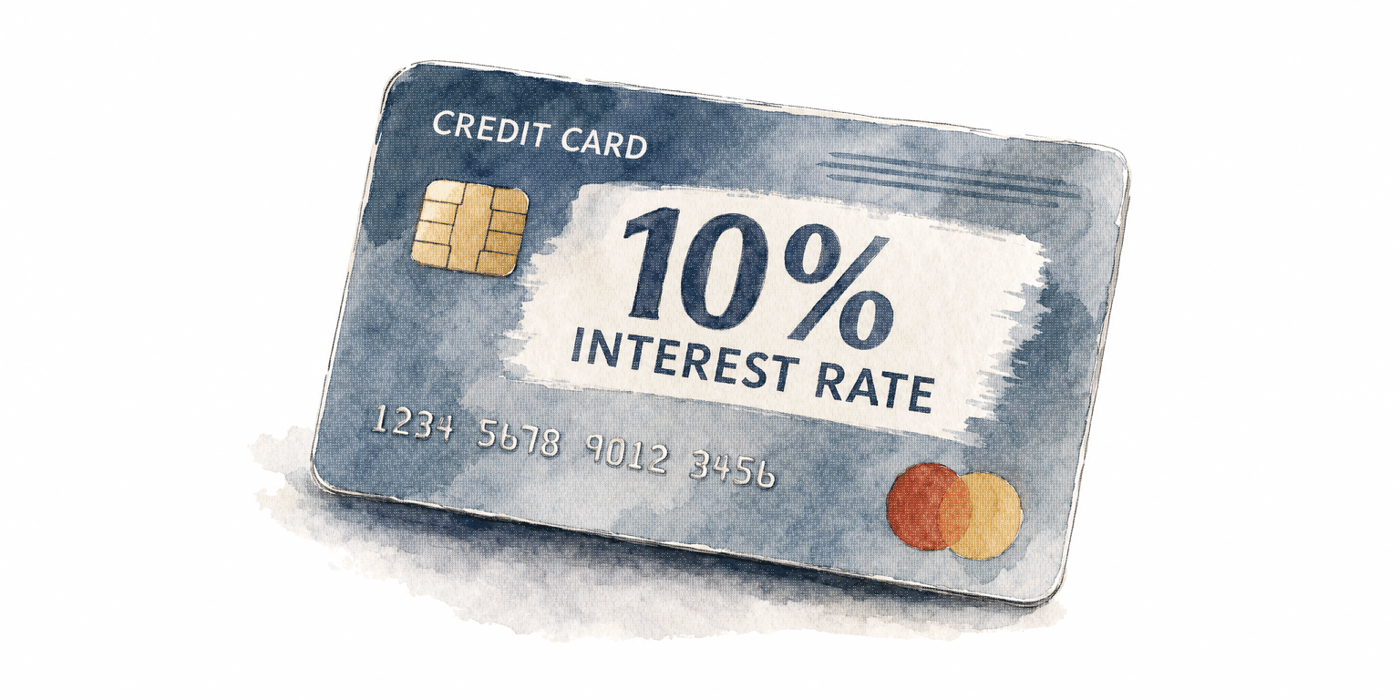

Over the weekend, President Donald Trump, in an interview with former White House Press Secretary Kayleigh McEnany, addressed an idea he had previously floated back in January. That proposal was to cap credit card interest rates at 10% for one year.
McEnany raised the proposal again, asking, “Is that a place you think you could work with Democrats to accomplish something?”
Trump answered, “It is. I said that; I didn’t even know they said it, but they’ve been trying to get that for years. I would do it.” He then argued, “These credit card companies have made a lot, and the credit card fees that they charge — I’m all into it. I know some people would say that it’s not free enterprise, but what’s free enterprise when you’re sitting home, and you get a bill that some guy set up in an office on Park Avenue, and they said let’s charge a fee that’s too high, so I’m all for that.”
It is a populist proposal, which is likely why Trump favors it. Anyone who has ever found themselves in credit card debt can immediately sympathize with the idea of halving, or more, the interest they pay on that debt. After all, with interest rates reaching as high as 35%, borrowers may end up paying more than double their original debt.
However, many Americans also overextend themselves, buying things they otherwise couldn’t afford simply because credit cards make spending easy. All told, Americans hold nearly $1.3 trillion in credit card debt.
Yet consumers with middling to poor credit ratings can only hope to get a credit card because of high interest rates. Cards require no collateral, so high rates are how credit card companies can offer credit cards to higher-risk applicants. That’s why banks and credit card companies responded quickly when Trump first floated the idea that such a policy would reduce the number of credit cards available, pushing some folks to seek out other, even more problematic sources of loans, such as payday lenders.
These negative tradeoffs are likely why Trump never acted on the idea. But now, with Congress’s incoming Democrat majority, Trump seems to want bipartisan issues he can work on with Democrats. For example, Senator Elizabeth Warren, who will chair the Senate Banking, Housing, and Urban Affairs Committee and has long advocated for capping credit card interest rates, responded, “Let’s cap credit card interest rates and save Americans money.”
So, Trump and Democrats like Warren and Senator Bernie Sanders appear to be on the same page. But is the proposal actually good for the country?
While it may offer some benefits to a few, the damage it risks to the overall U.S. economy quickly outweighs any gains.
Interestingly, capping credit card interest rates would negatively impact America’s small businesses, which employ roughly half of the nation’s workforce and account for 43% of the country’s GDP.
Around half of small business owners rely on credit cards for short-term loans, with an average business owner spending $24,000 a month. Economist Stephen Moore contends that credit card interest rate caps are an underhanded way to impose price controls. The problem with price controls is that they produce the opposite of what they supposedly try to “fix.” Rather than lowering the cost of goods, price controls actually produce greater scarcity, which pushes prices higher.
Furthermore, credit card spending helps to facilitate over $5 trillion in transactions annually. Credit cards account for one-third of all U.S. sales annually. Capping interest rates on credit cards would produce an immediate negative impact on the economy. Sales would drop, some small businesses would go under, and people would lose their jobs.
So, what sounds good from an immediate knee-jerk reaction — because nobody likes paying high interest rates — would ironically make things worse.
It will be interesting to see if anything comes of Trump’s pitch. But with Democrats soon to take control, it seems likely they would produce some type of legislation to support this economically damaging proposal. The question is whether Trump will be amenable to it or reject their final product. Time will tell.