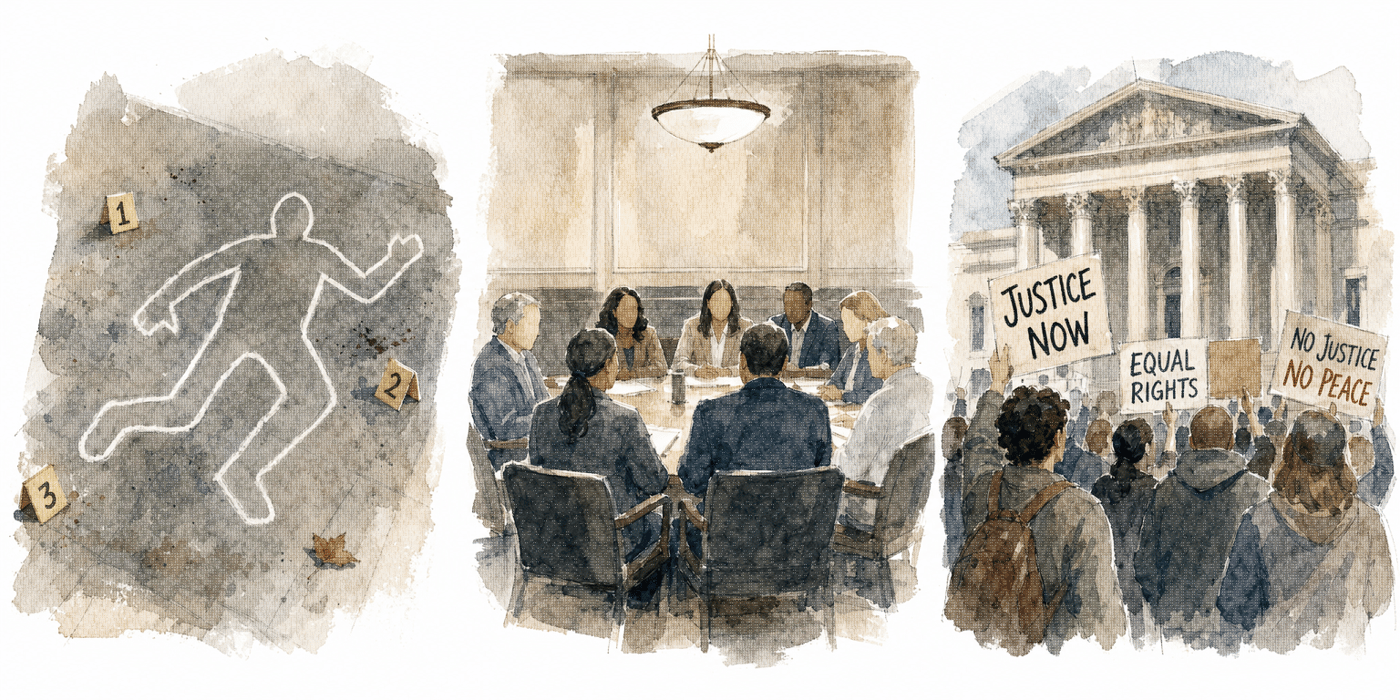

Sunny Hostin recently made a startling revelation on “The View”: before becoming a prosecutor, legal analyst, and television personality, she served on the jury in the 1991 murder trial of Daniel Rakowitz.
Almost as shocking as the story itself was the tone she used to tell it — as though she were recounting an episode of her favorite true-crime drama.
Hostin described being one of the jurors who refused to find Rakowitz criminally responsible for murdering his roommate, 26-year-old Monika Beerle. Rakowitz didn’t simply kill Beerle. He dismembered her body, boiled portions of her remains, and, according to testimony at trial, claimed to have fed soup containing her flesh to homeless people.
As Hostin recalled persuading the other jurors to accept the insanity defense, even her fellow hosts appeared stunned. Cohost Alyssa Farah Griffin reacted in disbelief: “And you got this guy off??” But perhaps even more jarring was Hostin’s apparent lack of awareness of just how callous her retelling sounded.
The focus was on Rakowitz. His mental illness. His psychosis. His responsibility. Hostin’s determination to convince the jury that he belonged in a psychiatric institution rather than prison.
“One by one, I picked them off,” she said, describing how she convinced fellow jurors. Eventually, she said, all 12 agreed Rakowitz was not criminally responsible.
Almost completely absent from the triumphant retelling was Monika Beerle, the actual victim of this heinous crime.
An innocent 26-year-old woman was brutally murdered and dismembered, yet somehow the most compelling character in the story had become the man who killed her — and the accomplishment was making sure he wasn’t held criminally responsible for doing it.
There is some dispute over Hostin’s description of herself as the holdout. Reports described an unemployed male juror as the principal holdout, while a 1991 Daily News report described the holdout juror as an “unemployed man” and quoted Hostin — then Asuncion Cummings — as saying of Rakowitz, “He knew what he was doing,” raising questions about whether she actually believed at the time that he was legally insane.
But what’s striking isn’t simply whether she was another juror who helped sway the jury toward that verdict.
It’s how quickly the conversation becomes about Rakowitz — his psychosis, his illness, his treatment — while Monika Beerle seems an afterthought.
She was murdered. Her body was butchered. Her skull was stuffed into a bucket of kitty litter.
Where is she in our discussion of “justice”?
It raises a bigger question: Do we even know what justice is anymore? And perhaps more importantly — do we still care about the actual victims?
Because Monika Beerle isn’t the only victim whose tragedy has taken a back seat to a more compelling narrative.
Consider the case of Nolan Wells.
Wells disappeared during a July 4 trip to Mississippi’s Horn Island with friends. His body was discovered two days later. Rumors exploded online, many focused on the fact that Wells was Black and several of the friends with him were white.
But a 23-member grand jury heard 43 witnesses and reviewed physical and digital evidence, interviews, videos, maps, GPS information, and cellphone records. It found Wells’ death “consistent with drowning” and found no credible evidence that his friends committed a crime, that his death was racially motivated, or that foul play was involved.
In fact, the grand jury said speculation directed at Wells’ white friends was “not based in fact.”
Yet Wells’ parents and attorney Ben Crump aren’t satisfied. They have questions they feel are unanswered. The autopsies did not definitively establish drowning as the cause of death — but Crump continues to raise race as a possible factor. He recently pointed to messages suggesting some people considered Horn Island racist.
Questions are fair.
But you can’t demand criminal accountability based on suspicion alone. And much to Crump’s disappointment, skin color certainly isn’t evidence of wrongdoing.
Yet for those treating his friends as guilty because they’re white — or because the evidence hasn’t produced the conclusion they wanted — Nolan’s case seems to have become less about finding the truth and more about proving a racial narrative that was being shaped before the investigation had even begun.
Nolan Wells already suffered a tragedy. So why does his death need to become something more — a hate crime, a racial conspiracy — before we’re willing to treat him as a victim?
And what happens when the goal of reaching a preferred conclusion moves from the court of public opinion into the courtroom itself?
That brings us to the Lindsay Clancy trial.
Michael Desronvil was the lone juror who refused to find Clancy not criminally responsible for strangling her three children — five-year-old Cora, three-year-old Dawson, and eight-month-old Callan.
Eleven jurors disagreed with him.
And afterward, rather than simply accepting that a jury failed to reach unanimity, Desronvil became the story.
Other jurors publicly criticized him. His personal history was dug through. Court records revealed past domestic-violence allegations and a restraining order. Now Clancy’s attorney, Kevin Reddington, is asking the court to investigate Desronvil’s phone use, questionnaire answers, background, and potential criminal history.
Desronvil disputes claims that he ignored reasonable doubt and says he believed the physical evidence proved Clancy knew what she was doing.
His attorney warns it is “a full frontal attack on the U.S. Constitution.” If lawyers investigate jurors whenever they dislike their vote, jurors become little more than placeholders, creating the illusion of justice — while intimidation, not evidence, shapes verdicts.
And sadly, as the focus has shifted almost entirely to the juror — his decision, the public attacks against him, and now the legal battle surrounding him — the actual victims have once again been buried beneath the controversy:
Cora. Dawson. Callan.
That’s what connects these stories.
We increasingly seem willing to begin with the conclusion we want and work backward. Mental illness shifts our attention from the killed to the killer. Race transforms suspicion into presumed guilt. And when a juror reaches the “wrong” conclusion, apparently that juror deserves more attention than the children whose lives were taken.
Justice cannot work this way.
Evidence has to matter more than narratives. Race cannot substitute for proof, and jurors cannot be afraid to follow the evidence simply because their conclusion may be unpopular.
Most importantly, victims cannot become supporting characters in their own tragedies.
Equal treatment under the law means justice won’t always produce the outcome we want. But once evidence only matters when it confirms our preferred conclusion, justice becomes conditional — and eventually nonexistent.
We need to remember that justice isn’t meant to validate our worldview or prove a particular narrative. It’s meant to seek the truth and to honor the victims by letting the facts tell their story.