
If you are my age, you will remember when groceries were just as expensive (as compared to income) as the post-COVID Bidenflation caused them to be today, and how that led to the bland packaging across the nation during the late 1970s to mid-80s that bore a simple black-and-white barcode and informative labels like “BEER”, “CORN”, “PEAS”, “FLOUR”, or “DOG FOOD” and little else (other than the government-required nutrition information).
I see those products contrasted against the colorful packaging of the brand-name products on the shelves, and that image seems an apt metaphor for the latest “revolution” brought about by American leftists, and the strange way they are going about it.
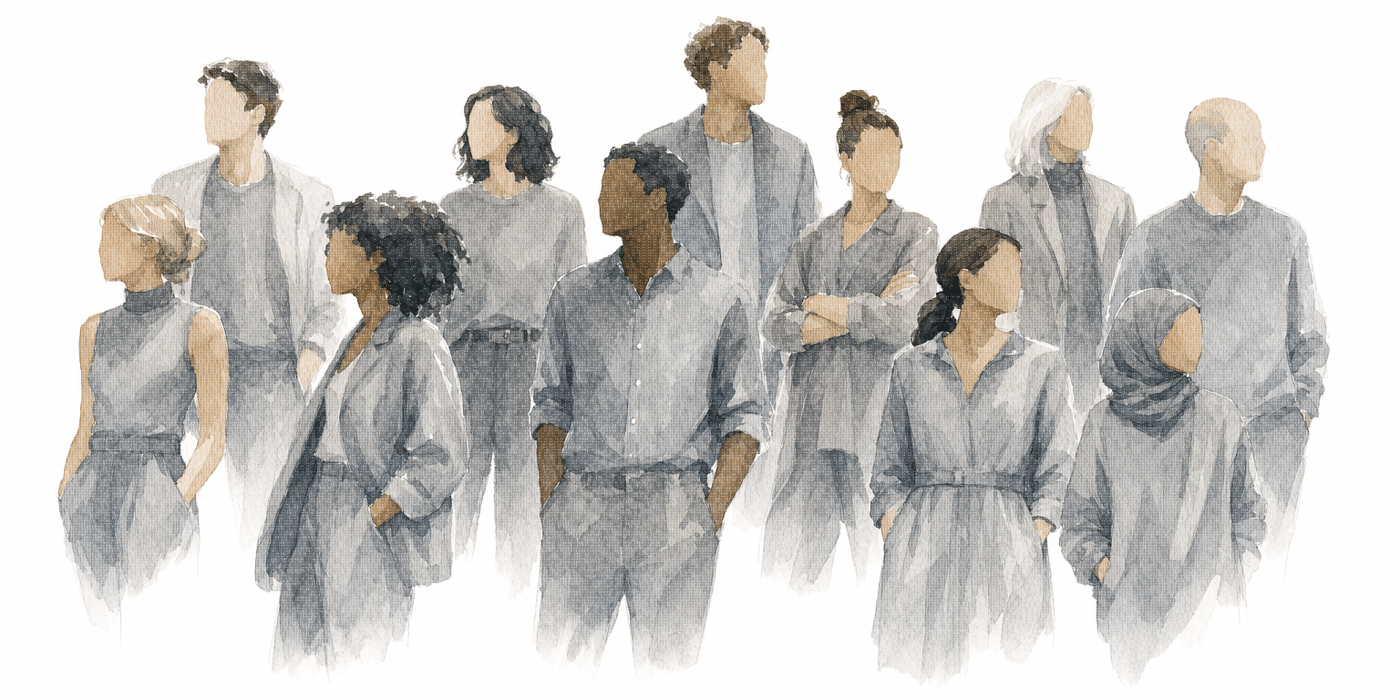
There is a peculiar contradiction at the center of contemporary progressive collectivism. On one hand, it seems determined to erase the individual, reducing human beings to essentially interchangeable barcode-wearing units of society whose differences in ability, ambition, judgment, and achievement are treated as inconveniences to be corrected.
On the other hand, it is obsessed with identifying, categorizing, and amplifying every conceivable difference between people, organizing society into competing groups defined by race, sex, ethnicity, sexuality, economic class, and an expanding inventory of supposedly defining characteristics.
How can a political philosophy simultaneously insist that we are all essentially the same while demanding that our differences become the organizing principle of society?
Perhaps the contradiction disappears when we recognize that individuality and identity are two entirely different things.
And if you consider this to be true, the identity politics that has been practiced for decades completely falls apart.
Individuality is what makes each human being unique. It encompasses intelligence, temperament, ambition, creativity, moral judgment, personal responsibility, experience, preferences, and the capacity to make independent choices. In my mind, individuality is a passive state — it is a state of being, the way you are, absent any externalities.
Identity, at least in its contemporary political application, is increasingly concerned with membership in a particular category. It is an active state; it is less about who you are and more about what you are, what you do, where you live, and what job you hold (or don’t).
Individuality describes who you are; in my analogy, it is the colorful brand-name box that makes you feel good about the purchase. Political identity describes what you are, according to somebody else’s classification system. This is where they list your ingredients, wrap you in a black-and-white box, and stick the barcode on you.
This is an enormously consequential distinction.
The classical liberal conception of equality holds that all human beings possess equal inherent dignity and equal rights under the law. It does not presume that people are equivalent in their abilities, ambitions, accomplishments, or circumstances. Indeed, the entire premise of individual liberty is that people are different, that they will make different choices, pursue different objectives, and inevitably produce different outcomes.
Equality before the law is not equivalence in life.
Yet much of contemporary progressive politics appears increasingly uncomfortable with that distinction. Differences in outcomes are often presented as evidence of systemic injustice, as though unequal results could arise only from unequal treatment. Individual achievement becomes suspect, personal responsibility becomes subordinate to collective circumstances, and the natural consequences of human differences become political problems requiring government intervention.
Meanwhile, the same philosophy that diminishes the importance of individual differences elevates demographic distinctions to extraordinary political significance. People are no longer simply citizens possessing equal rights. They become representatives of groups, each assigned its own grievances, privileges, obligations, and political expectations.
The individual disappears behind the classification.
This is not to suggest that discrimination against groups is imaginary or that identifying genuine patterns of injustice is illegitimate. The problem arises when group membership becomes more important than the individual’s actual circumstances, character, or conduct. At that point, the political system is no longer concerned primarily with protecting individual rights. It is increasingly occupied with managing relationships between competing collectives.
There is another irony here. A society can become extraordinarily diverse in its demographic composition while becoming remarkably intolerant of intellectual diversity (as ours has become with its heckler’s vetoes of conservatives — and now Jews — on college campuses around America). It can celebrate every conceivable difference in identity while demanding conformity in thought, language, morality, and political opinion.
Something I have been considering is the deeper philosophical conflict. Does society exist to protect individual liberty, or do individuals exist to serve the objectives of society as defined by those who presume to manage it?
These two views are on competitive display right now.
The classical liberal answer begins with the individual as a sovereign moral agent whose rights precede government. The collectivist temptation is to subordinate that individual to some supposedly greater social purpose, with political authorities deciding which differences deserve recognition and which must be overcome. The ultimate paradox is that a philosophy claiming to celebrate human diversity can end up diminishing the very thing that makes diversity meaningful: the existence of unique, independent human beings.
A free society does not require people to be interchangeable, nor does it require them to be divided into politically useful categories. It requires only that we recognize their equal dignity, protect their individual liberty, and allow them the freedom to be different.
When you consider it this way, you realize that our Founders left us with a Constitution, one that created our representative republic and is designed around the very premise that even though we are all different, we are all equal under liberty.
That is the only diversity that leads to unity.