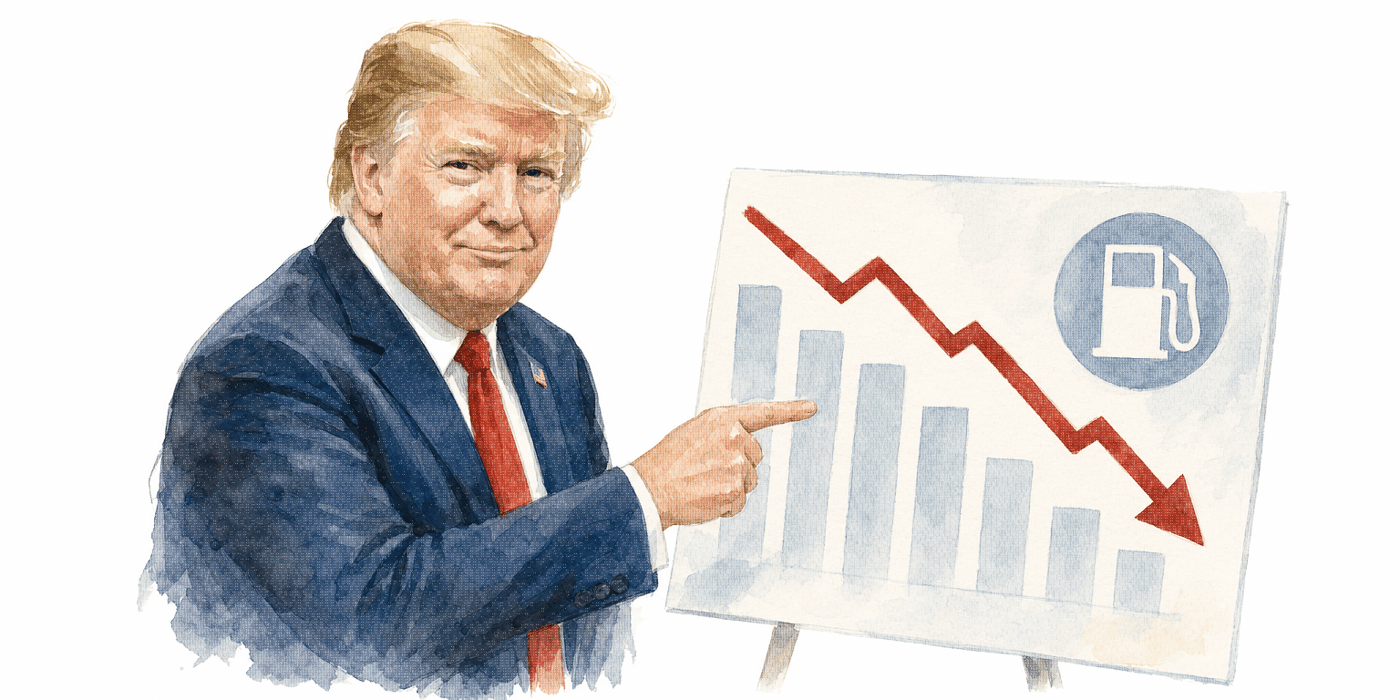

Before the midterm elections, President Donald Trump addressed high gas and diesel prices, telling reporters, “Right after the election, oil prices are going to be tumbling downward. They’re going to be tumbling down, and we’ll get them down.”
Here we are just two weeks after the midterms, after the Democrat surge, and just as Trump predicted, the price of oil has fallen precipitously.
Last month, the national average price of regular gas was $4.29 per gallon. Today, the average price is just $3.72 per gallon. Naturally, the mainstream media dutifully noted the record-high election-day price of $4.14, but since then, they’ve lost interest.
Importantly, the average price of gas has fallen to its lowest level since March, which is good news for Americans ahead of Thanksgiving.
Even more significantly, the price of diesel fuel dropped as well. After hitting a record high of $6.53 per gallon in September, the highest in U.S. history, which the mainstream media incessantly noted in the lead-up to the midterms, it has also dropped, down to $5.93 per gallon as a national average.
According to the mainstream media, this high diesel cost was attributed solely to the conflict with Iran. Of course, the Iran conflict did contribute; another major factor has been the ongoing war in Ukraine. But that couldn’t be blamed on Trump, so they neglected to mention it.
Interestingly, the primary reason that oil prices have dropped is that shipments through the Strait of Hormuz have steadily increased, rising to more than 105 million barrels a day.
The Trump administration has also pursued several avenues to reduce prices, including the President issuing a waiver of the Jones Act, which he recently extended by an additional 90 days. By waiving the Jones Act, foreign-flagged, built, and crewed ships are permitted to move cargo between U.S. ports.
Prices were already falling weeks before the midterms, despite the mainstream media’s lack of coverage. For example, the popular narrative surrounding the Strait of Hormuz has been that Iran closed it to almost all shipping traffic.
Yet the reality is, as noted above, shipping through the Strait had been increasing steadily for weeks, pushing daily oil shipments above pre-war levels. This surge partly reflects a backlog of shipments delayed when traffic through the strait slowed over the summer.
While Democrats got a voter boost from the high price at the pump, their election successes have nothing to do with the prices now decreasing. The good news is these dropping prices will be felt across the economy.
Though many Americans blame Trump now for high gas prices, if the trend continues and he prevails in preventing Iran from acquiring a nuclear weapon, maybe even pushing a regime change in Tehran, then maybe Americans’ opinions will change. But even if they don’t, addressing the Iran problem, which has cost Trump politically, may prove to save America and our allies in the region in the long run.