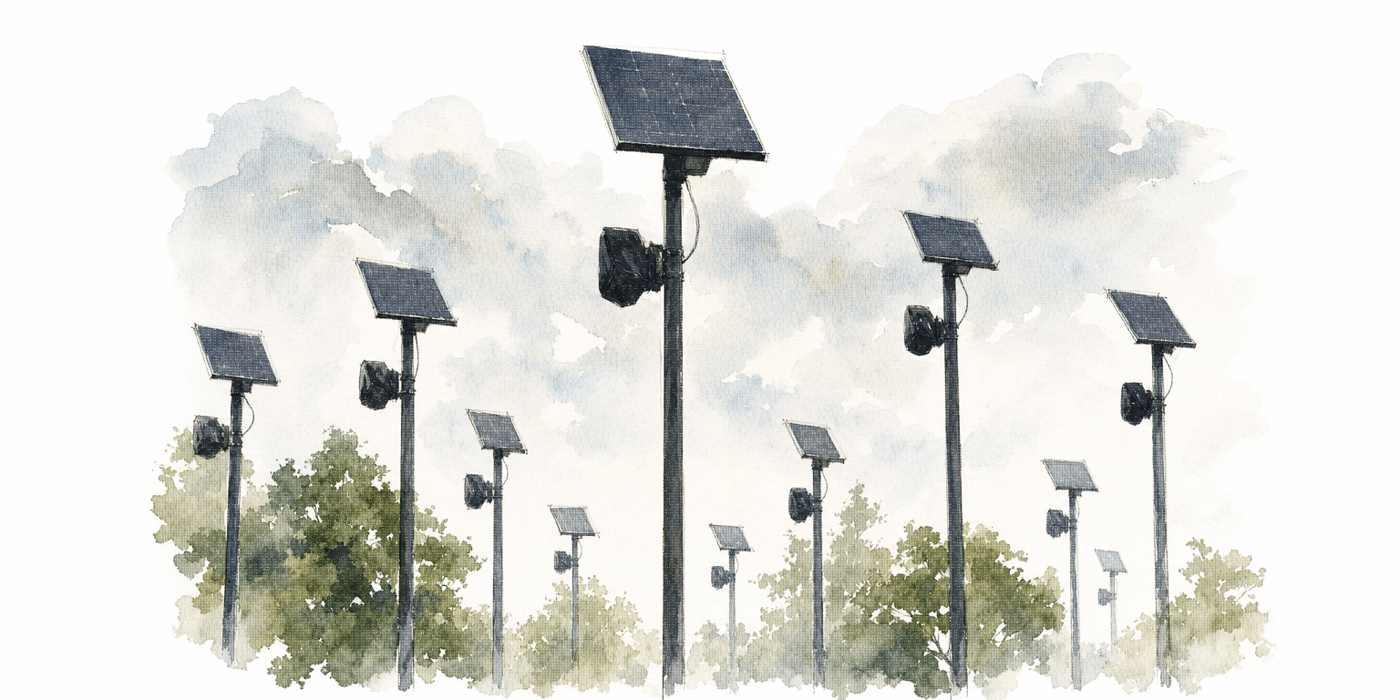

A dual-use technology, product, or piece of infrastructure serves both legitimate civilian purposes and military or national security functions. Many of the technologies that define modern life — such as GPS, drones, artificial intelligence, satellite communications, semiconductors, and biotechnology — also have applications in warfare, defense, or intelligence gathering. Likewise, civilian infrastructure such as ports, airports, railroads, power grids, and telecommunications networks can become essential assets during military operations. This overlap creates a constant challenge for governments, which seek to encourage innovation while preventing adversaries from exploiting technologies that could strengthen their military capabilities.
In warfare, the concept of dual use also has important legal implications. Civilian objects do not automatically become lawful military targets simply because they exist, but they may become legitimate targets if they are making an effective contribution to military operations and attacking them provides a definite military advantage. Even then, the laws of armed conflict require militaries to distinguish between civilian and military objectives and to weigh the expected military benefit against the risk of harm to civilians. As technology increasingly blurs the line between civilian and military applications, dual-use issues have become one of the most complex challenges in national security, international trade, and the law of armed conflict.
For a long time, I have struggled with “dual use” tech, even extending to rights, laws, and social mores that fit this definition. They can simultaneously preserve liberty while destroying it, prosecute crime while supporting it, and prevent behaviors that are harmful to society while allowing them.
You could say that our constitutional Republic is built on the conundrum of “dual use” philosophies.
My latest internal struggle is over the recent rise in Flock cameras and even Flock drones that seem to be flooding our cities and towns as the fight against crime grows more complicated.
The term “Flock cameras” usually refers to automated license plate reader (ALPR) systems made by Flock Safety. Thousands of police departments, neighborhoods, businesses, and homeowners’ associations use them to photograph passing vehicles and compare license plates against databases of stolen cars, wanted suspects, missing persons, and other law-enforcement alerts.
If you watch TV at all, chances are that you have seen reruns of a program called “Person of Interest” that ran from 2011 to 2015, starring Jim Caveizel as the off-the-grid and presumed-dead former CIA agent, John Reese, who is hired by a mysterious tech billionaire software genius, Harold Finch (Michael Emerson), to prevent violent crimes before they happen in New York City via an advanced surveillance software that can clandestinely access any camera and computer system.
This series began with crime-fighting based on the purest of intentions, but evolved to show the risk of an all-seeing, all-knowing entity — what we now call AI.
The greatest threat to Liberty has rarely arrived wearing a jackboot. More often, it comes padding in on the soft feet of a kitten, promising convenience, efficiency, or safety. Flock license plate readers are merely the latest example of a technology that promises to catch criminals while also quietly transforming every law-abiding citizen into a subject of perpetual observation.
The defenders of this tech point out, correctly, that license plates are displayed publicly. If a police officer may legally write down a plate number while standing on the side of the road, why should a camera not do the same? The flaw in that reasoning is the same flaw found in so many arguments favoring expanded government power: It ignores the difference between isolated observation and comprehensive surveillance.
An officer cannot be on every corner 24 hours a day.
A network of cameras can.
Historically, courts have held that people have a reduced expectation of privacy while driving on public roads. The Supreme Court has repeatedly said police officers may observe and record what is openly visible from a public place, but the more difficult issue is scale. Instead of one officer observing one car for a few minutes, a network of thousands of cameras can reconstruct months of a person’s movements and, in my view, activate the Fourth Amendment’s protection against unreasonable searches.
Several Supreme Court cases raise concerns about long-term electronic surveillance, suggesting that while a single observation in public may not constitute a search, aggregating thousands of observations over time can become constitutionally significant.
However, the Supreme Court has not yet ruled directly on nationwide ALPR (or similar) systems.
For most of American history, privacy was protected not only by the law but by practical limitations. The government simply lacked the resources to record every citizen’s movement, associations, and routines. Technology has erased those limitations. Today, thousands of cameras can compile an extraordinarily detailed map of where people drive, where they worship, which doctors they visit, where they shop, who they spend time with, and what political meetings they attend. None of those activities are criminal, yet all become part of a searchable historical record.
That should trouble anyone who values a free society.
Supporters insist the data are only used to catch criminals. Perhaps that is true today. The problem is that governments do not voluntarily surrender powers they acquire. Every surveillance system experiences mission creep. Databases built for one purpose inevitably become tempting tools for another. What begins as a program to recover stolen vehicles eventually becomes useful for tax enforcement, regulatory investigations, political protests, civil litigation, or any number of objectives never envisioned when the cameras were installed.
I believe such a dual-use data collection system/technology is patently unconstitutional and poses a grave risk that outweighs its benefits.
I go back to the objection made by Jeff Goldblum’s “Jurassic Park” character, Ian Malcolm: Some folks are “so preoccupied with whether or not they could, they didn’t stop to think if they should.”