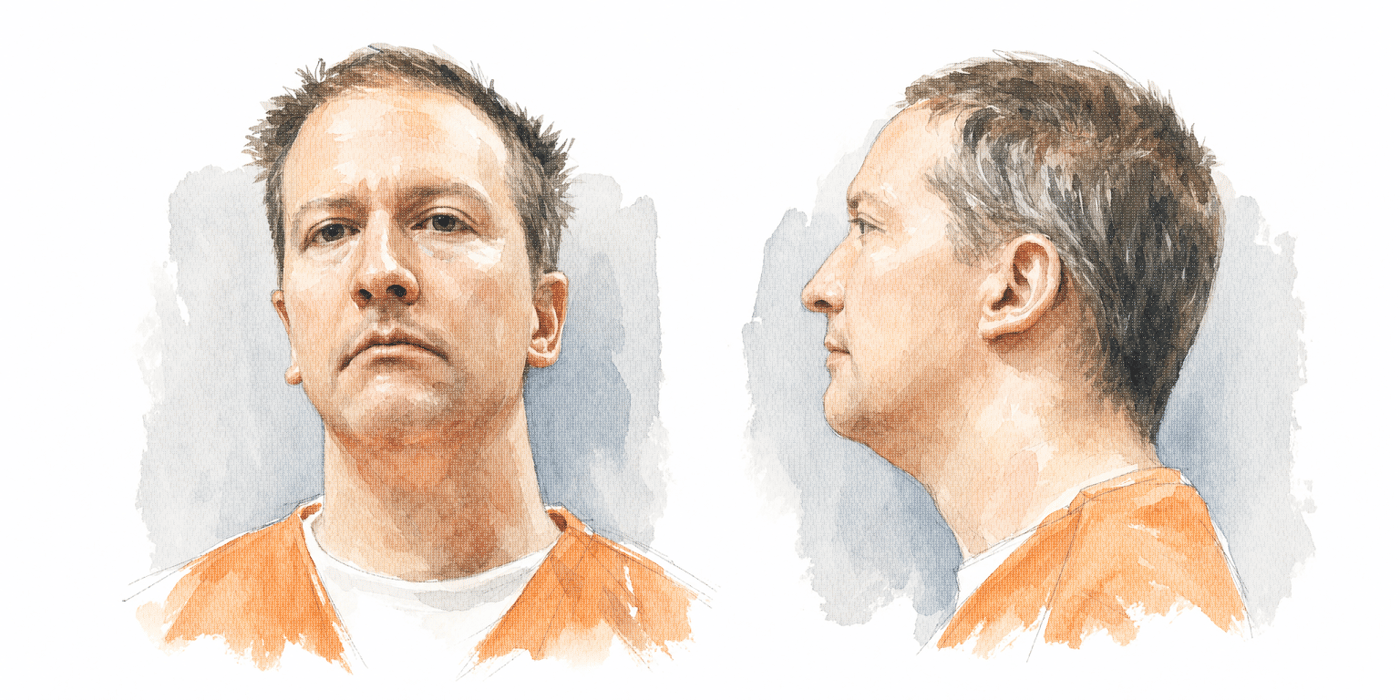

More than five years after Derek Chauvin was convicted of murdering George Floyd, the legal battle surrounding one of the most consequential criminal cases in modern American history is still not over.
Chauvin’s attorneys filed a new petition this week seeking to overturn his Minnesota murder conviction, arguing that there were fundamental problems with how the case was prosecuted. His attorneys are asking the Minnesota Court of Appeals to pause his existing appeal so they can return to the trial court with a new argument alleging that Governor Tim Walz improperly referred the prosecution to Attorney General Keith Ellison.
Whether that argument ultimately succeeds is for the courts to determine. But Chauvin’s case deserves another look for a much broader reason: it was never treated like a normal criminal case.
Before Chauvin ever entered a courtroom, George Floyd’s death had become something much bigger than a prosecution. Politicians, corporations, universities, activists and media outlets turned it into a national referendum on race, policing and America itself.
By the time Chauvin faced a jury, much of the country had already decided what the verdict was supposed to be. That should concern anyone who believes in due process, regardless of what they personally think of Chauvin.
The American legal system is not supposed to operate on public outrage. Prosecutors must prove criminal charges beyond a reasonable doubt, and defendants are entitled to have those charges evaluated independently of whatever political movement has developed outside the courthouse.
Yet the public narrative surrounding Chauvin routinely went further than what prosecutors actually established.
Chauvin was never charged with a hate crime. Minnesota AG Keith Ellison later explained that prosecutors did not have evidence sufficient to prove such a charge, saying his office charged crimes for which it had evidence it could present to a jury.
The country was repeatedly told Floyd’s death represented racist policing. The resulting movement helped fuel massive demonstrations, corporate DEI campaigns and a nationwide political reckoning over race. But Chauvin’s trial was about use of force and whether his conduct satisfied the elements of murder and manslaughter — not whether prosecutors had proven racial animus.
The prosecution presented supervisors and use-of-force experts who testified that Chauvin’s restraint was excessive. The jury ultimately accepted the prosecution’s case and convicted him of second-degree unintentional murder, third-degree murder, and second-degree manslaughter.
But the existence of a guilty verdict does not make questions about the process illegitimate.
The circumstances surrounding the trial were extraordinary. Minneapolis was still dealing with the aftermath of months of protests and unrest. The courthouse was heavily fortified. National attention was constant. And during the trial, the fatal police shooting of Daunte Wright only intensified tensions throughout the area.
The jury was not fully sequestered through most of the proceedings.
It is impossible to know what was inside each juror’s mind. But it is equally difficult to pretend jurors could somehow be unaware of what a different verdict might mean outside that courtroom.
That is precisely why Chauvin’s case should never be reduced to a question of whether someone “supports” him. Due process is most important when protecting someone the public despises.
Chauvin also pleaded guilty to separate federal civil-rights charges and received a 21-year federal sentence that runs concurrently with his state sentence. A president could pardon the federal conviction, but could not erase Minnesota’s state conviction; state relief must come through Minnesota’s legal or clemency process.
Chauvin became a national symbol before the legal system finished treating him as a defendant. His latest petition provides another opportunity to ask whether politics, public pressure and the demand for a particular outcome overwhelmed the protections every American defendant is supposed to receive.
The Bible repeatedly commands judges to show no partiality — to neither favor the poor nor defer to the powerful, but to judge fairly and according to justice. That principle matters precisely when a defendant is unpopular.
In Derek Chauvin’s case, he became a national political and cultural symbol before his trial was finished, raising serious questions about whether he could truly be judged without fear, favor, or outside pressure. Justice requires that every defendant be judged on the evidence and the law — not on politics, public outrage, or what a verdict is expected to represent.