

Right Opinion
The best of conservative opinion and commentary, updated daily.
Wednesday, October 5, 2016
Cruzing Past the Point
Earlier this week, The Wall Street Journal ran an interesting editorial critiquing the endorsement decisions of Sen. Ted Cruz, R-Texas, with regard to the coming presidential election. Several months ago, I took issue with The Wall Street Journal’s editorial page for holding Donald Trump and Ted Cruz to different standards: understanding the anti-establishment appeal of the former while condemning the latter for campaigning on the exact same trends in American political life. This assessment included a mischaracterization of The Heritage Foundation’s work, which is nonpartisan research and development and promotion of conservative policies. Strangely enough, this week their editorial page included another misunderstanding, alleging that Cruz would find “Heritage Foundation echo chambers” a platform for his future political endeavors.

Will Illegal Foreign Voters Steal the Election?
“It could all come down to Colorado.” That’s the latest conventional wisdom from presidential poll watchers. But it may not be legal American citizens in my adopted home state who choose the next commander in chief. Instead, it could very well be foreign noncitizens voting illegally in the Rocky Mountains — and in other crucial swing states — who seal our country’s fate. Former Colorado Secretary of State Scott Gessler identified nearly 5,000 noncitizens in Colorado who voted in the 2010 general election. Gessler’s office uncovered upwards of 12,000 noncitizens registered to vote. Liberal groups who oppose stronger election system protections attacked him for trying to verify citizenship status — because God forbid public officials sworn to uphold the rule of law actually do anything to enhance the integrity of our election system!

Hillary’s Hypocrisy
Hillary Clinton has been the recipient of massive amounts of money from billionaires and Fortune 500 CEOs. (She really is the candidate of the 1%.) I guarantee you that all of her Fortune 500 CEO supporters have taken advantage of the normal, well-defined provisions of the tax code, provisions which she is now blasting Donald Trump for using. I guarantee you that they paid only the minimum amount of taxes they had to pay. If they have been in business any length of time, with its inevitable ups and downs, all of them have had years with no tax liability due to business losses.

Post Talk Press Disorder
Not everything Donald Trump says is an outrage — but that doesn’t stop the media from treating it like one. [Monday], the GOP nominee was back in the political hot seat after comments about the spike in post-traumatic stress disorder (PTSD) cases at a Virginia town hall for retired military warriors. During the Q&A portion of the event, which FRC’s Lt. General Jerry Boykin (U.S. Army-Ret.) and I moderated, Marine Staff Sergeant Chad Robichaux, president of Mighty Oaks Warrior Programs, asked Trump if he would support faith-based programs for troops suffering from PTSD.
The New York Times Savaging Its Enemies
On Oct. 2, The New York Times published an admittedly “fragmentary” front-page story about Donald Trump’s taxes. Just three pages were cited: the first page of the state tax returns Trump filed in New York, New Jersey and Connecticut in 1995. The Times reported that Trump claimed a $916 million loss, which could — emphasis on “could” — have allowed him to avoid paying federal taxes for “up to 18 years.” The story was stuffed with speculation about what Trump may have potentially done. The Times was typically harsh in tone. The tax records “reveal the extraordinary tax benefits that Mr. Trump, the Republican presidential nominee, derived from the financial wreckage he left behind” with his financial “mismanagement.” A tax expert declared that Trump “has a vast benefit from his destruction” in the early 1990s, like he was Hurricane Donald.

Solving Fiscal Crises Through Personal Ownership
I participated in a conference last week in Grand Rapids, Michigan, sponsored by the Western Michigan Policy Forum. The focus of the conference was getting Michigan on sound fiscal footing, and one of the main topics of discussion was pensions. Public pension systems around the state of Michigan are grossly underfunded. According to the Mackinac Center, the average city in the state of Michigan has only funded 67 percent of its pension liabilities. According to Mackinac, there is only one solution, and that is moving to the trend in pension reform that has been going on for years. That is, switching to defined contribution pension programs and away from defined benefit programs.
Labor to Young Americans: Work Less, Achieve Less
A 25-year-old woman three years out of college earns a modest, but livable, salary in a professional position where she oversees the work of several other young people. She works eight-to-ten hours every weekday — then goes home and takes a three-mile walk. When she is walking, she sometimes thinks about her job and how she can make those she supervises more productive. One night on her walk, she has a brilliant idea, which she starts implementing at work the next day. This idea makes the jobs of her subordinates easier, more enjoyable and more productive. It makes the family-owned business she works for more profitable. It puts her on a faster track to career advancement and a higher salary.
Dunbar High School After 100 Years
One hundred years ago, on October 2, 1916, a new public high school building for black youngsters was opened in Washington, D.C. and named for black poet Paul Laurence Dunbar. Its history is a story inspiring in many ways and appalling in many other ways. Prior to 1916, the same high school had existed under other names, housed in other buildings — and with a remarkable academic record. In 1899, when it was called “the M Street School,” a test was given in Washington’s four academic public high schools, three white and one black. The black high school scored higher than two of the three white high schools. Today, it would be considered Utopian even to set that as a goal, much less expect to see it happen.

Admiring Foreign Leaders
Asked on a TV show to name a foreign leader he admires, Libertarian Party presidential candidate Gov. Gary Johnson choked. He couldn’t produce a name. He said he had “a brain freeze.” The media pounced. “Unable to name a foreign leader,” sneered NPR. “Cannot name one,” echoed USA Today. But that’s just unfair. Johnson wasn’t asked to name a foreign leader. MSNBC’s Chris Matthews asked him to name one he *admires*. Why should he admire any of them? Johnson should have dismissed the question outright for its pro-government bias. Why presume that everyone should venerate “leaders”? If we’re free, we lead ourselves. Stop giving the politicians the credit.
Discrimination and Segregation
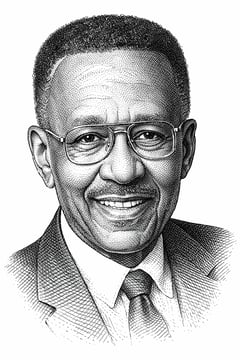
I was invited, along with several other American professors, to deliver lectures at South Africa’s University of the Witwatersrand in Johannesburg in 1979. Pieter Willem Botha was the prime minister, and apartheid, though becoming a bit relaxed, was the law of the land. Under apartheid, intermarriage between blacks, coloureds and Indians on the one hand and whites was prohibited. There was the Group Areas Act, which determined where different races could live. In addition to many other racially discriminatory laws, there were job reservation laws that determined who could hold what jobs by race. My lecture sought to produce the argument that in free market settings, one is apt to observe less racial discrimination because it is costly to both the discriminated and the discriminator.

Oblivious Trump Can’t Avoid Self-Sabotage
“Jonah — We have come a long way together — and I like it! Thank you!” That right there is the full extent of my personal communications with Donald J. Trump. He wrote it by hand in broad felt pen on the very page my column appeared in the New York Post, mostly in ALL CAPS, followed by his signature (which looks a bit like an EKG reading). It came to me as a PDF via email on Sept. 4, 2015, under the subject header “From the office of Donald J. Trump.”
Tuesday, October 4, 2016
Thoughts on the Passing of Three Sports Legends
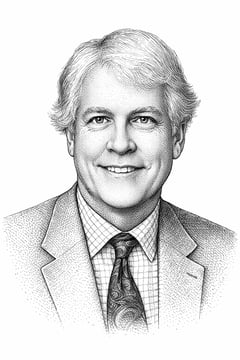
With the recent passing of Arnold Palmer, yet another all-time great sports icon has left us in 2016. How ironic that three athletes, each of whom was the face of his sport in the 1960s — Arnold Palmer in golf, Muhammad Ali in boxing, and Gordie Howe in hockey — all have left us this year. Perhaps that is fitting. They deserve to be remembered together for their combined impact on the world of sports. Although I am a lifelong sports fan, I’ll confess to having only modest interest in golf. That interest, though, stems entirely from the winsome personality of Arnold Palmer. The combination of his sonorous drawl, charismatic smile, twinkling eyes, easy-going manner, modesty, genuineness, and gentlemanliness made it impossible not to be charmed by the man. Arnie was the hook that drew me to watch enough golf tournaments over the years to at least know who the outstanding players are in any given year.

We All Avoid Taxes
Give Donald Trump credit for going big. When he wanted to declare a $915,729,293 loss on his 1995 tax returns, the software used by his accountant couldn’t accommodate anything higher than a seven-figure loss. The accountant had to add the first two digits, “91,” with a typewriter. The improvisation gets to what is most noteworthy about Trump’s tax gambit, which is the sheer scale of it.
Religious Liberty: Beaten to a Pulpit
Plenty of people have weighed in on the 2016 elections — and [Sunday], that chorus included pastors! Clergy across the country preached loudly and proudly about the issues, the importance of voting, and even — yes — the political races in their areas. As part of Pulpit Freedom Sunday, they dared the IRS to come after them for speaking out in direct defiance of the Johnson Amendment, which liberals have twisted into a license to intimidate and silence churches on the important topics of the day. As we have every year since 2008, FRC and our friends at Alliance Defending Freedom (ADF) encouraged tens of thousands of pastors to freely use their voice as God intended it: as the moral conscience of their people.

Trump’s Plan Isn’t Trickle-Down Economics
Hillary Clinton keeps bashing the Trump tax plan as “trumped-up trickle-down economics.” This class-warfare card has become the standard and tired response to every Republican tax reform plan for 30 years. No wonder we haven’t cleaned out the stables of the tax code since the Reagan era. Democrats have no interest in doing so. Clinton’s claim is that the plan will blow a hole in the debt (which is rich coming from someone who worked for an administration that nearly doubled the debt in eight years) and that the benefits all go to the rich. She also says it will cost jobs and could even cause a recession. I worked on devising the Trump tax plan with economists Larry Kudlow, Sam Clovis and others, so I know a little bit about the costs and the benefits.
Trump & Taxes
Over the weekend, the New York Times broke a story on Donald Trump’s taxes. The report states that in 1995, Trump reported a $916 million loss, “a tax deduction so substantial it could have allowed him to legally avoid paying any federal income taxes for up to 18 years.” The key word in that sentence is “legally.” The Times also states that tax experts it consulted “said nothing in the 1995 documents suggested any wrongdoing by Mr. Trump.” So even the New York Times concedes Trump acted legally and appears to have done nothing wrong. So why is this news? It’s not news. It is nothing more than a left-wing hatchet job, carried out by an arm of the Clinton campaign. Don’t forget, my friends, that the New York Times tried to smear John McCain with unsubstantiated accusations of adultery.

Clinton Won on Nonsense, Trump Won on Substance
The overwhelming media consensus regarding the first presidential debate — Donald Trump vs. Hillary Clinton and Lester Holt — is that Clinton won. If she did win it was because Trump, after a strong opening 30 minutes, allowed himself to get baited into emotional and tendentious self-defense. And because the media have decided to focus on the tendentious, such as the utterly moronic issue of whether, in 1996, Trump called then-Miss Universe Alicia Machado “Miss Piggy,” almost all the debate analyses ignored many of the most important things each candidate said. On those grounds, Clinton did not win. On many truly significant subjects, she said things that were actually frightening, and he said things that were actually important.

Voters Reject John Lennon’s ‘World as One’
“The president believes the world will be a better place if all borders are eliminated — from a trade perspective, from the viewpoint of economic development and in welcoming people from other cultures and countries.” That’s a paraphrase of a speech former President Bill Clinton made only months after leaving office, on Sept. 10, 2001, in Melbourne, Australia. There’s apparently no transcript; the quotation is from the businessman who hosted the forum, appearing in an article in the next day’s Melbourne newspaper, which, thanks to time zone differences, was about 12 hours before the airliners hit the twin towers.

Faith and the VP Debate
In every election cycle since Jimmy Carter introduced “born again” into the political lexicon, a politician’s faith has been an object of curiosity and contention. At an appearance in Iowa in January, Hillary Clinton responded to a question about her faith, saying she is a Christian and a Methodist and that to her “the most important commandment is to love the Lord with all your might and to love your neighbor as yourself.” She is correct, but the challenge comes in how that commandment and Scripture are applied in the political arena. The same Scripture in which Hillary Clinton says she believes also teaches that marriage is between a man and a woman and that human life begins at conception. Hillary Clinton is pro-choice and favors same-sex marriage and the repeal of the Hyde Amendment, which prohibits taxpayer funds being used for abortion.
The Academic Curtain
Back in the days of the Cold War between the Communist bloc of nations and the Western democracies, the Communists maintained pervasive restrictions around Eastern Europe that were aptly called an “iron curtain,” isolating the people in its bloc from the ideas of the West and physically obstructing their escape. One of the few things that could penetrate the “iron curtain” were ideas conveyed on radio waves. “The Voice of America” network broadcast to the peoples of the Soviet bloc, so that they were never completely isolated, and hearing only what the Communist dictatorships wanted them to hear. Ironically, despite the victory of democracy over dictatorship that brought the Cold War to an end, within American society there has slowly but steadily developed in too many of our own colleges and universities a set of restrictions on what can be said on campus, either by students or professors, or by outside speakers with views that contradict the political correctness of our time.