

Right Opinion
The best of conservative opinion and commentary, updated daily.
Wednesday, September 30, 2009
Is Disagreement with Obama Racism?
Former president Jimmy Carter said, "I think an overwhelming portion of the intensely demonstrated animosity toward President Barack Obama is based on the fact that he is a black man." That's from a man who earlier referred to Obama as "This black boy" on the Jim Lehrer "News Hour." New York Times social critic Maureen Dowd said, in reference to Rep. Joe Wilson's shouting "Liar" during Obama's address on health care before the joint session of Congress, "Some people just can't believe a black man is president and will never accept it." Washington Post's Howard Kurtz said he "began to suspect that race was a factor for at least some critics when I heard them shouting about 'the Constitution' and 'taking our country back.'" Kurtz asked whether the massive tea parties and other public protests reflect a "distinct discomfort with the country's first black president." House Ways and Means Committee Chairman Charlie Rangel, Rep. Eddie Bernice Johnson, New York Gov. David Paterson, MSNBC's Chris Matthews, and other leftists claim that racism is behind criticism of President Obama.
The Perils of the Middle Way
WASHINGTON -- As President Obama approaches a decision on the way forward in Afghanistan -- the most historically consequential choice of his presidency so far -- military leaders seem impressed with his decision-making process. During the next few weeks, Obama has scheduled considerable time to be personally involved in discussions. In the White House economy, presidential attention is the most valued commodity -- coveted, hoarded and stolen. Obama's engaged, deliberate style has fans in the military. But there are also risks when arguments about military strategy are too public for too long. An enemy can try to influence the outcome of a debate with attacks and propaganda. Al-Qaeda's most recent video warns Europeans that they are about to be abandoned: "It won't be long until the dust of war clears in Afghanistan, at which point you won't find a trace of any American, because they will have gone away far beyond the Atlantic."
The Intellectual Talent Scout
There must still be places like the all-night cafes and cafeterias I remember on the Lower East side, where students could sit till all hours nursing a cup of coffee or maybe a glass of tea -- a glesele tay, to lapse into my childhood Yiddish -- while solving all the problems of the world, or maybe just stirring them up. Or at least making the kind of obscure ideological distinctions that seemed all-important at the time. Intellectually, the New York of the 1930s may have been the liveliest part of the Soviet Union. Name your own opiate of the intellectuals. It would surely be represented during those all-nighters. And fiercely debated. With any luck over a good piece of strudel, which would be the only connection with the real world. A visiting rabbi circuit-riding here in Arkansas once recalled his seminary days in New York when he was trying to study a page of Talmud in such a setting -- an assignment that can be a week's if not a lifetime's work -- when he realized an old man was looking over his shoulder. "Nu," asked the stooped figure, "you want an argument?"
Tuesday, September 29, 2009

Reflections on the Death of My Mother
My mother, Hilda Prager, died 10 days ago. Because she has consumed my thoughts since then, I thought I would share some of them with my readers. 1. On the age a parent dies One of the first things most people ask when a person loses a parent is how old he or she was. This is entirely normal, yet it demands explanation. It is entirely normal because people regard the death of a 90-year-old parent quite differently from that of, let us say, a 70-year-old, let alone someone younger than that. For good reason. The death of a 90-year-old is not a tragedy; the death of a 60-year-old is. As the son of a woman who died at age 89, I fully recognize this. I am deeply grateful that my mother lived so long.
Freedom -- the Key Foreign Policy Concept
George W. Bush got banged up badly for his foreign policy choices: Iraq, Guantanamo, "torture," a certain tonal disdain for critics foreign and domestic. It will be interesting to see, in a matter of weeks or possibly days, how his successor, Barack Obama, fares with the critics.

Who Needs Religion?
Well, that's one way to look at it. Writing in Haaretz, Orna Coussin praised Yom Kippur (the Jewish Day of Atonement that began Sunday night and ended Monday night) as the ultimate green holiday. Coussin is a secular Israeli and was expressing her appreciation for the fact that everyone is obliged to travel by foot on Yom Kippur. All traffic stops in Israel. No cars, busses, trains, or taxis clog the streets on that day. The shops and offices are closed and the city is given over to pedestrians. "Last year, on Yom Kippur," she exults, "carbon monoxide levels fell from 205 parts per billion, on the day prior to the holiday, to just 2 parts per billion at its height -- a phenomenon unmatched anywhere in the world." That's nice. But for millions of Jews worldwide the Day of Atonement continues to exert its traditional power. Coussin may see it as a day for walking the city; religious Jews are trying to walk with God. But even non-religious Jews can find uplift in the Yom Kippur service.
Obama's Globalism: We Are the World
Polite conservatives grow nervous when their less inhibited brethren suggest that President Barack Obama does not feel warm and fuzzy when contemplating pre-Obama-inauguration America. But considering the mounting evidence, the burden of proof has certainly shifted to the polite group to demonstrate otherwise. Obama should not get off the hook in just one short news cycle for the shots he took at this nation in his shameful first speech to the United Nations General Assembly. In his opening salvo, he said, "For those who question the character and cause of my nation, I ask you to look at the concrete actions we have taken in just nine months." Then he proceeded to tick off those "concrete actions," such as prohibiting torture -- as if to suggest that prior to his ascension, it had been official U.S. policy.
Enlightened - and Joyful - Women
The ugly face of female oppression is all around us. But the source might surprise you. Females are favored on college campuses for scholarships and sports, so it's not educational opportunity that we lack. In fact, female co-eds now dominate universities in both numbers and in special programs available to them. With plenty of government grants for businesses run by women, we've got advantages there too. And there are innumerable labor laws that protect women in the workforce from discrimination. It's obviously not the modern American male that is oppressing women. A growing majority of men are so careful not to offend that many of them don't even open doors or compliment women anymore. Many men are scared to treat women like ladies - let alone deny them opportunity - for fear that the bitter voice of feminism will rise up and call them bigots.
The Brainy Bunch
Many people, including some conservatives, have been very impressed with how brainy the president and his advisers are. But that is not quite as reassuring as it might seem. It was, after all, Franklin D. Roosevelt's brilliant "brains trust" advisers whose policies are now increasingly recognized as having prolonged the Great Depression of the 1930s, while claiming credit for ending it. The Great Depression ended only when the Second World War put an end to many New Deal policies. FDR himself said that "Dr. New Deal" had been replaced by "Dr. Win-the-War." But those today who are for big spending like to credit wartime big spending for bringing the Great Depression to an end. They never ask the question as to why previous depressions had always ended on their own, much faster than the one under FDR, and without government intervention or massive government spending.

Deception
If you are an enemy of America seeking her destruction, you would add to your pursuit of nuclear, biological and chemical weapons the undermining of this nation from within. You would do this largely through deception, putting on a peaceful face while subtly plotting ways to bring America down. That tactic was on display last Friday in Washington as a crowd estimated at 3,000 Muslims gathered to pray. The organizer of the rally, Imam Abdul Malik of Brooklyn, N.Y., told Americans what we like to hear: "What we've done today, you couldn't do in any Muslim country. If you prayed on the palace lawn there, they'd lock you up." As reported by The Washington Times Sadara Shaw, a resident of Washington, D.C., was quoted as saying "It's a show of solidarity to show all Muslims are not terrorists but law-abiding citizens." That is probably true, but irrelevant since it takes only a small number of terrorists to cause havoc. "We believe in America's possibilities," Malik told the crowd. "We didn't come to criticize our nation ... I want the American people to know that we love you."
Monday, September 28, 2009

With Obama, Too Much Nuance, Not Enough Power
"It is my deeply held belief," Barack Obama told the United Nations General Assembly, that "in the year 2009 -- more than at any point in human history -- the interests of nations and peoples are shared." That is, of course, the year Obama became president, and he wasn't shy about referring in his second paragraph to "the expectations that accompany my presidency around the world," though he assured us they "are not about me."
Sunday, September 27, 2009
A 'Principled Conservative'
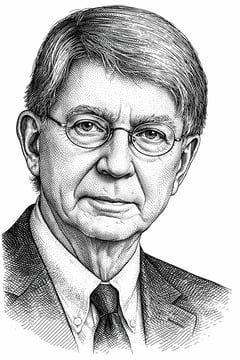
MIAMI -- Florida, a geological afterthought, was the last portion of what are now the lower 48 states to emerge from the ocean, and it emerged halfheartedly: Its highest point is just 345 feet above sea level. But the fourth-most-populous state will loom over American politics next summer when Republicans select a Senate nominee. Their primary will test whether the party has become so risk-averse that it flinches from interesting choices. The nominee almost certainly will be either Gov. Charlie Crist or Marco Rubio, former speaker of the Florida House (term limits, which he supports, retired him). Leading national Republicans rushed to endorse Crist. In tennis, such decisions are called unforced errors.
Saturday, September 26, 2009
The Man Who Changed Everything
"When the wheat is ripening properly, when the wind is blowing across the field, you can hear the beards of the wheat rubbing together. They sound like the pine needles in a forest. It is a sweet, whispering music that once you hear, you never forget." --Norman Borlaug It could have been the picture on some tattered old travel poster blowing in the wind: Visit Mexico in the Fall. It was long ago and we were on our way to see the fabled Copper Canyon by rail, and the same scene kept being repeated outside the window of our swaying old passenger car on the Chihuahua al Pacifico line somewhere south of Chihuahua and before we reached the first slopes of the Sierra Madre. All was flat, dry, brown and barren. One arid vista succeeded another, one adobe hovel followed another. And then, like a dream, acres of bright green fields appeared, their stalks of grain waving in the wind, and in the middle of this postcard view, a great Victorian mansion. Then it was all gone, and once again we were rolling past much the same scrawny fields that had come before. Only later did we learn that we'd just passed a Mennonite colony.

Kevin Warsh Is on the Money
Attendees of the G-20 meeting in Pittsburgh and members of the Federal Reserve Board in Washington should carefully read a Wall Street Journal op-ed by Fed Governor Kevin Warsh. In a piece titled "The Fed's Job Is Only Half Over," the former Wall Street investment banker sends a shot across the global economic bow. He says the Fed's job will not be done until it removes the easy-money policies put in place over the past year. In other words, an exit strategy.
Friday, September 25, 2009
Obama's Self-Worship
President Obama's speech to the United Nations has been called naive and even "post-American." It was something else, as well: the most extravagant excursion into self-worship we have yet seen in an American leader. Beware of politicians who claim to be "humbled by the responsibility the American people have placed upon me." It's a neon sign flashing the opposite. And sure enough, in almost the next sentence, the president allowed that "I am well aware of the expectations that accompany my presidency around the world." Really? The whole world pulses with hope and expectation because Obama is president? People in Amsterdam, Sao Paulo and Taipei have a spring in their step because an Illinois Democrat won the White House? Well, yes, he says, but it's not "about me," rather it's a reflection of dissatisfaction with the "status quo that has allowed us to be increasingly defined by our differences and outpaced by our problems." Oh, yes, and everyone around the world was electrified by Obama's campaign slogan because these expectations "are also rooted in hope. The hope that real change is possible and the hope that America will be a leader in bringing about such change."
Picture This, Or: Seeing Is Believing
Not that folks with an iPhone, complete with camera app, need be reminded, but it's definitely a visual age. Which could explain why it's a vulgarized one. Nothing can be hinted at any longer, it must be shown. Preferably in stark lighting. Which may explain the long decline and sudden fall of ACORN. It's scarcely been a secret all these years that ACORN has been an ongoing scandal. It's been involved in so many cases of fraudulent voter registration, I've lost count of how many of its people have been hauled up on charges. The last estimate I saw was something like 70 of its employees in 12 different states. Yet only now has it moved to the center of public indignation. What took so long? In a way, ACORN's behavior is supposed to be outrageous. Founded right here in Arkansas, it's very business is community-organizing, protest-planning, and tantrum-throwing. For it strives to follow Saul Alinsky's classic guide to agitation for fun and profit. And it could have gone merrily on its scandalous way if some of its mischief hadn't been captured on film.

The Three R's in the Age of Obama: Rappin', Revolution and Radicalism
When the White House announced plans for the president's nationwide address to schoolchildren two weeks ago, worried parents were dismissed as "kooks." We pointed to the subtext of "social justice" activism rampant in American classrooms. It's time for a big fat Told You So. Out of the spotlight, politicized lessons continue to supplant core academics. Earlier this year, at the B. Bernice Young Elementary School in Burlington Township, N.J., schoolchildren were instructed to memorize a paean to Barack Obama. A video uploaded to the YouTube account of Charisse Carney-Nunes, author of the children's book "I Am Barack Obama" and a self-described Harvard Law "schoolmate" of the president's, showed students lined up in the auditorium snapping their fingers and chanting in unison:
A Great Good Man
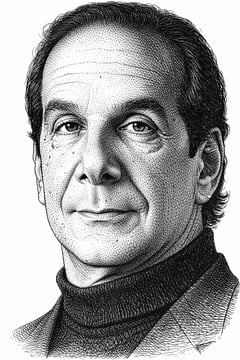
WASHINGTON -- After the plain pine box is lowered into the grave, the mourners are asked to come forward -- immediate family first -- and shovel dirt onto the casket. Only when it is fully covered, only when all that can be seen is dust, is the ceremony complete. Such is the Jewish way of burial. Its simplicity, austerity and unsentimentality would have appealed to Irving Kristol, who was buried by friends and family Tuesday. Equally fitting for this most unsentimental of men was the spare funeral service that preceded the burial. It consisted of the recitation of two psalms and the prayer for the dead, and two short addresses: an appreciation by the rabbi, followed by a touching, unadorned remembrance by his son Bill. The wonder of Irving was that he combined this lack of sentimentality with a genuine generosity of spirit. He was a deeply good man who disdained shows of goodness, deflecting expressions of gratitude or admiration with a disarming charm and an irresistible smile. That's because he possessed what might be called a moral humility. For Irving, doing good -- witness the posthumous flood of grateful e-mails, letters and other testimonies from often young and uncelebrated beneficiaries of that goodness -- was as natural and unremarkable as breathing.