

Right Opinion
The best of conservative opinion and commentary, updated daily.
Thursday, August 4, 2011
They Don't Seem All That Gay
There are certain topics about which I write that inevitably trigger predictable responses. If I write, say, a defense of Israel, I know I will be called one of three or four obscenities by anti-Semites. If I write a piece bemoaning the fact that 80% of Jewish Americans invariably vote for left-wingers, I can expect to be vilified, not as a conservative, but as a self-hating Jew. If I write disparagingly about Obama, a certain number of readers, taking their lead from Rep. Sheila Jackson Lee, will condemn me as a racist, and if I write anything in opposition to same-sex marriages, I'm pilloried as a homophobe.

The Long War and the Budget
Washington -- we are engaged in a long war -- actually two long wars. The first and most commonly accepted of our wars is the long war against Islam o' fascists. It is not a war against vast armies. Comparatively speaking, it is just a war against a handful of thugs, but they want to strike at our heart, wherever we are ill-prepared, and if they can they will cause incalculable destruction. This we discovered on September 11, 2001. We are on the hem of wiping al-Qaeda out, but there are other thugs waiting. We must be vigilant against them. It will be a long war.
It's Not Easy to Get Three-Quarters of America to Disapprove of You
So many want to put the entire blame on President Barack Obama for the reckless spending and huge debt that America suffers from. But it took an entire village of idiots to get us here. Americans recognize this. A nationwide poll conducted by InsiderAdvantage for NewsMax found that a whopping 73 percent of the country disapproved of the "overall job performance of the U.S. House, Senate, and the president in their collective efforts to raise the national debt ceiling."

Strong Profits, Easy Money and Tea Party Gains Argue Against Recession
Stocks and bond yields are sinking, as Wall Street disses the debt deal and instead focuses on a likely double-dip recession. Everyone is gloomy. But is this pessimism getting a little overbaked? Granted, the economy is sputtering, with less than 1 percent growth in the first half of the year. But if there is a recession in the cards, it will be the first time one occurs when the yield curve is steeply positive (an ultra-easy Fed) and corporate profits are strong.

Chasing Votes by Promising to Do Impossible Things
"Leading from behind." That's what an unnamed White House aide told the New Yorker's Ryan Lizza that Barack Obama was doing on Libya. It's an apt description of Obama's feckless handling of the debt ceiling debate. He kept calling for a tax increase even though there was never a majority in either house of Congress for one and even after Senate Democratic leader Harry Reid dropped any such demand. But leading from behind is also a description of what most of the declared and all-but-declared Republican presidential candidates were doing on the debt limit issue.

Sales Department -- Barack Obama, Manager
Barack Obama put it so persuasively in his address the other night that I had to restrain myself from rushing out to apply for still another credit card. Or just accepting the next one to arrive in the mail, as they do with remarkable frequency. It was one heckuva sales job the president did, and as a political appeal, it wasn't bad, either. At least not for one based on the solid theory, oft attributed to that well-known political scientist P.T. Barnum, that there's one born every minute. As our president explained in terms any fool can understand, if only fools, this whole tangle in Washington over raising the debt limit hasn't really been about whether to curb the federal government's high-spending ways. Not at all, not at all.

Media: Halliburton Paid Dick Cheney to Commit Rape in Iran
A front-page story by James Risen in The New York Times on Wednesday, Feb. 13, 2008, reported on a "troubling trend" of sexual assaults committed by American employees of military contractors in Iraq. The centerpiece of his story was Jamie Leigh Jones, who claimed to have been brutally gang-raped in 2005 while working in the Green Zone. (Risen also interviewed other women claiming to have been sexually assaulted in Iraq and -- for journalistic balance -- their attorneys.) Jones famously claimed that days after arriving in Iraq with KBR, then a subsidiary of Halliburton, she had been drugged and gang-raped by fellow employees and then held at machine-gunpoint in a tiny shipping container by KBR managers, with no food or water for 24 hours, as retaliation for reporting the rape.

Smearing the Tea Party
Did Vice President Joe Biden slander Tea Party Republicans by saying they "acted like terrorists" in the protracted debate over raising the federal debt ceiling? To use such language would be contemptible, especially in the wake of Anders Breivik's twin massacres in Norway and just weeks before the 10th anniversary of the 9/11 atrocities. Biden claims he never said it, and out of respect for his office I'd like to believe him. But I'm skeptical. Politico reported Monday that at a closed-door meeting of the House Democratic caucus the vice president joined in the "hot rhetoric" against GOP conservatives, specifically agreeing with one Democrat who described them as a "group of terrorists [who] have made it impossible to spend any money." Biden's office initially refused to confirm or deny the comment, but after it became public, he went on TV to disavow it: "I did not use the 'terrorism' word," he told CBS.

Obama Won Debt Debate -- He Just Doesn't Know It
So, who "won" the debt ceiling standoff? President Barack Obama -- for two reasons. First, the tea party-influenced GOP stopped his job-killing bucket list: higher taxes, more "stimulus," union card check, and cap and trade, among the items. Whatever the economy does going forward, it will be better than had Obama and the Dems not been whacked. The policies of the last two-and-a-half years -- ObamaCare, "stimulus," bailouts, regulation, "green technology investments," "quantitative easing" (or as normal people would say, printing money), taxing and threatening to raise taxes further -- have failed. The debt-ceiling debate -- plus the new Republican majority in the House and the Democrats' loss of their Senate supermajority -- changes the game for the rest of his presidency.

Tea Party 'Terrorists'
According to the website Politico, Vice President Joe Biden agreed "with a line of argument made by Rep. Mike Doyle (D-Pa.) at a two-hour, closed-door Democratic Caucus meeting" that congressional tea party members "acted like terrorists" in the way they stood against attempts to raise taxes and force spending reductions as part of the debt-ceiling deal. Biden denied making the comparison. Given the heated rhetoric behind and in front of the scenes, the use of such a phrase, particularly in light of Biden's known salty language, has credibility.

Are GOP Presidential Hopefuls Really Serious?
Republicans running in the 2012 presidential primary have a credibility gap. Only one announced candidate -- former Utah Gov. Jon Huntsman, and he is not exactly a household name -- supported the bipartisan Budget Control Act of 2011, which passed with 174 House and 28 Senate Republican votes this week. The others argued that the compromise debt-ceiling package did not meet their standards. GOP primary voters should ask themselves, Will the field's ideological purity ruin the GOP's chance of retaking the White House? Will Americans see candidates who could not support workable legislation as credible when they vote in November 2012?

Spare Us the Sermons, Mr. President
During the recent debt crisis, President Obama talked about the need for bipartisan compromise and, as in the past, urged civility. Giving ground and engaging in polite discourse, of course, can be noble aims. But, like most one-eyed-jack politicians, Obama has rarely embraced the admirable qualities he advocates -- a fact increasingly evident to a skeptical public. In 2006, then-Senator Obama voted against the Bush administration's request to raise the debt ceiling -- when the national debt was about 60 percent of what it is now. He did not show up for similar votes in 2007 and 2008. In that regard, Senate Majority Leader Harry Reid opposed every request when Republicans were in control of the Senate to raise the debt ceiling. Of course, such an unthinking party-line voter is exactly the sort of partisan senator or congressman that President Obama now deplores.
Wednesday, August 3, 2011

A Clarifying Debate
WASHINGTON -- The story is that as Mark Twain and novelist William Dean Howells stepped outside one morning, a downpour began and Howells asked Twain, "Do you think it will stop?" Twain answered, "It always has." The debt- ceiling impasse has, as things generally do, ended, and a post-mortem validates conservatives' portrayal of Barack Obama and their dismay about the dangers and incompetence of liberalism's legacy, the regulatory state. For weeks, you could not fling a brick in Washington without hitting someone with a debt-reduction plan -- unless you hit Obama, whose plan, which he intimated was terrifically brave, was never put on paper. In a prime-time spill of his usual applesauce about millionaires, billionaires and oil companies, he said, yet again, that justice demanded a "balanced" solution -- one involving new revenues. His whistle into the wind came after Washington's most consequential Democrat, Harry Reid, proposed a revenue-free solution.

Where Are These Government-Slashing Republicans I Keep Hearing About?
Two weeks ago, The New York Times reported that Republicans "want a vastly smaller government." Last week, the Times called the dispute about raising the federal debt ceiling "an epic clash over the parties' divergent views on the size and role of the federal government." This week, it said President Obama faces "a conservative movement seeking a wholesale redefinition of the proper role of government." The recent debt deal, widely portrayed as a victory for Republicans, suggests their goals are decidedly less ambitious. As always in Washington, the "epic clash" perceived by the Times is in fact a squabble between two parties that both favor big government.
Misleading Words: Part II
If there were a contest for the most misleading words used in politics, "poverty" should be one of the leading contenders for that title. Each of us may have his own idea of what poverty means -- especially those of us who grew up in poverty. But what poverty means politically and in the media is whatever the people who collect statistics choose to define as poverty. This is not just a question of semantics. The whole future of the welfare state depends on how poverty is defined. "The poor" are the human shields behind whom advocates of ever bigger spending for ever bigger government advance toward their goal.

Back to Big Government-Spending as Usual
The American Age of Austerity lasted approximately three minutes, give or take a nanosecond. Immediately after the Senate approved the bipartisan "Budget Control Act of 2011" on Tuesday afternoon, President Obama hustled over to the Rose Garden -- to crow about the renewed opportunity to make "key investments." Yes, the pitched battle to force government to live within its means has preserved the failed stimulator-in-chief's ability to keep spending like there's no tomorrow. As the curtains closed on D.C.'s debt-ceiling theater, Obama wasted no time putting his new "investment" priorities on the table: higher taxes, more funding for endless unemployment benefits and a "national infrastructure bank."

Obama Is Out of Options
After Pearl Harbor, President Franklin D. Roosevelt's presidency changed. As he put it in 1943, "Dr. New Deal" had to be replaced by "Dr. Win the War." It was a colossal policy switch, but it wasn't an extreme makeover politically. He was still the same FDR, and the public understood the need for change. And it saved his presidency. As President Obama's former economic advisor, Larry Summers, said recently, "Never forget ... that if Hitler had not come along, Franklin Roosevelt would have left office in 1941 with an unemployment rate in excess of 15 percent and an economic recovery strategy that had basically failed."
Debt Status Quo Triumphs Over Future -- Again.
The debt deal, if it sticks, is a triumph for the bipartisan, status quo-clinging Washington establishment. Here is a prediction: Between now and January 2013, total actual spending cuts will be minimal. That will result from the following: (1) The $900 billion deficit reduction is almost all back-loaded to the years beyond 2012. (2) The select committee created by the budget deal will fail to pass a "second tranche" deficit-cut package of an additional $1.5 trillion. (3) The "trigger" will be pulled that will identify an additional $1.2 trillion. (4) The pulled trigger won't require any more deficit reductions to go into effect until 2013, when a new Congress and either a new president or a re-elected President Obama will be able to re-decide (or repeal) all these decisions. That president will also have to decide what to do with the expiring Bush tax cuts, which if extended would be scored to increase deficit by $3.5 trillion over ten years. (5) The debt ceiling will not need to be raised until 2013.
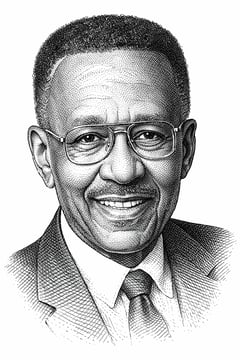
Cruel Laws
What does it take to be able to own and operate a taxi and earn $30,000, $40,000 or more a year? You need to purchase a used car and liability insurance. Compared with other businesses, the startup cost to become a taxi owner/operator is modest; that's until you have to come up with money for a license. In May 2010, the price of a license, called a medallion, to own one taxi in New York City sold for $603,000. As referenced in my recent book, "Race and Economics," New York City is not alone. In Chicago, a taxi license costs $56,000, Boston $285,000 and Philadelphia $75,000. It's not rocket science to understand the effect of laws that produce these prices: They discriminate against anyone getting into the taxi business who lacks tens and hundreds of thousands of dollars or bank credit to be able to get a loan.

Balancing the Budget
The political class predicted "disaster" if Congress didn't raise its debt limit. I think that was a scam to get more money. See, the poor politicians don't have enough, and they need to borrow more. We taxpayers are cheap. This year we'll give them only $2.2 trillion. They want to spend $3.8 trillion. The president said if he didn't get more money, Social Security checks wouldn't go out. Why not?