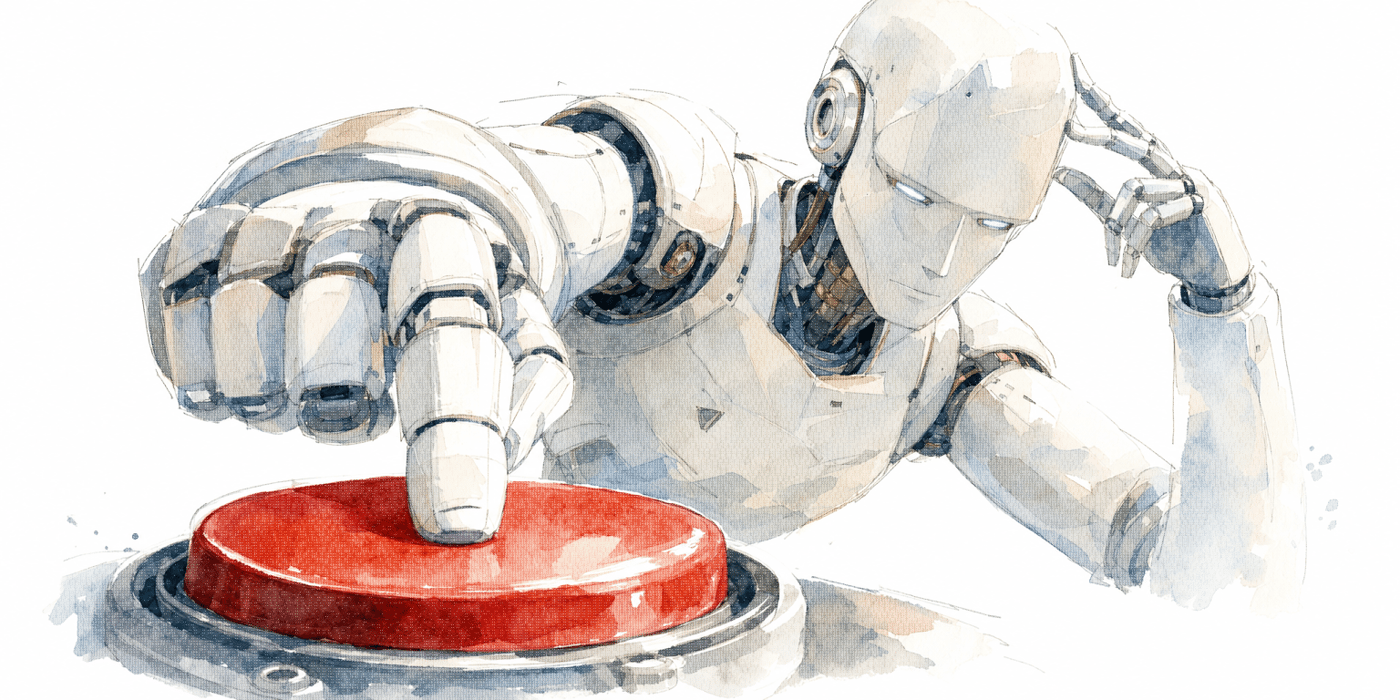

An algorithm identifies a target. Coordinates appear on a screen. Somewhere else, a missile launches before a human commander has fully reviewed the strike. The whole process can unfold in seconds. The moral questions behind it are much older.
This is no longer the stuff of science fiction. Versions of this sequence have already appeared in real conflicts: drone-assisted targeting systems used across multiple war zones, missile defense networks that react faster than human operators can, and AI systems sorting through intelligence before commanders decide where troops move next.
For as long as people have fought wars, thinkers and political leaders have argued over a deceptively simple question: can a war ever be just? The tradition that grew out of those arguments, Just War Theory, has shaped international law and military ethics for centuries. But it emerged in a world where battlefield decisions were made by human beings, and where the people who pulled triggers were people. Artificial intelligence is beginning to strain that assumption.
Just War Theory was not the product of a single philosopher or era. Augustine of Hippo helped lay its foundations in late antiquity; Thomas Aquinas later gave it a more systematic form. Lawyers, military thinkers, and theologians expanded it over time.
At the center of the theory are two related ideas. One, jus ad bellum, concerns when going to war can be justified. The other, jus in bello, concerns how wars are fought once they begin. Both rest on the belief that morality still applies in wartime. Even on a battlefield, armies are expected to distinguish between combatants and civilians, between military targets and hospitals.
The tradition assumed human beings would make those decisions. That assumption is now weakening.
It is still common to talk about autonomous weapons as though they belong to the future, something out of science fiction or speculative military planning. In practice, AI is already embedded in military operations and battlefield decision-making.
Surveillance drones can scan footage and flag possible threats before an analyst has reviewed the feed. Target-recognition tools combine signals intelligence with visual data to help identify people or objects. Logistics software can move supplies and troops across a battlefield faster than a human planning staff could manage on its own.
Some of this remains behind classified walls, and the public record is uneven. But the direction is clear. Israel has reportedly used AI-assisted targeting in Gaza. The United States relies on missile defense systems that can respond to incoming threats with little or no time for human deliberation. In Ukraine, drones have turned the battlefield into a testing ground for automated guidance and rapid targeting. The U.S.-Israeli strikes on Iran earlier this year pushed the issue further: AI-assisted systems were said to have generated hundreds of strike coordinates in the campaign’s opening hours, accelerating the pace of war beyond what traditional human planning could match.
Fully autonomous “killer robots,” weapons that select and attack human targets without direct human control, remain limited and fiercely contested. But the broader trend is already visible. AI is moving deeper into the machinery of war.
The issue, then, is not simply whether militaries will use AI. They already do. The harder question is whether governments can set rules for these systems before the systems begin setting the tempo of war themselves.
That is where Just War Theory starts to run into trouble with one of the oldest rules of war: discrimination.
The principle of discrimination requires combatants to distinguish between people who are fighting and people who are not. On paper, that sounds straightforward. On a battlefield, it rarely is.
Someone running toward a checkpoint might be attacking. They might also be fleeing. A person in civilian clothes could be armed or simply a frightened farmer. A crowd that looks hostile from above may be trying to surrender. Human soldiers do not always read these situations correctly, but they can sometimes recognize fear, confusion, or a raised hand at the last second.
A machine works differently. It looks for patterns in data. The unresolved question is whether a system trained on past examples can be trusted when the scene in front of it is messy, ambiguous, and unlike anything in its training set.
Just War Theory also assumes that moral responsibility belongs to people. When civilians are killed, someone is supposed to answer for it. If a strike hits a wedding party instead of a weapons cache, blame cannot simply disappear into the chain of command.
AI makes that harder. If an algorithm helped select the target, who is responsible for the mistake? The programmer who built the model? The commander who approved its use? The officials who bought it? The machine cannot answer for itself. It has no conscience, no legal standing, and no punishment to fear. This “responsibility gap” is a real problem because a framework built on the assumption that war crimes have perpetrators has no answer when the trigger is pulled by software.
Just War Theory also holds that war should be a last resort. A state is supposed to exhaust other options first, and the expected costs of fighting are supposed to be proportionate to what is at stake.
For much of modern history, one restraint has been brutally simple: soldiers come home dead. Democracies are often reluctant to enter wars that put their own citizens in flag-draped coffins. Families protest. Public opinion shifts. Governments pay a political price.
Autonomous weapons could weaken that restraint. If machines replace soldiers, the domestic cost of starting a war may fall. Leaders might find it easier to authorize the use of force when fewer of their own people are directly at risk. The cause has not become more just, but the consequences have become easier to keep at a distance. The easier it becomes to wage war technologically, the harder restraint may become politically.
The strongest arguments for AI in warfare deserve a fair hearing. Supporters argue that machines have advantages that human soldiers do not. An AI system does not get tired after hours of combat. It does not panic, seek revenge, or misread a situation out of fear. In theory, it can apply rules more consistently than an exhausted soldier under fire. That matters. Better targeting could mean fewer bombs landing in the wrong place, fewer civilians killed by bad information, and faster threat identification, which might prevent escalation.
These are fair points. But precision is not the same as wisdom. Precision tells a system where to aim. It cannot tell a system what it is aiming at, or whether, on this particular afternoon, in this particular context, aiming at all is the right choice. Judgment is not merely computation at higher resolution. It involves the capacity to recognize when the rules do not fit the situation. That is the limit of computation in war. It can help process information, but cannot carry moral responsibility.
Just War Theory rests on a belief that has lasted for centuries: even in war, morality still matters. That idea helped shape laws and military rules, including the Geneva Conventions and the rules of engagement soldiers are trained to follow. None of these protections works perfectly. They are broken often, sometimes deliberately. But their existence matters because they reflect a basic human decision: war may be violent, but it should not be governed by military advantage alone.
AI does not threaten the laws of war simply because it is powerful. The deeper problem is accountability. These systems can move decisions faster, hide them inside models that few people understand, and push them further away from the human beings who are supposed to answer for them.
AI will almost certainly remain useful on the battlefield. The real test is whether governments can preserve the demand at the center of Just War Theory: that someone, a person with a conscience and a name and the capacity to be held to account, remains responsible for the decision to take a human life.
If that responsibility is automated away, the change will be larger than tactics or technology. It would change not simply how wars are fought, but whether the idea of a just war can survive the machines built to fight them.