
I’ve noted in the past there are two kinds of poverty — absolute poverty and relative poverty.
Absolute poverty is simply defined as a daily battle for survival. I liken this to the poverty in the slums of New Delhi or the outskirts of Bangkok, where people live in leaky, one-room tin shacks under the light of a single bulb and survive on a bowl of rice a day.
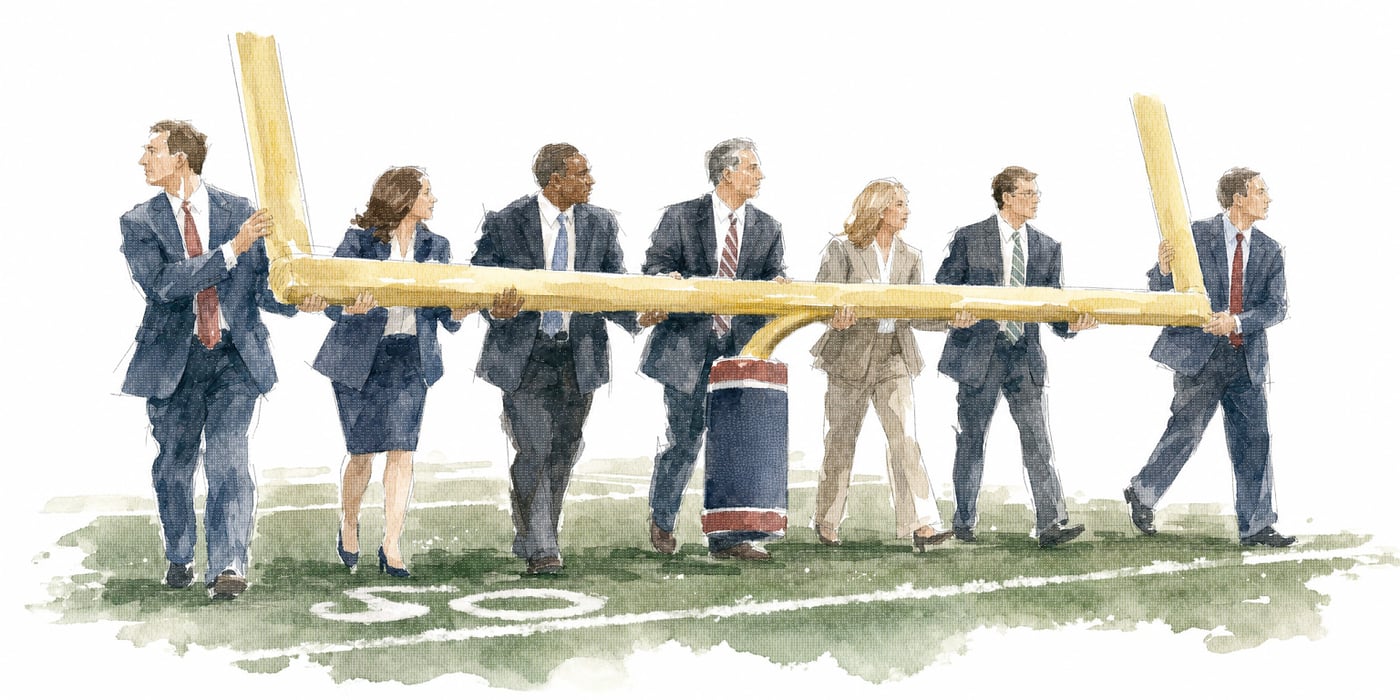
Relative poverty is what we have in the U.S., where poverty is measured as a percentage of the income level. This allows us to classify people who possess items that are not essential to survival (i.e. mobile phones, TVs, cars, and PlayStations) as “poor,” which is not true poverty. Efforts to “alleviate” relative poverty are nothing more than attempts to provide a certain guaranteed standard of living, not to assure survival. Spending our way out of relative poverty is impossible because every time the economy improves and the upper and middle classes do better, the poverty line rises commensurate with their improvement. It is the ultimate in moving the goalposts. You are never going to cross the goal line.
I was thinking about how this perspective applies to our contemporary politics as well.
There is absolute politics and there is relative politics.
The politics we primarily practiced up until the Clinton administrations and the first George W. administration were absolute. There were definite standards and principles that both the Left and Right were inflexible about, lines that were not crossed and where no compromise was possible — and the interesting thing about those times was that both sides could find agreement on certain things because we shared goals; we just disagreed on the ways to achieve them.
That began to change with the contested election of 2000 but was held in abeyance for a few years by 9/11 and the unity produced from the Twin Towers tragedy — but that began to fade as catching Osama bin Laden proved elusive and the “good” war in Afghanistan and the “bad” war in Iraq began to drag on with no real positive results.
At first, we drifted into relative politics, but then suddenly crashed headlong into it.
A couple of examples that triggered my thinking: the way the Left is crapping on everything Trump is doing for our 250th national birthday and the Maine Senate race.
Regarding America 250, I saw a tweet today by a guy with the handle “Bookshelf Q. Battler” who summed it up by tweeting: “In any other era, Hollywood would have made hay this summer. Networks could have broadcast concerts and events, fireworks. Maybe a few blockbuster history movies. It’s all about the narrative. Trump is president so life must suck. If concert held, people might think Trump [is] not bad.”
Another tweet noted, “If Trump came out for oxygen, Democrats would try to ban breathing.”
It doesn’t matter what it is — anything done by the Trump administration must be opposed.
The Maine Senate race is the real illustration. When you look at Susan Collins, she is exactly the kind of progressive Republican the Democrats claim all Republicans should be. She works with Angus King, the other Maine senator, and Democrats at large to advance progressive programs and policies, often voting against her own party to do it.
You would think they would be happy to have her, but instead, they went out and voted for literally the most radical piece of fecal matter they could find to put as much ground between Collins and Platner when they really didn’t need such separation. It’s not about getting your policies implemented; it’s about opposing any Republican as hard as possible, even progressive ones.
That’s the way relative politics is played.
In my opinion, Republicans are far more progressive than they were 30 years ago. In many ways, Trump has a progressive streak woven into his tapestry of populist appeal. Yet instead of leaning into that, Democrats have chosen to go crazy enough that they make Vladimir Lenin look like a rock-ribbed conservative.
The politics of relativism means that the goalposts keep moving, positions keep changing, and every statement comes with an expiration date. Where you stand no longer depends on your sincerely held principles and beliefs (because you no longer bother with those); it depends entirely on where your opposition stands. You must make sure to keep distance between your opposition regardless of whether that lands you in some crazy places you otherwise would never visit.
Like relative poverty, there is no solution to relative politics. You can’t spend, talk, or negotiate your way out of it because it’s not about the positions; it’s about maintaining the spread between them.
The only way our system of governance works is when politics is absolute, anchored on something of constant substance.