
Hawaii may be isolated from the rest of the U.S. by thousands of miles of ocean, but the Constitution still applies, including the Second Amendment. This past week, the U.S. Supreme Court issued a ruling reminding the 50th state of this reality.
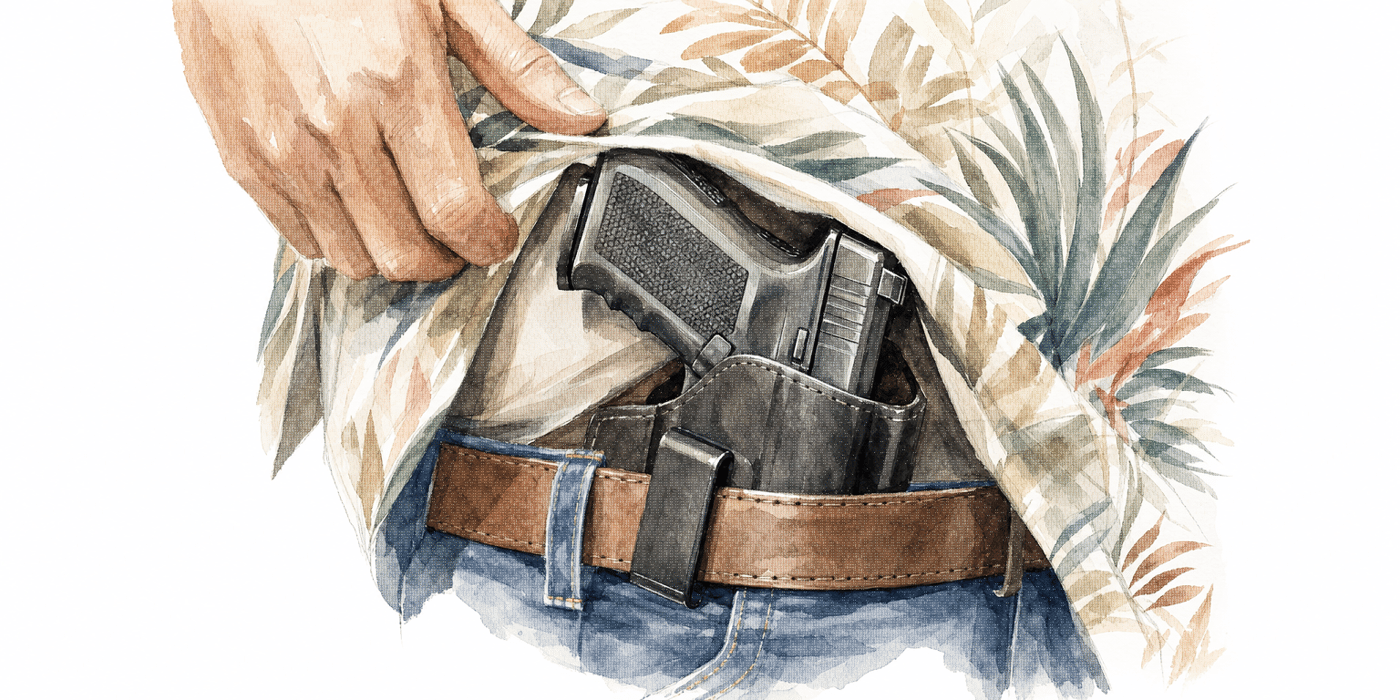
In Wolford v. Lopez, the Court handed down a 6-3 ruling finding Hawaii’s concealed-carry-limiting law, dubbed the “vampire rule,” to be an unconstitutional infringement of residents’ Second Amendment rights.
As I wrote in January, “The law effectively classified the Aloha State as a de facto gun-free zone. Lawmakers created a ‘no guns’ policy for all private property that is open to the public, such as gas stations and grocery stores, and the legislation forbids a person from carrying firearms in these places without the ‘express authorization’ of the property owner. Violators face up to a year in jail.”
The state defended this blatant infringement of the Second Amendment by claiming it was consistent with the state’s “spirit of Aloha,” insisting that Hawaii historically had much stricter gun laws than the rest of the country.
Unsurprisingly, this argument was especially appealing to Justice Ketanji Brown Jackson, who accepted the claim that this was fundamentally not about Second Amendment rights but rather property rights. In her dissent, she opined, “There is no constitutional right to enter private property without the owner’s permission, let alone with a firearm.”
Yet Justice Brett Kavanaugh responded to Jackson’s misleading argument by pointing out, “No one doubts that all property owners in Hawaii could bar the carry of arms on their respective premises, if they wanted to. But the Second Amendment does not apply to private parties. It does apply to the States. ... And when a State enacts a property law that regulates arms-bearing conduct, that law implicates the Second Amendment.”
The state also sought a historic precedent for this infringement by pointing to — wait for it — Louisiana’s post-Civil War Jim Crow laws, which stripped the right to bear arms from blacks. Justice Samuel Alito directly addressed that argument, writing, “The statute Hawaii cites was part of Louisiana’s Black Code, and it provided a tool for disarming blacks and thus leaving them defenseless against attacks. ... The Republican Party Platforms of 1856 and 1860 called for protection of the right to keep and bear arms for self-defense. Unless we put history entirely out of our minds, Hawaii’s claim that this tainted artifact illuminates the original understanding of the right to keep and bear arms cannot be taken seriously.”
In effect, Hawaii, in defending its Second Amendment-infringing law, appealed to a view that different standards or rules apply to different cultures, essentially undercutting the very principles behind the Declaration of Independence, the Constitution, and our shared national identity.
The right to self-defense is not only inferred in our Constitution but also explicitly stated. Denying American citizens the right to bear arms is fundamentally an effort to deny them their God-given right to self-defense.
Repeatedly, the U.S. Supreme Court has had to strike down, primarily in Democrat-run states, efforts to infringe on the Second Amendment. Democrats use all manner of excuses to justify these infringements, all of which ignore, downplay, or reject the fundamental individual right to self-defense.
Thankfully, the Supreme Court has done its duty once again and, in so doing, continues to establish a strong precedent against infringement of the Second Amendment. We have District of Columbia v. Heller, McDonald v. City of Chicago, New York State Rifle & Pistol Association, Inc. v. Bruen, and now Wolford v. Lopez.