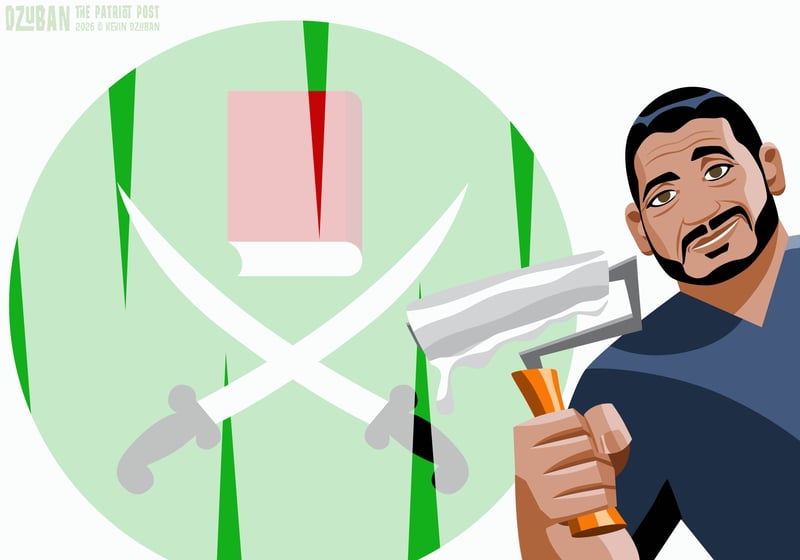

Texas politics have erupted into open warfare. A week ago, more than 50 Democratic members of the state House of Representatives fled Austin, boarding planes to New York, Illinois, and Massachusetts. Their aim: to deny Republicans the quorum needed to ram through a mid-decade redistricting plan. Texas Governor Greg Abbott and President Donald Trump aim to create five new Republican-leaning seats, tilting the state’s 38-member delegation even further to the right — and helping the GOP retain control of the US House in 2026.
The showdown has spiraled into political madness. Republican leaders have threatened to expel the Democrats who fled the state if they don’t return. At one point, police responded to a bomb threat at the Illinois hotel where some of the lawmakers were staying. And on Thursday, Senator John Cornyn, a Texas Republican, said the FBI would “assist” in “locating” the runaway state legislators.
Meanwhile, national Democratic Party leaders are threatening to fight fire with fire by redrawing the congressional maps in New York, California, and other blue states. “As far as I’m concerned, everything is on the table,” Governor J.B. Pritzker of Illinois said last week. Even Governor Maura Healey of Massachusetts piled on. On Tuesday she blasted the “partisan, craven, political power grab” by Texas Republicans, while praising the Democrats who bolted for protecting “the integrity of their state’s congressional elections.” Trump in turn accused Massachusetts Democrats of gerrymandering their own congressional map.
There are no saints or villains in this saga. Republicans and Democrats are engaging in a bare-knuckled fight for power, and what each side condemns is presumably what it would be doing if the roles were reversed.
The cause of all this drama is not inherent Republican or Democratic perfidy. It is an institutional flaw: With only 435 seats, the US House is far too small — which means each congressional district is far too large. The average district now encompasses nearly 760,000 people. That is a constituency vastly greater than any member of Congress can effectively or fairly represent. And because congressional districts are so large, each one is a political prize well worth gerrymandering. When each district must corral so many people, a single line on the map has an outsize political impact.
Under such circumstances, partisan cartography becomes irresistible — and bitter, recurring fights like the one in Texas are inevitable.
Happily, there is a structural remedy that would dramatically curtail the constant court fights, political retaliation, and vicious maneuvering surrounding redistricting. Congress ought to expand the size of the House from the current 435 members to 1,500. No constitutional amendment would be needed — it would require only a simple statute to restore each House district to a more manageable size, and thereby make gerrymandering far less tempting.
That would be a return to what the framers of the Constitution intended. The House of Representatives was conceived as the people’s chamber, designed to grow along with the population. In the First Congress, there were 65 House members, each representing roughly 30,000 constituents. But it was “take[n] for granted,” as James Madison wrote in Federalist No. 55, “that the number of representatives will be augmented from time to time.” For more than a century, that was the practice. Congress passed new apportionment laws after every census, and the number of House members climbed steadily — to 106, then 142, then 182, and so on until it reached 435 in 1912.
And there it froze.
Congress didn’t expand the House following the 1920 census, because of a political standoff. Many members resented the swelling ranks of foreign-born voters in the cities and balked at creating new seats to accommodate their numbers. In 1929, Congress compounded the error by permanently capping the House at 435 members. That decision — made when the nation’s population was less than one-third what it is today — locked into place a system that has grown more dysfunctional and undemocratic with every passing decade. Among the world’s leading nations, the US House, 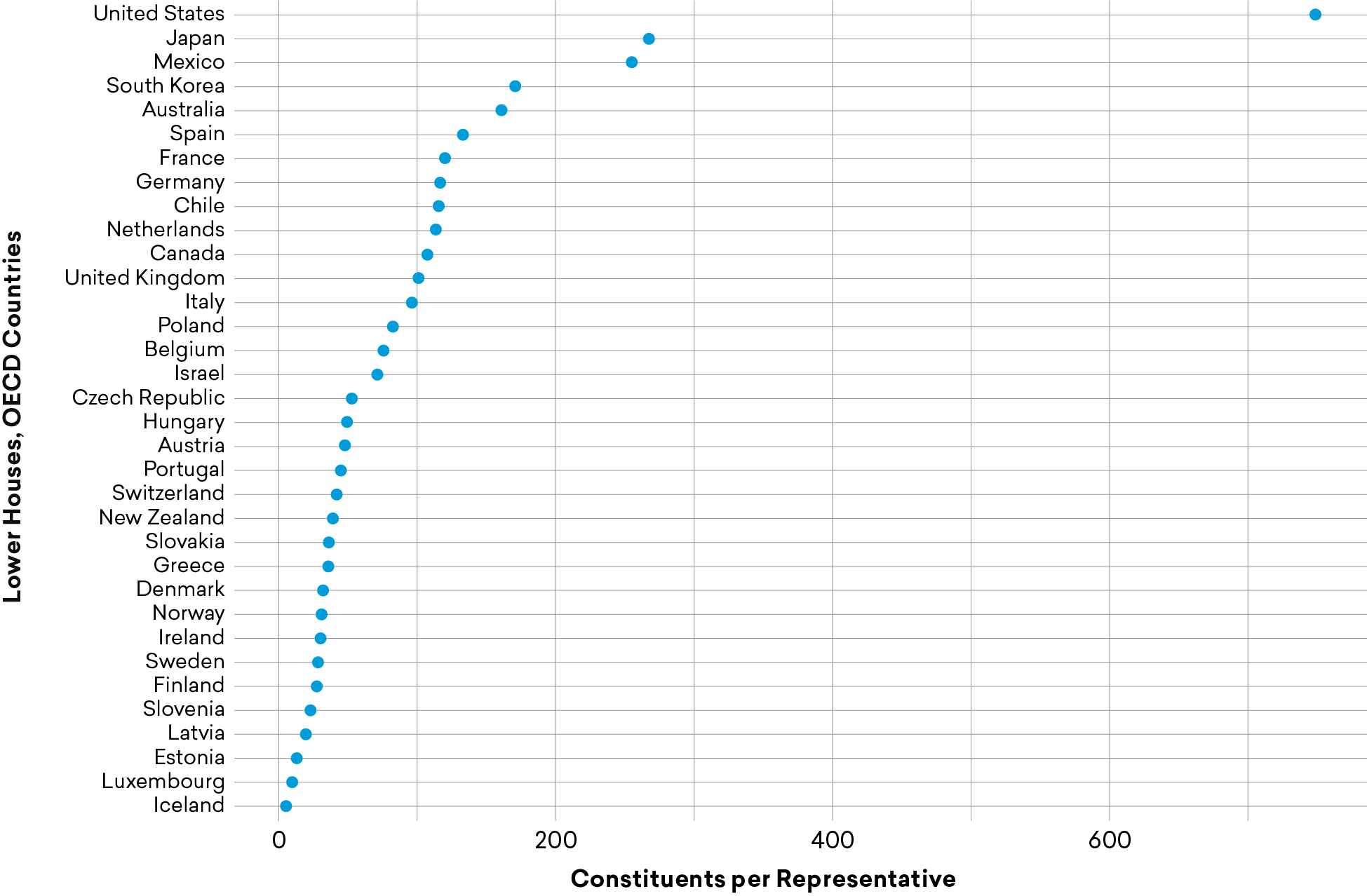 , is the least representative body of its kind.
A House of 435 might have been workable during the Hoover administration. It makes no sense now.
If the House were expanded to 1,500 members, the average congressional district would have about 225,000 people — still larger than its counterparts in many other modern democracies, but far more manageable than today’s bloated mega-districts. Granted, that would require more chairs in the House chamber and perhaps smaller offices and staffs for each member. But the payoff would be enormous: Not only would the House be more representative, it would also be less susceptible to gerrymandering. Here’s why:
When each congressional district contains three-quarters of a million seats, a carefully crafted border can determine the balance of thousands of votes — enough to flip a seat. That makes each boundary line a powerful political weapon. But when districts are a third or a quarter of that size, no single line carries as much weight. Shifting a few neighborhoods or towns from one district to another would affect far fewer voters, making it harder for mapmakers to engineer outcomes with surgical precision. Smaller districts mean smaller levers — reducing the scope for mischief.
And the more districts there are, the less potent those engineering tactics become. Gerrymandering works best when the map has fewer, larger pieces — which makes it easier to “pack” opposition voters into a handful of districts, and to “crack” the rest among multiple other districts, thinning out their numbers to ensure that they lose everywhere else. But multiply the number of districts, and that strategy loses force. The cartographer’s advantage fades as the map gets more granular. When each puzzle piece covers a smaller slice of territory, the lines become less predictable and harder to weaponize.
Last but definitely not least, in a 1,500-member House, voters would be likelier to know their elected representative — and to be known in return. In districts limited to 225,000 constituents, there would be room for more local voices, more diversity of all kinds, more candidates who reflect the communities they serve. Much smaller districts means much less expensive campaigns — and lower barriers to entry for challengers. It also encourages lawmakers to stay grounded in the concerns of their neighbors rather than the noise of national partisanship.
Congress blundered badly when it froze the House at 435 seats. The chaos emanating from Texas is only the latest consequence of that blunder.
It doesn’t have to be this way. Enlarging the House to 1,500 members would end the gerrymandering wars. Better still, it would revive the ideal of a legislature that truly speaks for the people — and restore the people’s House to its constitutional roots.